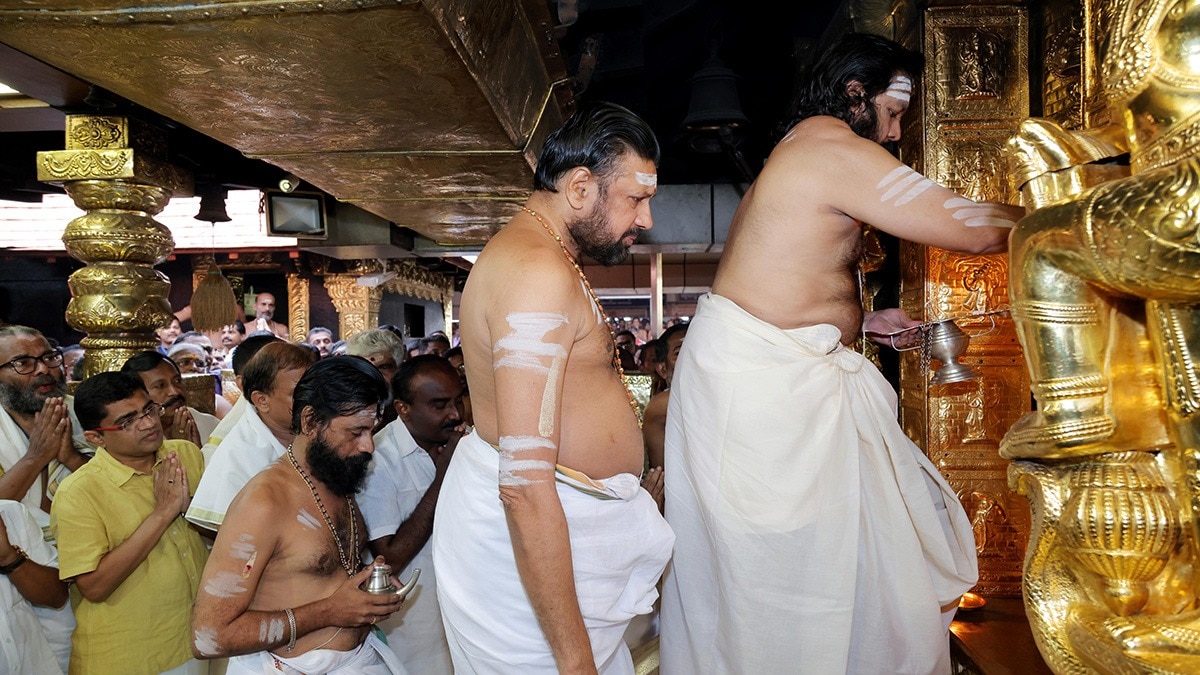
Even after winning three assembly seats, Kerala's BJP is grappling with a Rs 12 crore election fund scandal and a heated debate over Sabarimala tantri rights. Rajeev Chandrasekhar's moves and RSS warnings have deepened internal fractures.
Key Takeaways (मुख्य बिंदु)
- The Kerala BJP faces a Rs 12 crore election fund misappropriation investigation.
- Party leaders clash over the hereditary tantri rights of the Sabarimala Temple.
- The RSS warns that internal discord could damage the party’s long‑term prospects.
Kerala’s BJP recently celebrated a modest victory by securing three assembly seats, but the triumph is shadowed by a brewing internal crisis. State chief Rajeev Chandrasekhar has dismissed three senior functionaries— a state secretary, a committee member and a zonal secretary— over alleged misuse of election funds, estimated at around Rs 12 crore. An internal audit has been ordered to verify the authenticity of invoices and fund transfers made during the campaign.
Simultaneously, party vice‑president K.S. Radhakrishnan demanded that the Thazhamon family, hereditary tantris of the Sabarimala Temple, surrender their ritual authority. He cited the ongoing gold‑loot case in which the current tantri, Kandararu Rajeevaru, was named an accused and arrested, arguing that the family’s continued control undermines the party’s ethical stance. Radhakrishnan also referenced the 2006 arrest of former tantri Kandararu Mohanaru and the 2012 Ernakulam court verdict that cleared him while convicting eleven others.
Chandrasekhar rejected Radhakrishnan’s remarks, emphasizing that the appointment of a tantri is not a political issue and that individual opinions do not represent the party line. The response was echoed by senior RSS leaders in Kerala, who described the episode as an unnecessary politicisation of a religious matter.
Historical Background
The Sabarimala Temple, one of India’s most visited pilgrimage sites, has traditionally placed ritual authority in the hands of the Thazhamon Madom family since the 12th century. Past controversies, such as the 2006 black‑mail scandal involving tantri Kandararu Mohanaru, have highlighted the delicate interplay between religious custodianship and political influence. These precedents make any contemporary challenge to the tantri’s role especially sensitive.
Current Situation vs Desired Unity (Comparison Table)
| Aspect | Current Situation | Desired Unity |
|---|---|---|
| Leadership Approach | Fragmented, personal agendas dominate | Coordinated, collective strategy |
| Fund Management | Under audit for alleged misappropriation | Transparent, accountable spending |
| Religious Intervention | Tantri rights become a political flashpoint | Minimal political interference in religious affairs |
"Kerala’s BJP infighting not only jeopardises its electoral gains but also risks destabilising a state where religion and politics are tightly interwoven," says political analyst Dr. Anita Sharma.
Why This Matters (इसके मायने क्या हैं)
If the party’s internal rift persists, it could erode voter confidence and give opposition parties a strategic advantage. From an economic perspective, the election fund scandal may deter investors and slow down local development projects, as transparency becomes a central concern. BozokMedia analysis shows that such intra‑party conflicts often translate into reduced grassroots mobilisation and weaker performance at the polls.
On the religious front, the debate over tantri rights directly impacts the temple’s pilgrimage flow, a key driver of Kerala’s tourism revenue. Any prolonged uncertainty could diminish pilgrim numbers, affecting small businesses that rely on seasonal influxes. Thus, reconciling political ambition with religious stewardship is crucial for the state’s socio‑economic stability.
Frequently Asked Questions (अक्सर पूछे जाने वाले प्रश्न)
Question 1: Will all individuals implicated in the fund scam face legal action?
Answer: The audit is ongoing; legal consequences will follow if evidence confirms wrongdoing.
Question 2: How would removing tantri rights affect temple rituals?
Answer: It could lead to changes in ceremony protocols, but the state government has not yet issued a definitive decision.


