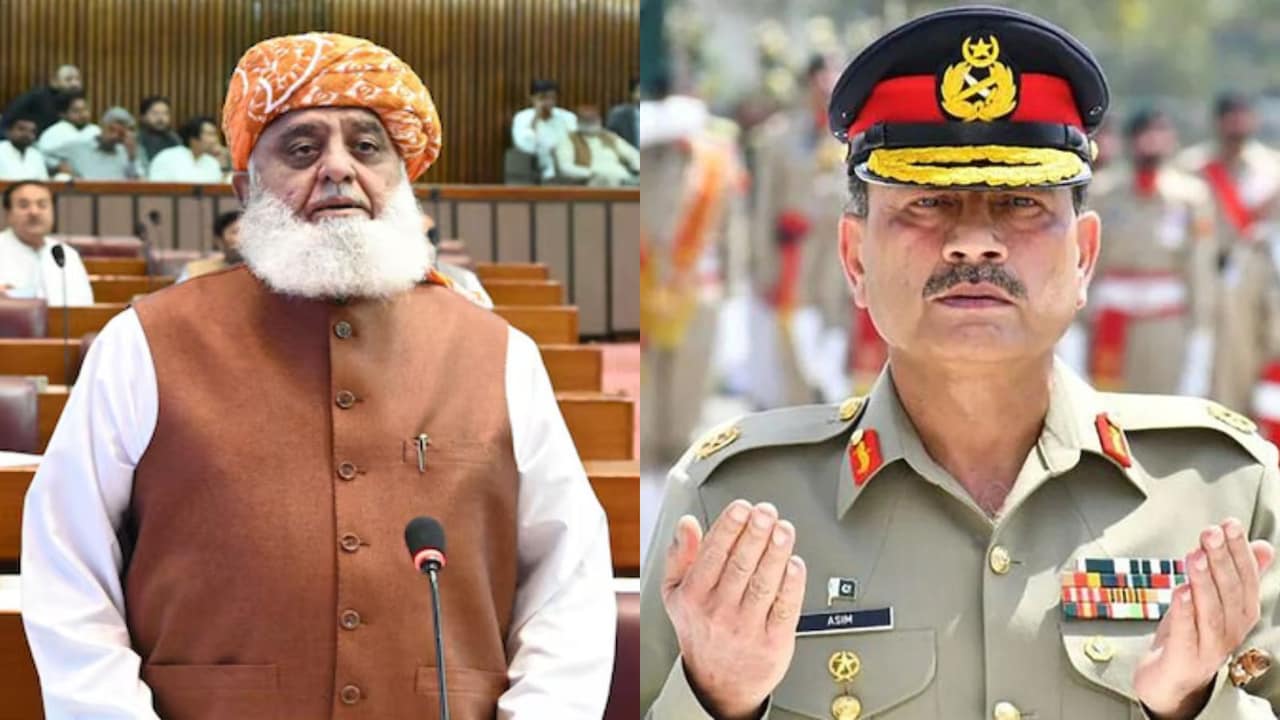
JUI-F leader Maulana Fazlur Rehman has launched a scathing attack on the Pakistani military, daring officials to shed their uniforms and enter the democratic fray.
Key Takeaways
- Maulana Fazlur Rehman accused the Pakistani military of undue interference in politics.
- He challenged military leadership to contest elections in civilian attire.
- The remarks highlight the deep-seated friction between the military establishment and political parties.
- The statement underscores the ongoing struggle for democratic supremacy in Pakistan.
The political landscape in Pakistan has witnessed a dramatic escalation in tensions following a provocative statement by Maulana Fazlur Rehman, the chief of Jamiat Ulema-e-Islam-F (JUI-F). Addressing a massive public rally on Sunday, the seasoned politician directly confronted the military establishment, signaling a significant rift in the country's power dynamics.
'Take Off Your Uniform': A Direct Challenge to the Establishment
In a moment of high political drama, Maulana Fazlur Rehman did not mince words while addressing the crowd. He issued a blunt challenge to the military leadership, including General Asim Munir, stating, "If you want to do politics, then take off your uniform and come. Take part in the election. You will get to know how many votes people in uniform receive." This rhetoric strikes at the heart of the perennial conflict regarding the military's role in Pakistan's governance.
The Shadow of Military Influence on Democracy
Pakistan has a long and complex history of military involvement in civilian administration. For decades, the 'establishment' has been accused of steering the country's political direction from behind the scenes. Rehman's comments reflect a growing sentiment among civilian leaders that the military's influence over electoral processes and policy-making undermines the sanctity of the democratic mandate and the sovereignty of the people.
Implications for Pakistan's Stability
This confrontation comes at a precarious time for Pakistan, as the nation grapples with severe economic volatility and internal political polarization. The direct challenge to the military's political footprint could trigger a broader confrontation between the civilian government and the powerful armed forces. As the rhetoric intensifies, the question remains whether Pakistan can find a path toward a stable, civilian-led democracy or if the cycle of institutional interference will continue to destabilize the nation.

