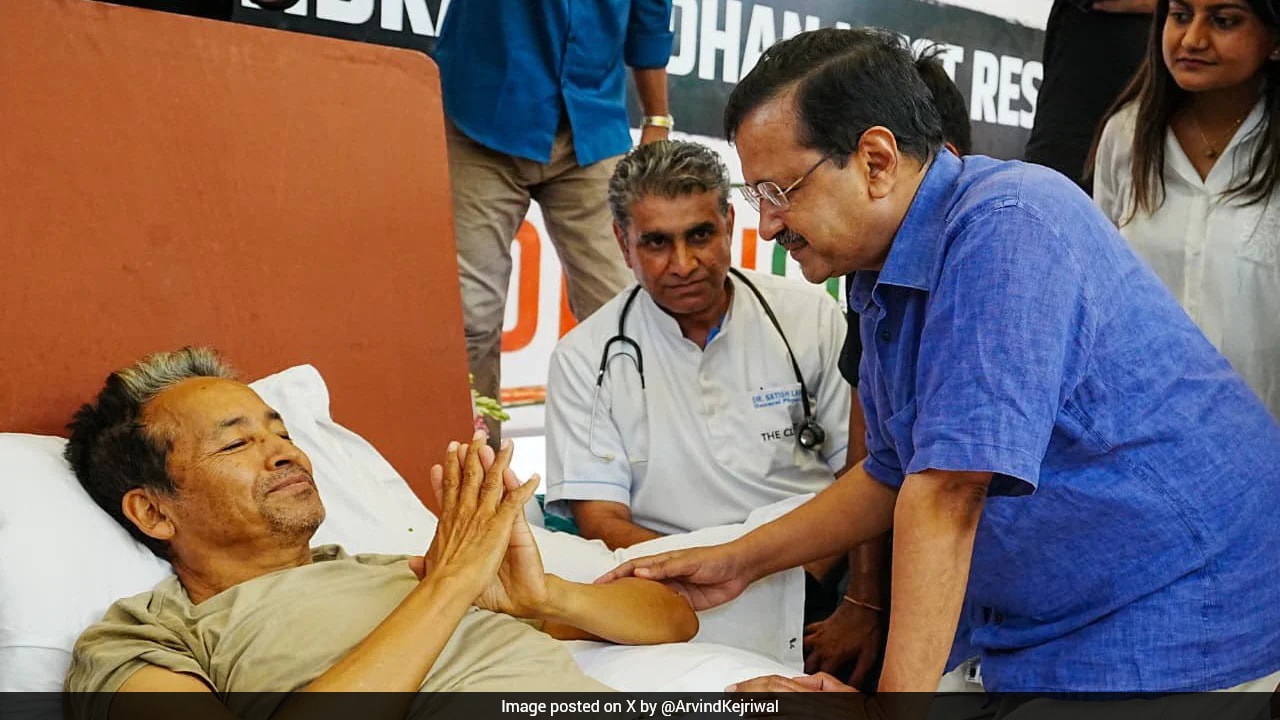
AAP leader Arvind Kejriwal expressed strong support for Sonam Wangchuk during his protest against NEET examination irregularities.
Key Takeaways
- Arvind Kejriwal visited Sonam Wangchuk at Jantar Mantar.
- Wangchuk is on an indefinite hunger strike protesting NEET irregularities.
- Kejriwal advocated for Wangchuk to hold the Education Ministry to ensure systemic reform.
In a significant political gesture, former Delhi Chief Minister Arvind Kejriwal has lauded the efforts of renowned innovator and environmentalist Sonam Wangchuk. During a visit to the protest site at Jantar Mantar, Kejriwal remarked that Wangchuk’s integrity and dedication make him an ideal candidate for the role of the country's Education Minister.
The Battle for Examination Integrity
The context of this meeting is deeply rooted in the growing unrest surrounding the NEET (National Eligibility cum Entrance Test). Sonam Wangchuk has been leading a high-profile, indefinite hunger strike to demand accountability regarding alleged irregularities, paper leaks, and systemic flaws in the medical entrance examinations. His protest highlights the vulnerability of millions of students who rely on these standardized tests for their professional futures.
Political Implications and Social Justice
Kejriwal's endorsement of Wangchuk comes at a time when the credibility of India's national testing agencies is under intense scrutiny. By suggesting that a grassroots activist like Wangchuk should lead the Ministry of Education, Kejriwal is highlighting a perceived gap between the current political leadership and the actual needs of the student community. This move is seen by many as an attempt to align political discourse with the cause of academic transparency.
A Systemic Crisis in Need of Reform
The recurring issues in national-level examinations have transcended mere administrative errors; they have evolved into a national crisis of trust. Experts argue that without radical structural reforms and the involvement of incorruptible figures, the sanctity of the Indian education system remains at risk. Wangchuk’s struggle serves as a catalyst for a broader conversation about ethics, technology, and fairness in the modern educational landscape.


