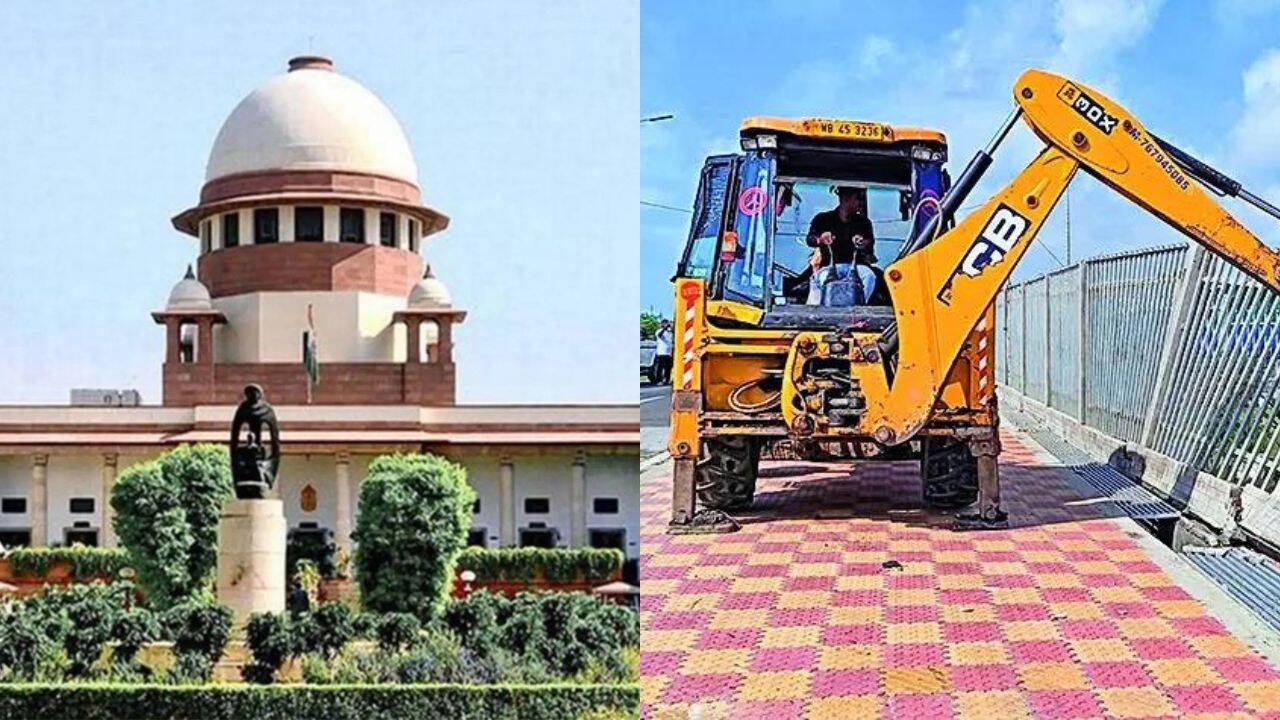
The Supreme Court reaffirmed that bulldozers may be used to clear illegal structures on public land, provided municipal procedures are strictly followed. Individual contempt petitions will now be heard by the respective High Courts, where fact‑finding missions will determine any arbitrariness.
Key Takeaways
- Bulldozers can be deployed only after full compliance with municipal law.
- Individual contempt petitions will be adjudicated by the appropriate High Courts.
- Fact‑finding will involve district judicial officers on the ground.
New Delhi – Two years after a landmark judgment on “bulldozer justice,” the Supreme Court today clarified that its order does not impose a blanket prohibition on using bulldozers to remove illegal constructions on public land. The clarification came from a bench comprising Chief Justice Surya Kant and Justices Joymalya Bagchi and V Mohana, who emphasized strict adherence to municipal procedures.
Legal Background
On 13 November 2024, the apex court issued a detailed directive aimed at curbing selective demolition practices. The bench warned against the practice of deploying bulldozers only against properties of accused individuals while ignoring similar illegal structures surrounding them. It mandated a comprehensive notice‑and‑hearing process, a 15‑day window for owners to respond, personal hearings, and a final order followed by a 15‑day appeal period.
New Clarification
During the July 2026 hearing, the Court observed, “There are rampant illegal constructions and encroachments in public places. That is not the area where SC has commented on use of bulldozers.” In other words, the Court’s concern was not with the tool itself but with the selective, discriminatory manner of its deployment.
Handling of Contempt Petitions
The Court refused to entertain individual contempt petitions alleging demolition of houses, mosques or other structures without due process. Instead, it directed that such petitions be transferred to the jurisdictional High Courts, where fact‑finding exercises—supported by district judicial officers—will ascertain whether authorities acted arbitrarily.
Implications for Governance
This clarification sends a clear signal to municipal bodies and development agencies: bulldozers remain a legitimate instrument for enforcing land‑use regulations, but only after the procedural safeguards outlined in the 2024 judgment are meticulously observed. Failure to do so may invite scrutiny from High Courts, potentially leading to stricter oversight of demolition drives.
Legal experts anticipate that the decision will reinforce the rule of law by ensuring that demolition actions are transparent, non‑discriminatory, and anchored in statutory mandates. It also provides a procedural roadmap for future demolition initiatives, balancing the need for swift action against illegal encroachments with the protection of citizens’ constitutional rights.