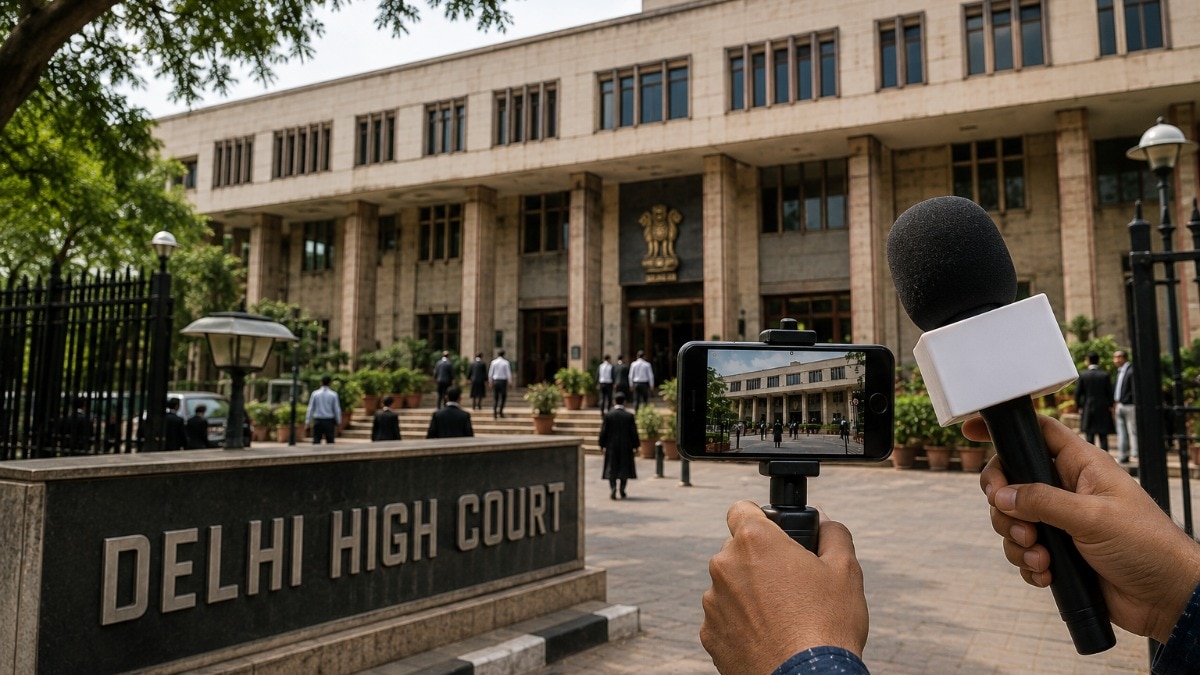
The Delhi High Court has called for a legal framework to regulate media, warning against 'self-styled reporters' who use digital platforms to spread unverified content.
The Delhi High Court has raised a significant alarm regarding the rise of unregulated digital journalism. Observing that virtually anyone equipped with a mobile phone and a microphone can now claim to be a 'reporter' without any professional training or ethical grounding, the court has urged the legislature to establish a robust legal framework for media regulation.
The remarks were made by Justice Girish Kathpalia during a bail hearing involving two individuals accused of assaulting freelance YouTube reporters in Northeast Delhi's Seemapuri in 2025. The court noted that while press freedom is a fundamental pillar of democracy, it cannot serve as a shield for irresponsible journalism, intimidation, or the dissemination of content that threatens public order.
Why This Matters (इसके मायने क्या हैं)
BozokMedia analysis shows that the democratization of content creation has led to a dangerous vacuum in accountability. Unlike traditional newsrooms that operate under editorial oversight, individual digital creators often prioritize 'clicks' and 'sensationalism' over factual accuracy. This shift poses a direct threat to social cohesion, as unverified allegations can trigger communal disharmony or widespread public unrest almost instantaneously.
For the common citizen, this means the line between credible news and propaganda is becoming increasingly blurred. The legal challenge lies in crafting a regulatory model that ensures professional accountability and ethical standards without infringing upon the constitutional right to freedom of speech. Without such a framework, the digital landscape risks becoming a breeding ground for misinformation that can destabilize the very fabric of society.
"The power to shape public opinion carries an implicit duty to exercise restraint, fairness, and responsibility."
The court specifically flagged selective reporting and the publication of unverified claims as practices that could deepen social divisions. The High Court emphasized that the time has come for lawmakers to balance the preservation of press freedom with the necessity of upholding the rule of law and the rights of citizens.
Historical Background
Historically, journalism in India has been governed by various self-regulatory bodies and statutory frameworks, such as the Press Council of India (PCI) for print media. However, the explosion of the internet and social media platforms has outpaced existing laws. The transition from 'Gatekeeper Journalism' (where editors vetted news) to 'Gatekeeper-less Journalism' (where anyone can broadcast) has created a regulatory gap. While traditional media adheres to established codes of conduct, the digital sphere remains largely a 'Wild West,' making the High Court's observations particularly timely in the context of modern democratic challenges.
| Aspect | Traditional Journalism | Self-Styled Digital Reporting |
|---|---|---|
| Training & Ethics | Professional training & strict codes | Often lacking formal training |
| Accountability | Institutional & legal oversight | Minimal to none |
| Primary Driver | Public interest & facts | Sensationalism & engagement (views) |
Frequently Asked Questions (अ अक्सर पूछे जाने वाले प्रश्न)
Question 1: Why is the Delhi High Court concerned about 'self-styled' reporters?
Answer: Because they often lack journalistic training and accountability, leading to sensationalism and unverified news.
Question 2: Does this mean the government will control the news?
Answer: The court is seeking a 'regulatory framework' to ensure accountability and ethics, not necessarily to stifle the freedom of the press.


