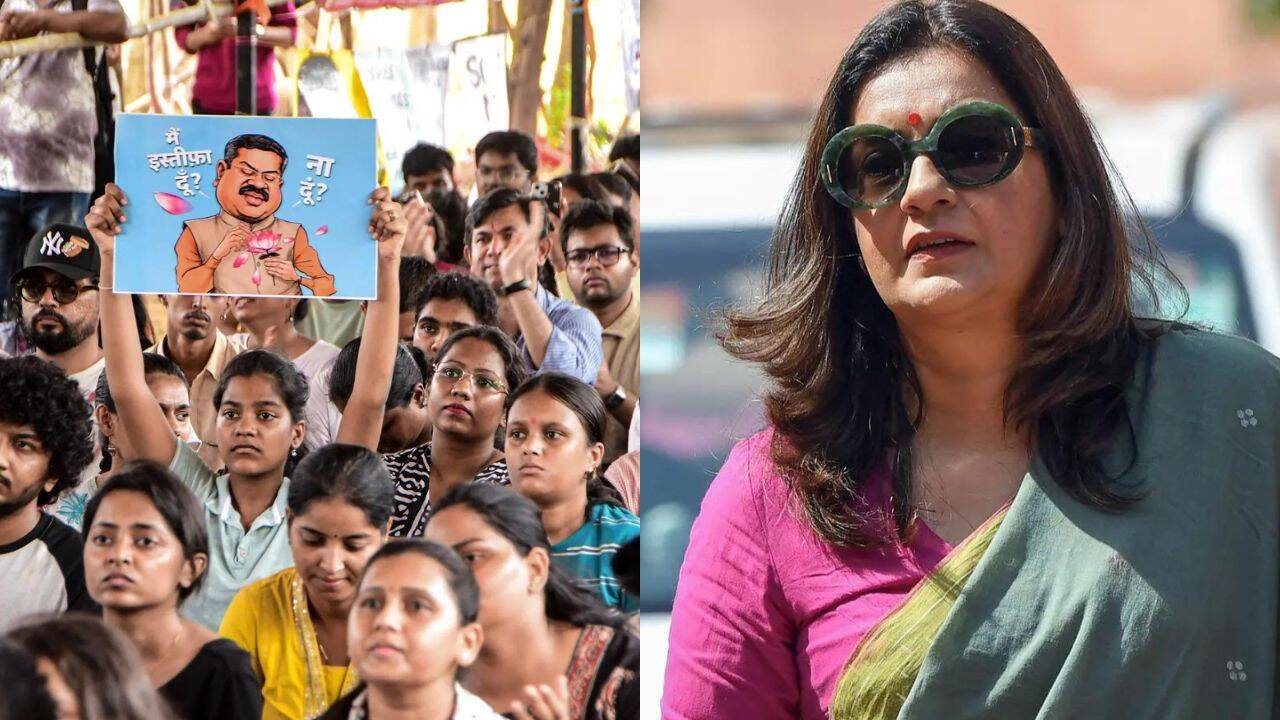
Shiv Sena (UBT) leader Priyanka Chaturvedi has demanded the resignation of Union Education Minister Dharmendra Pradhan amid escalating student protests over the NEET-UG paper leak scandal.
Key Takeaways
- Shiv Sena (UBT) leader Priyanka Chaturvedi demands the removal of the Education Minister.
- The demand follows intense student protests regarding the NEET-UG paper leak.
- Chaturvedi emphasizes accountability over political credit.
- Activist Sonam Wangchuk's hunger strike adds momentum to the movement.
The political landscape in New Delhi is witnessing intense friction as Shiv Sena (UBT) leader Priyanka Chaturvedi has publicly urged the Central Government to remove the Union Education Minister. This demand comes at a critical juncture when the nation is reeling from the fallout of the NEET-UG paper leak controversy, which has ignited widespread outrage among the student community.
Accountability Over Political Credit
In a strongly worded post on 'X', Chaturvedi questioned the government's hesitation to take decisive action. She argued that removing the minister would be the "right thing" for the administration to do, noting that the government has a precedent of replacing ministers when required. Addressing the potential fear of losing political narrative, she stated, "If the worry is about political credit, then blocking accountability... won't help the government anyway." She further emphasized that the credit for the movement belongs solely to the students, who are fighting for the integrity of the nation's future.
The Role of Activism and Public Unrest
The controversy has gained significant traction due to the high-profile hunger strike by renowned activist Sonam Wangchuk at Jantar Mantar. Wangchuk is protesting in support of the CJP, demanding the immediate resignation of Union Education Minister Dharmendra Pradhan. The intersection of student activism and seasoned political leaders like Chaturvedi highlights the depth of the crisis surrounding the National Testing Agency (NTA) and the sanctity of competitive examinations in India.
Broader Implications for India's Education System
This crisis is not merely a political skirmish; it is a fundamental challenge to the credibility of India's academic infrastructure. As millions of aspirants rely on these examinations for their career trajectories, any breach in security leads to a massive loss of public trust. The growing discontent suggests that unless the Centre implements systemic reforms to ensure exam transparency, the political and social repercussions could be long-lasting and profound.


