Sonam Wangchuk’s indefinite hunger strike has transformed the fledgling Cockroach Janata Party at Jantar Mantar into a unified, high‑visibility movement. His personal resolve gave the protest a clear focal point and sparked fresh calls for accountability across the nation.
Key Takeaways
- Sonam Wangchuk has been on a hunger strike for 19 days
- His presence united the scattered Cockroach Janata Party protesters
- The movement demands resignation of Education Minister Dharmendra Pradhan over alleged irregularities
Jantar Mantar, one of New Delhi’s most iconic public spaces, became the stage for an unexpected transformation this June. On June 6, the Cockroach Janata Party (CJP) launched its first offline protest, but slogans floated without direction and participants formed loose circles. When 59‑year‑old Ladakh activist and educator Sonam Wangchuk arrived, every eye instantly shifted to him.
Wangchuk’s arrival acted like a magnetic pull, drawing the previously scattered crowd toward a single point. Cameras that had been idle sprang to life, and the protest gained a recognizable centre. While the immediate grievance centred on Education Minister Dharmendra Pradhan’s alleged misconduct, the movement also sprang from outrage after Chief Justice of India Surya Kant labeled unemployed youth as “cockroaches” and “parasites,” inspiring the satirical party name.
Historical Background
Jantar Mantar, originally built in 1819 as an astronomical observatory by Maharaja Ranjit Singh, has evolved into a democratic arena for dissent. Over the past decades it has hosted protests ranging from anti‑corruption rallies to climate strikes. Sonam Wangchuk, known for his 2019 “Himalayan Model” of school reform in Ladakh, has long championed educational innovation, making his involvement a natural extension of his lifelong advocacy.
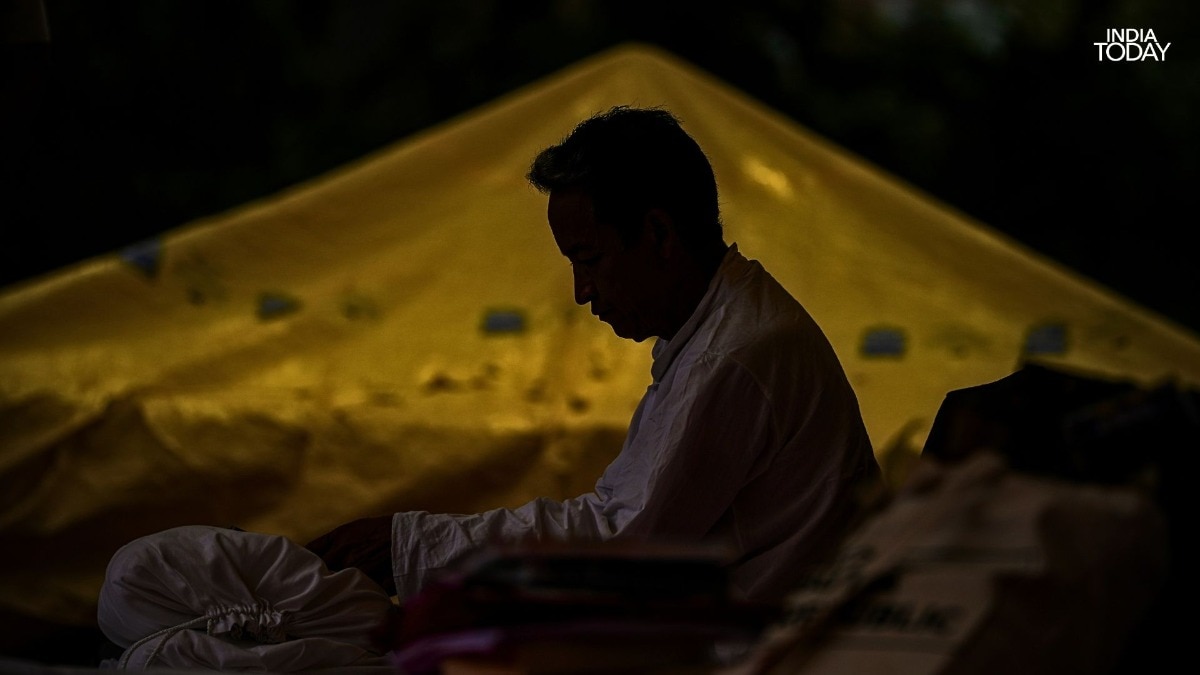
Choosing an indefinite hunger strike, Wangchuk confined himself to a mattress, two fans, an iPad, and a handful of volunteers. Despite repeated pleas from politicians, actors, and authors to end the fast, he replied, “I’m not in great shape, but please join me on July 20 for a peaceful march to Parliament instead of asking me to eat.” This insistence turned the protest’s identity from a party‑based rally into a personal symbol of sacrifice.
Why This Matters (इसके मायने क्या हैं)
According to BozokMedia analysis, Wangchuk’s hunger strike has reignited a nationwide conversation on governmental accountability, especially within the education sector. When an individual risks personal health to highlight systemic flaws, it galvanizes citizens to demand transparency, potentially reshaping policy priorities and influencing future legislative agendas.
Economically, greater transparency in education funding can boost investor confidence in ed‑tech startups and private institutions, while socially it empowers youth to believe that non‑violent protest can effect real change. The ripple effect may see stronger civil society participation across other sectors as well.
"A hunger strike is not merely a personal protest; it becomes a catalyst for structural reform when it captures the public imagination," says political scientist Dr. Ayesha Khan.
Frequently Asked Questions (अक्सर पूछे जाने वाले प्रश्न)
Q: When will Sonam Wangchuk end his hunger strike?
A: He has not set a specific end date; his focus remains on prompting the minister’s resignation and broader educational reforms.
Q: What is the primary goal of the Cockroach Janata Party?
A: The party seeks to expose corruption in the education system, demand accountability from officials, and empower the youth against systemic neglect.