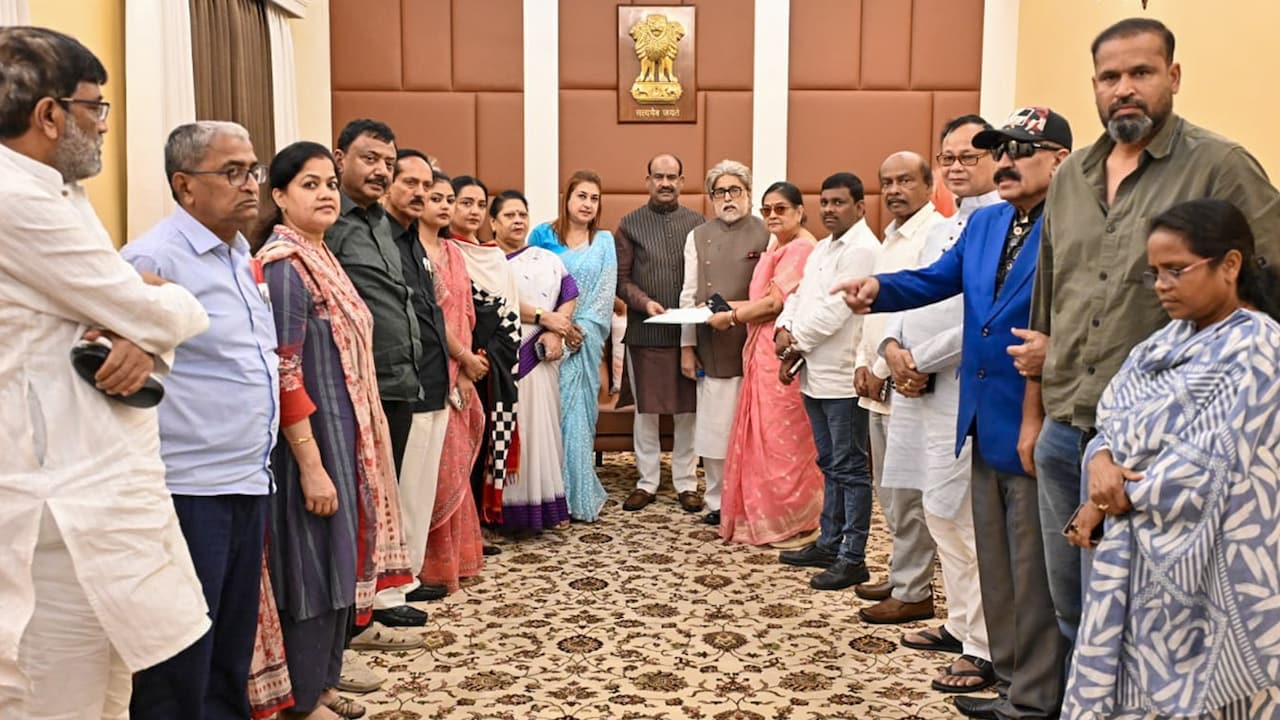
The Lok Sabha Secretariat's decision to allocate separate seating for 20 rebel MPs has triggered a massive political controversy. Parliamentary Affairs Minister Kiren Rijiju's correspondence referring to the 'NCPI' group has added fuel to the fire, signaling official recognition of the split.
Key Takeaways
- The Lok Sabha Secretariat has designated separate seating arrangements for 20 rebel MPs.
- Union Minister Kiren Rijiju's official letter explicitly references the breakaway 'NCPI' faction.
- The move has triggered a fierce political debate over anti-defection laws and parliamentary recognition.
A major political controversy has erupted following the Lok Sabha Secretariat's decision to allocate separate seating for 20 rebel Members of Parliament. This administrative move is being viewed as a formal, albeit tacit, acknowledgment of a split within the parent party, sending shockwaves through the opposition ranks and altering the dynamics of the lower house of Parliament.
The controversy deepened when Union Parliamentary Affairs Minister Kiren Rijiju addressed a formal communication to TMC leader Sudip Bandyopadhyay, explicitly referring to the leader of the 'NCPI' (Nationalist Congress Party of India/rebel faction) in the Lok Sabha. Opposition leaders have quickly termed this as an orchestrational tactic by the ruling coalition to legitimize the breakaway group without undergoing due constitutional scrutiny.
Historical Background
Political defections and party splits have a long and contentious history in Indian politics. To curb unethical floor-crossing, the Tenth Schedule of the Constitution (commonly known as the Anti-Defection Law) was enacted. Under these provisions, a split is only recognized as legally valid if at least two-thirds of the legislative party's strength breaks away to merge with another party or form a new faction. The administrative allocation of separate seats before a formal ruling by the Speaker has historically been a grey area, often leading to intense legal battles.
| Feature | Original Trinamool Congress (TMC) | Rebel Faction (NCPI) |
|---|---|---|
| MP Strength | Majority Parliamentary Group | 20 Breakaway MPs |
| Seating Status | Official Opposition Bench | Separate Seating Allocated |
| Government Stance | Treated as Opposition Adversary | Symmetric Administrative Recognition |
Why This Matters (इसके मायने क्या हैं)
BozokMedia analysis shows that this development extends far beyond mere seating arrangements; it represents a tactical maneuver to fragment the opposition block in the lower house. By recognizing the NCPI faction administratively, the ruling coalition effectively dilutes the voting power and legislative leverage of the parent party, weakening the collective bargaining power of the opposition.
Furthermore, this decision sets a highly debatable precedent for parliamentary discipline. If administrative recognition is granted to breakaway groups prior to formal adjudication under the Tenth Schedule, it could undermine the authority of party whips and encourage internal rebellions across various regional parties, threatening the stability of federal party structures.
"The administrative allocation of separate seats often serves as the first crucial step toward legitimizing a political split, bypassing the immediate rigors of the Anti-Defection Law."
Frequently Asked Questions (अक्सर पूछे जाने वाले प्रश्न)
1. What is the significance of separate seating in the Lok Sabha?
Separate seating physically and administratively isolates a faction from its parent party's seating block, allowing them to function independently of the main party's immediate physical oversight inside the chamber.
2. Does separate seating protect rebel MPs from the Anti-Defection Law?
No, seating arrangement is purely an administrative decision made by the Secretariat. Immunity from disqualification depends entirely on constitutional proceedings conducted by the Speaker under the Tenth Schedule.