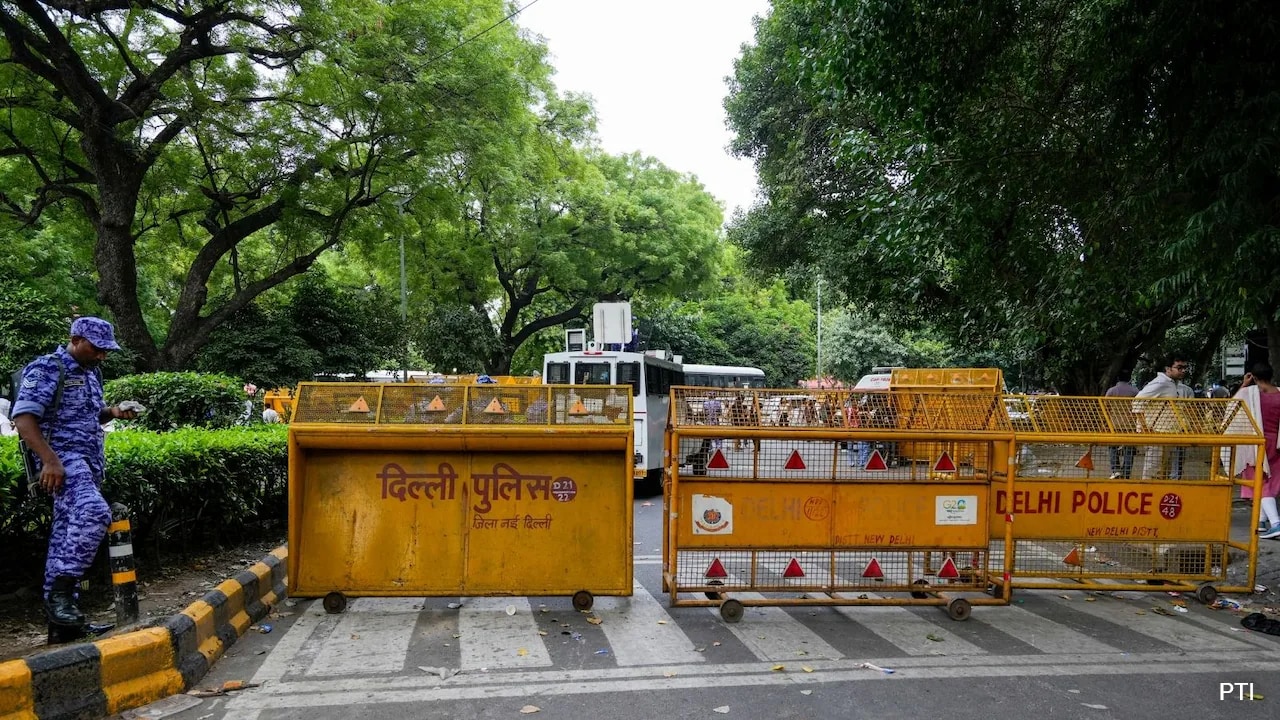
New Delhi district has imposed a ban on large assemblies as the CJP plans a protest on the opening day of the parliamentary monsoon session. Police have deployed extra security forces to curb potential unrest.
Key Takeaways (मुख्य बिंदु)
- Delhi bans large public gatherings
- CJP plans protest before monsoon session
- Police deploy additional security units
The administration of New Delhi has prohibited large public gatherings to pre‑empt the Central Justice Party's (CJP) planned protest march. The move comes as the Parliament’s monsoon session is set to commence this month, a platform the opposition intends to use for a high‑visibility demonstration.
Delhi Police, alongside the additional deployment of rapid‑response teams, radar‑enabled drones, and mobile watch towers, have bolstered security measures. Officials state that these steps are essential to mitigate crowd‑related risks, such as stampedes, clashes, and broader public safety concerns.
Historical Background: Restrictions on mass protests in Delhi are not new. In 2019, large-scale demonstrations were curtailed following the anti‑CAA rallies, and in 2020, the farmers' movement faced similar constraints. Courts have historically upheld such bans when public order was at stake, providing a legal precedent for today’s decision.
| Aspect | Before Ban | After Ban |
|---|---|---|
| Assembly Permission | Allowed up to 5,000 participants | Any gathering exceeding 5,000 prohibited |
| Police Deployment | Standard patrols | Enhanced with drones and mobile watch towers |
| Legal Action | Warnings and fines | Immediate dispersal, fines, possible arrest |
"Balancing security with democratic freedoms is now the chief challenge for policymakers," says security analyst Prof. Ajay Singh.
Why This Matters (इसके मायने क्या हैं)
BozokMedia analysis shows that the ban will influence not only political dynamics but also the scope of civil expression for ordinary citizens. If perceived as overly stringent, opposition parties may shift to digital platforms, reshaping protest strategies.
From an economic standpoint, large rallies often disrupt local commerce, increase security expenditures, and risk property damage. While the ban may reduce these costs, it could also spark criticism from civil‑society groups defending free assembly rights.
Frequently Asked Questions (अक्सर पूछे जाने वाले प्रश्न)
Q1: Does the ban apply to all types of gatherings?
A: Yes, any public assembly exceeding 5,000 participants—political, religious, or cultural—is prohibited.
Q2: What happens if a group violates the ban?
A: Police will intervene immediately, dispersing the crowd, imposing fines, and potentially initiating criminal proceedings.