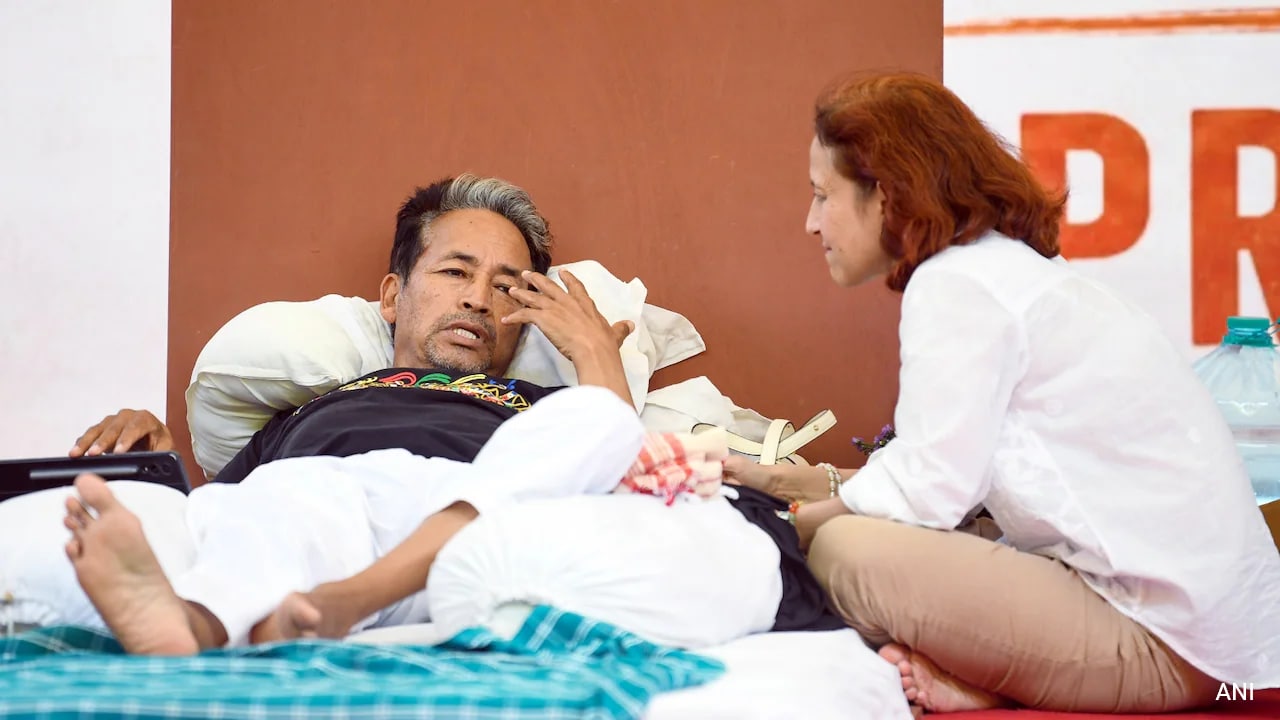
Sonam Wangchuk’s wife says she has lost faith in Safdarjung detention, labeling it illegal, and has pleaded to move him to a private medical facility.
Key Takeaways (मुख्य बिंदु)
- Sonam Wangchuk’s wife calls Safdarjung detention illegal
- She is seeking transfer to a private medical facility
- The case highlights political instability and human‑rights concerns
Former Delhi leader Sonam Wangchuk remains confined in the historic Safdarjung Jail. His wife recently announced that she has “lost faith” in the detention, describing it as illegal, and has formally requested his relocation to a private medical facility. The statement has ignited a nationwide debate over due process, political interference, and the rights of detainees.
Safdarjung Jail, built in the 1940s, is one of India’s oldest prisons and has housed several high‑profile political figures. Over the decades, the facility has faced scrutiny from international human‑rights groups for its handling of political prisoners, making the current controversy resonate beyond a single case.
Under Indian law, a detainee with serious health issues may be moved to a private hospital, but such transfers require a court order and a medical board’s recommendation—procedures that are often delayed or circumvented by political pressure.
Why This Matters (इसके मायने क्या हैं)
The implications are two‑fold. First, it tests the transparency and independence of the judiciary; a perceived lack of fairness can erode public confidence in governmental institutions. Second, granting the transfer could set a precedent for other political leaders to leverage health concerns as a tactical tool, potentially reshaping future policy debates.
BozokMedia analysis shows that this episode reflects a broader trend where legal mechanisms are being used to navigate political battles, turning personal health issues into strategic leverage. Such dynamics could redefine how opposition figures negotiate with the state.
"Balancing security with adequate medical care requires independent judicial oversight," says a constitutional law expert.
Below is a comparative overview of the current Safdarjung situation versus the proposed private facility:
| Aspect | Safdarjung Jail | Proposed Private Facility |
|---|---|---|
| Management | Government‑run | Private healthcare institution |
| Medical Care | Basic medical services | Advanced ICU and specialized treatment |
| Legal Process | Requires extensive judicial oversight | Requires court order for release |
| Security | High‑security protocols | Lower security, higher personal care |
Frequently Asked Questions (अक्सर पूछे जाने वाले प्रश्न)
Q1: Is the wife’s request legally valid?
A: Yes, if medical evidence demonstrates a serious health risk, a court can authorize transfer to a private facility.
Q2: What could be the political impact of this case?
A: It could shift the balance of power between the government and opposition, prompting broader calls for reform in detention policies.