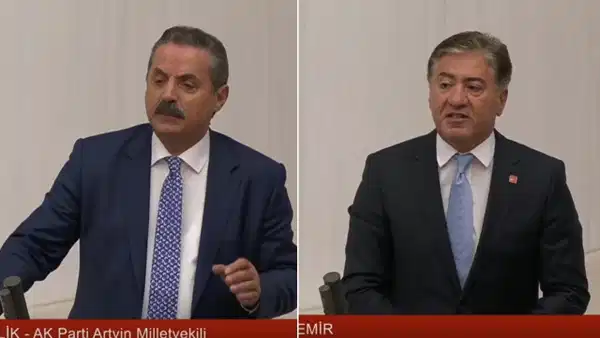
A heated debate erupted in the Turkish Grand National Assembly (TBMM) as the opposition CHP slammed the ruling AKP for the collapse of the social security system and rising pension woes.
Key Takeaways
- A fierce confrontation occurred in the TBMM between the AKP and CHP regarding pension reforms.
- CHP's Murat Emir accused the AKP of creating a 'collapsed system' that fails retirees.
- AKP's Faruk Çelik defended the 2008 social security reforms, calling them necessary.
- The debate highlighted the growing gap between inflation and actual pension payouts in Turkey.
The Turkish Grand National Assembly (TBMM) witnessed a high-voltage political showdown this week, centered on the contentious issue of social security and retirement pensions. The clash between the ruling AKP (Justice and Development Party) and the main opposition CHP (Republican People's Party) has brought the nation's pension crisis to the forefront of the political agenda.
During the session, AKP Deputy Faruk Çelik stood firm in defense of the 2008 social security reforms, arguing that the framework was fundamentally sound. Çelik contended that the current grievances stem from external factors like the COVID-19 pandemic and regional conflicts, suggesting that the solution lies in passing an 'Adjustment Law' (Intibak Yasası) to bridge the gaps for those retiring after the year 2000.
"You built this system, and now you claim it has failed; this is a direct evasion of political responsibility." - Murat Emir, CHP Group Deputy Chairman.
Why This Matters (इसके मायने क्या हैं)
BozokMedia analysis shows that this legislative friction is a barometer for the broader socio-economic stability of Turkey. For the average citizen, the pension system is not just a policy matter but a survival mechanism. As inflation erodes purchasing power, the failure to provide adequate pension adjustments can trigger widespread social unrest and deepen the economic divide.
Furthermore, the political tug-of-war over the 2008 reforms reflects a deeper struggle regarding Turkey's long-term fiscal health. If the government cannot reconcile the needs of the aging population with the state budget, the resulting instability could impact investor confidence and the overall economic trajectory of the country.
Historical Background
The social security landscape in Turkey underwent a massive transformation with the enactment of Law No. 5510 in 2008. This reform aimed to consolidate various social security institutions into a single, streamlined system. While intended to ensure long-term sustainability, it has been heavily criticized by labor unions and opposition parties for reducing pension calculation rates, leading to significantly lower monthly payments for many newer retirees compared to their predecessors.
| Feature | AKP Stance | CHP Stance |
|---|---|---|
| 2008 Reform | A necessary structural upgrade | A move that depleted retiree wealth |
| Primary Solution | Implementation of Adjustment Law | Systemic overhaul and accountability |
| Cause of Crisis | Global crises & old regulations | Government's failed implementation |
Frequently Asked Questions (अक्सर पूछे जाने वाले प्रश्न)
1. What is the 'Adjustment Law' mentioned in the debate?
It is a proposed legal mechanism designed to equalize the pension calculation methods between those who retired before 2000 and those who retired after.
2. Why is the 2008 reform controversial?
Because it changed the way pension amounts are calculated, which many argue led to lower monthly incomes for a large portion of the workforce.