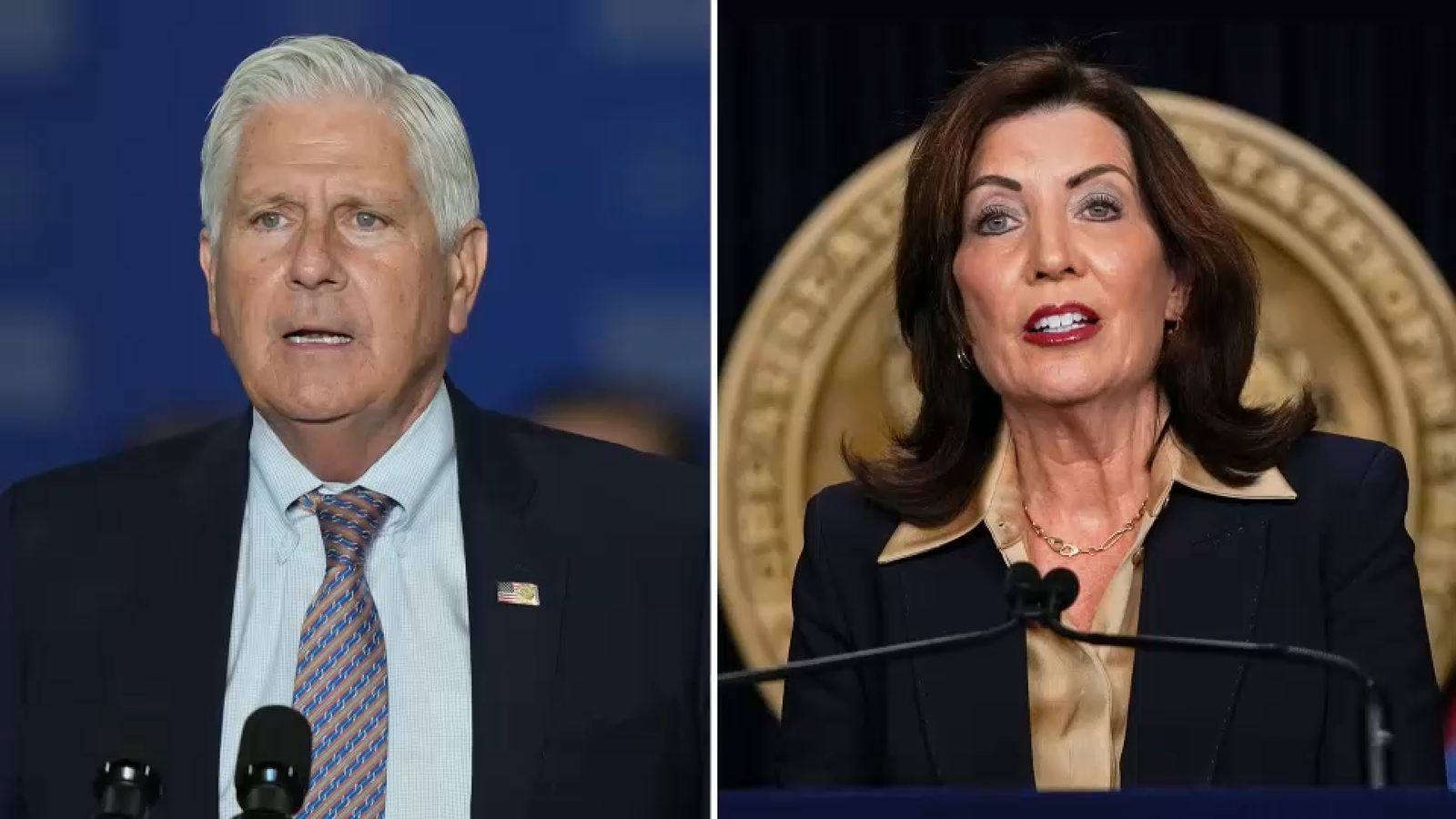
Republican candidate Bruce Blakeman is under fire for using AI-generated political ads, a move Democratic Governor Kathy Hochul has slammed as 'straight-up lying.'
Key Takeaways
- Republican Bruce Blakeman is defending the use of AI-generated ads as 'political satire.'
- Governor Kathy Hochul's campaign has labeled the ads as deceptive and dishonest.
- The use of AI in politics offers a cost-effective tool but raises massive ethical concerns.
- Voters remain divided on whether AI ads are modern campaigning or outright trickery.
The race for the New York governorship has entered a high-tech battlefield. Nassau County Executive Bruce Blakeman is facing intense backlash after deploying AI-generated advertisements targeting his opponent, Democratic Governor Kathy Hochul. While Blakeman defends the tactic as a necessary tool for modern campaigning, the Hochul camp has hit back, calling it a blatant attempt to deceive voters.
Blakeman has characterized the AI-driven content as 'political satire,' drawing parallels to late-night comedy sketches. He argues that in a massive state like New York, candidates must utilize every available resource to reach the electorate. However, critics argue that using AI to mimic a candidate's voice and appearance crosses a dangerous line into false advertising.
Why This Matters
BozokMedia analysis shows that the integration of Artificial Intelligence in political messaging represents a paradigm shift in electioneering. While AI provides a low-cost alternative for candidates with smaller budgets, it simultaneously threatens the sanctity of informed consent, making it increasingly difficult for voters to distinguish between authentic footage and synthesized fabrications.
The Supreme Court has historically protected political speech, but the era of AI-generated hyper-realism poses an unprecedented challenge to traditional legal frameworks.
The controversy centers on ads that use AI to depict Governor Hochul criticizing her own policies, such as bail reform. Hochul's campaign has responded with biting sarcasm, referring to her opponent as 'Bruce Fakeman' and asserting that they do not need AI to highlight his real-world record on taxes and crime.
Historical Background
Political satire and negative campaigning have been staples of American politics since the era of George Washington. However, the transition from caricature-based satire to AI-generated deepfakes marks a significant technological evolution that tests the limits of free speech and truth in the digital age.
Frequently Asked Questions
Question 1: Is it illegal to use AI in political ads?
Answer: Currently, much of this falls under protected political speech and satire, though regulators are increasingly looking at transparency requirements.
Question 2: How can voters spot AI-generated ads?
Answer: Look for unnatural movements, glitches in facial expressions, or audio that sounds slightly robotic or lacks natural cadence.