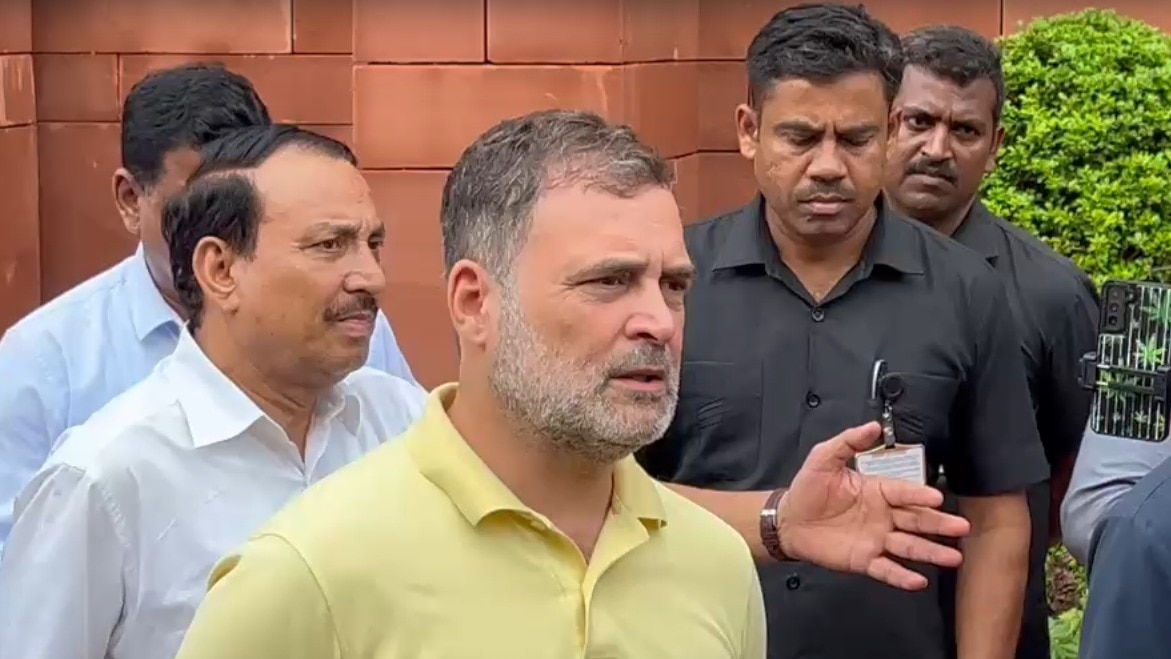
Urban Development Minister Yatindra Siddaramaiah clarified that Karnataka's decision to release water to Tamil Nadu is a legal obligation guided by CWMA instructions, not a discretionary choice.
Key Takeaways
- Water release to Tamil Nadu is strictly based on CWMA legal mandates.
- The government is balancing water release with future drinking water requirements.
- Chief Minister D.K. Shivakumar is acting on expert advice from legal and agricultural sectors.
Belagavi: Urban Development Minister Yatindra Siddaramaiah addressed growing concerns on Tuesday regarding the release of water from Karnataka's reservoirs. Responding to criticisms from various organizations, the Minister stated that the release of water to Tamil Nadu is being conducted strictly under the directions of the Cauvery Water Management Authority (CWMA).
The Minister emphasized that there is no room for individual or political decision-making in this matter. "It is a legal requirement. We have to release water to the lower riparian States, based on the formula worked out by various agencies like the CWMA," Siddaramaiah remarked during a press briefing.
Why This Matters
BozokMedia analysis shows that water sharing between Karnataka and Tamil Nadu remains one of India's most sensitive interstate issues. During years of low rainfall, the tension between meeting legal obligations to downstream states and ensuring domestic water security for the home state reaches a boiling point.
Managing interstate water rights requires a delicate balance between legal compliance and the immediate survival needs of the local population.
Addressing fears of a local shortage, the Minister noted that while reservoir levels are low due to insufficient rainfall, the government has meticulously calculated the water needed for drinking purposes in the coming months. He assured that Chief Minister D.K. Shivakumar is making timely decisions guided by experts in law, agriculture, and water resources to prevent any scarcity.
Historical Background
The Cauvery dispute has been a long-standing legal battle involving Karnataka, Tamil Nadu, Kerala, and Puducherry. The formation of the CWMA was a significant step toward implementing the Supreme Court's verdict on water sharing, aiming to provide a structured framework for distribution.
Frequently Asked Questions
1. Why is Karnataka releasing water despite low rainfall?
The release is a legal obligation mandated by the CWMA formula for lower riparian states.
2. Will there be a drinking water shortage in Karnataka?
The Minister assured that drinking water needs for future months have been calculated to prevent any scarcity.