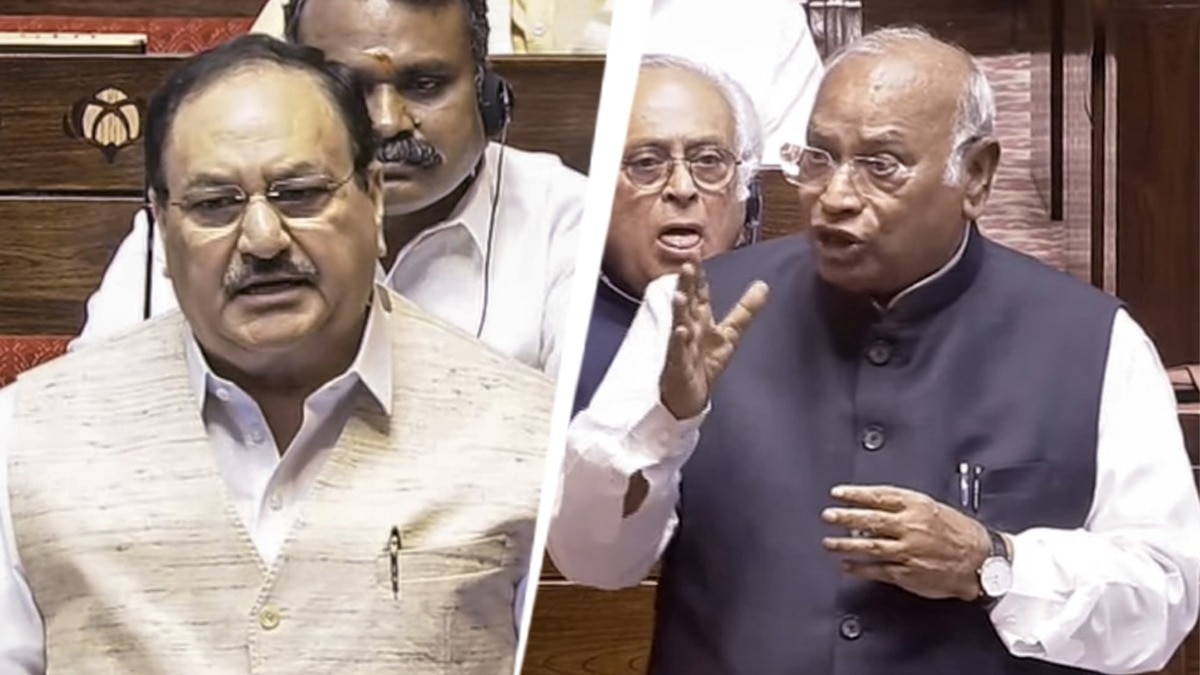
During the monsoon session of the Rajya Sabha, Congress leader Mallikarjun Kharge and BJP MP JP Nadda engaged in a fierce exchange over the inclusion of Manusmriti references in the RSS‑influenced syllabus. Kharge condemned the controversial content, while Nadda dismissed his claims, sparking a tumultuous debate in the upper house.
Key Takeaways
- Kharge challenges RSS‑linked syllabus content
- Nadda rejects Kharge's allegations as unfounded
- Parliamentary security and decorum come under scrutiny
On July 30, 2026, the Rajya Sabha monsoon session in New Delhi turned contentious when Congress president Mallikarjun Kharge raised serious objections to the syllabus allegedly drafted under RSS influence. He argued that the revised curriculum contains demeaning provisions against Shudras, demanding immediate removal.
In response, BJP MP JP Nadda vehemently countered, labeling Kharge’s statements as fact‑free and urging the verification of the original Manusmriti text. Nadda insisted, “Bring the authentic pre‑British era manuscript,” warning that such remarks fuel communal unrest.
Following Kharge’s remarks, the house erupted in disorder, with members chanting “No more mob violence” and demanding an apology from the treasury bench. The Speaker ordered the expungement of Kharge’s comments, further escalating tensions.
Why This Matters
BozokMedia analysis shows that the debate reflects deeper ideological divides over educational curricula and the reinterpretation of ancient texts, which could influence future policy and communal harmony in India.
Constitutional scholar Dr. Raghav Sharma says, "Any attempt to rewrite historical texts for political ends threatens the secular ethos of the nation."
Frequently Asked Questions
What are the original Manusmriti texts? The original Manusmriti, composed in the 2nd century BCE, is a classical Hindu legal code with numerous translations and commentaries available today.
What actions were taken after the Rajya Sabha clash? The Speaker ordered the removal of Kharge’s remarks and reinforced security protocols within the parliamentary precincts.