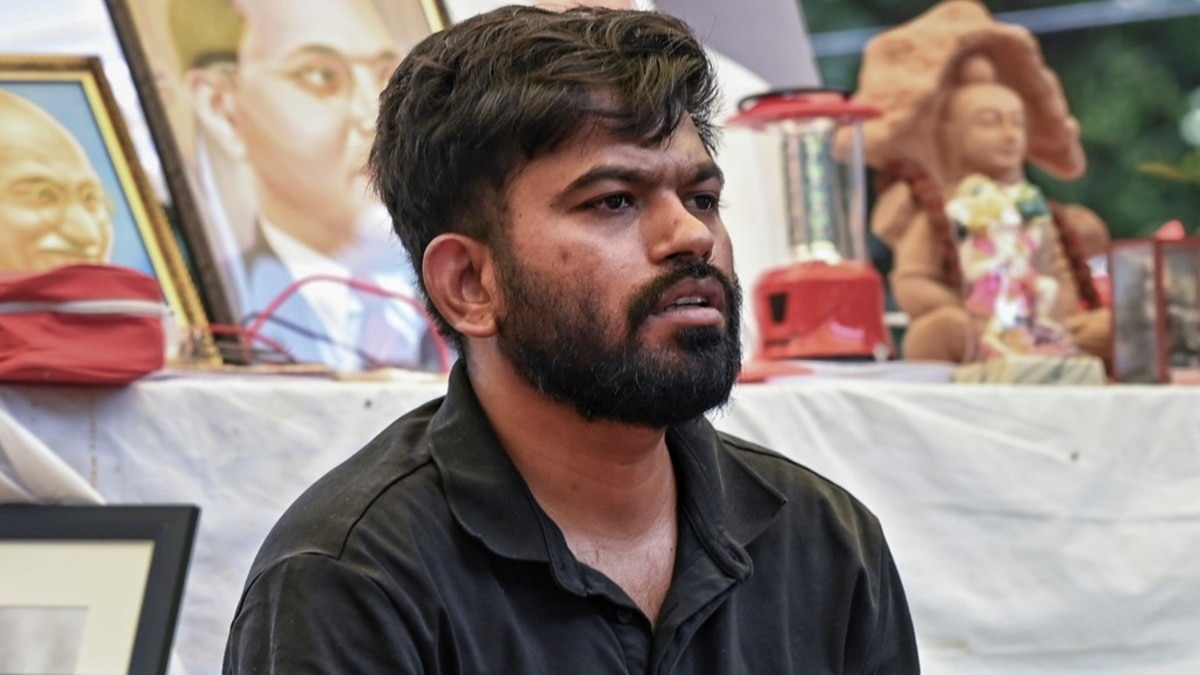
RTI activist Amit Tiwari has demanded an investigation into the finances of CJP founder Abhijeet Dipke's father and the legality of the party's fundraising activities.
Key Takeaways
- RTI activist Amit Tiwari has questioned the source of funds used for Abhijeet Dipke's US education.
- Questions raised regarding the legal status of the Cockroach Janta Party (CJP).
- Demand for scrutiny of the ₹1 crore legal defense fund announced by Kapil Sibal.
- Calls for investigation by the Election Commission and tax authorities.
A Surat-based Right to Information (RTI) activist, Amit Tiwari, has formally requested a probe into the financial background of Abhijeet Dipke, the founder of the Cockroach Janta Party (CJP). The activist has raised questions regarding how Dipke's father, a retired Maharashtra government employee, managed to fund his son's higher education in the United States.
Beyond personal finances, Tiwari has also escalated the matter to the Election Commission of India (ECI) and various tax authorities. He is seeking a detailed scrutiny of the ₹1 crore legal defense fund recently announced by senior advocate and Rajya Sabha MP Kapil Sibal, intended to support CJP protesters facing legal repercussions following the NEET paper leak agitations.
Why This Matters
BozokMedia analysis shows that this controversy touches upon the core of political transparency in India. The legality of an unregistered entity operating under the guise of a political party—and its ability to solicit large-scale donations—is a critical issue for regulatory bodies like the ECI and the Income Tax Department.
The intersection of political activism and private funding requires rigorous oversight to prevent the misuse of democratic platforms.
Tiwari pointed out that the Cockroach Janta Party (CJP) currently operates as an unregistered entity. He has urged the Election Commission to verify if the group is registered under Section 29A of the Representation of the People Act, 1951. If the entity is not registered, its operation as a political party and its collection of public funds could face significant legal challenges.
Furthermore, the activist has approached the Central Board of Indirect Taxes and Customs (CBIC) to determine whether GST applies to the contributions made to the legal defense fund. This follows Kapil Sibal's announcement of a substantial contribution to assist protesters arrested during recent Delhi demonstrations.
Historical Background
In the Indian legal framework, the distinction between a social pressure group and a registered political party is strictly governed by the Election Commission. Unregistered groups often face scrutiny when they begin to mirror the functions of political parties, particularly regarding fund collection and public campaigning.
Frequently Asked Questions
1. Who is Amit Tiwari?
Amit Tiwari is a Surat-based RTI activist who is seeking transparency in the finances of CJP's leadership.
2. What is the controversy surrounding Kapil Sibal?
Sibal announced a ₹1 crore fund for CJP protesters, which Tiwari argues needs tax and regulatory scrutiny.