India's Supreme Court has agreed to examine a public‑interest litigation arguing that Jantar Mantar is no longer a suitable site for demonstrations. The bench has issued notices to the Centre and other stakeholders, seeking detailed responses on resident inconvenience and service disruptions.
Key Takeaways
- Supreme Court accepts hearing a PIL claiming Jantar Mantar is unfit for protests.
- The petition cites resident distress and disruption of essential supplies.
- Notices issued to the Centre, Delhi Police and other parties for formal response.
Details of the Court's Decision
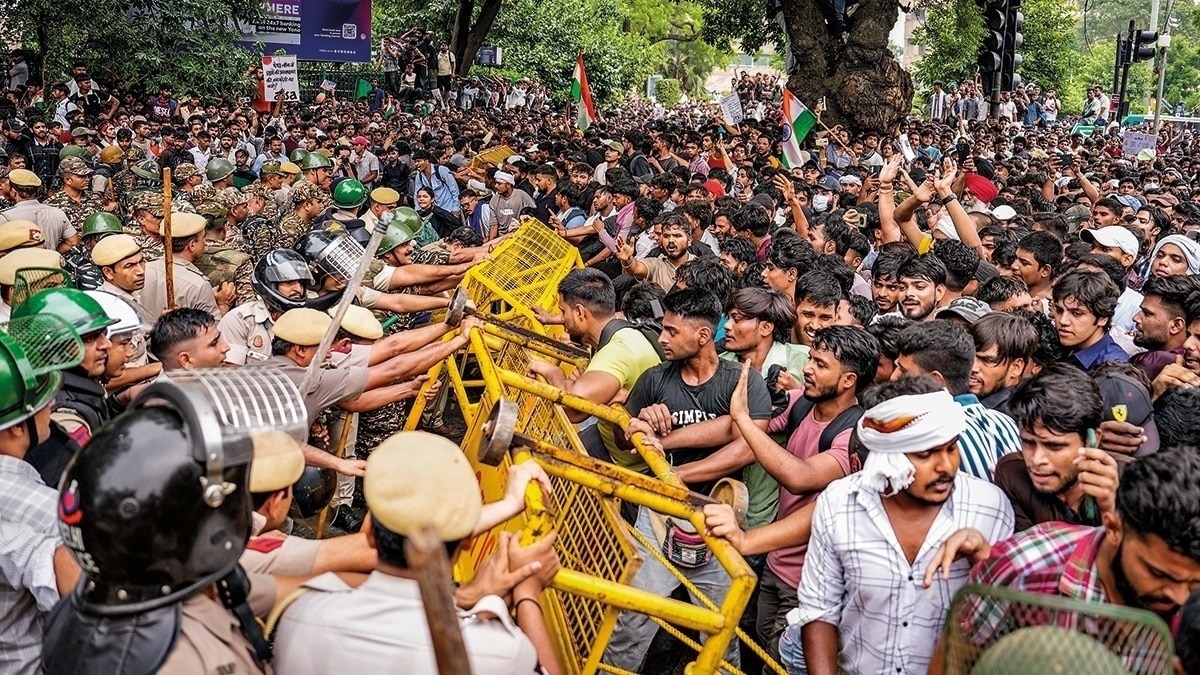
New Delhi – On August 3, 2026, the Supreme Court of India granted a hearing to a public‑interest litigation that argues Jantar Mantar in central Delhi has become an unsuitable protest venue. The petition, filed by Satish Chand Kaushik, highlights how frequent rallies impede local residents and hamper the delivery of essential goods and medical services.
A bench comprising Chief Justice D. Y. Chandrachud, Justice Joymalya Bagchi and Justice V. Mohana issued notices to the Union Government and other respondents. Solicitor General Tushar Mehta was directed to obtain instructions from the relevant authorities.
Key Points Raised During the Hearing
The Chief Justice observed, “The plea raises serious concerns about ingress‑egress and the supply of medical essentials, making Jantar Mantar an improper site for large‑scale protests.” He emphasized the need for clear guidelines to balance democratic expression with civic order.
Petitioner’s counsel also referenced a proposed political march, noting that Delhi Chief Minister Arvind Kejriwal had called a town‑hall and planned a march to the Prime Minister’s residence. The bench refrained from commenting on the march, directing that matter be listed separately.
Historical Background
Built in 1854 as an astronomical observatory, Jantar Mantar transformed into a symbolic protest arena after 2010. Notable demonstrations include the 2011 ATM closures against the government, the 2015 climate‑action march, and the massive 2020 civil‑rights rally that drew over 150,000 participants.
Why This Matters
BozokMedia analysis shows that restricting Jantar Mantar could accelerate the search for alternative protest sites, potentially redefining the boundaries of public dissent in India.
"If the Court curtails protests at Jantar Mantar, it sets a precedent that may limit democratic expression across the country," says legal scholar Dr. Ramesh Sharma.
Frequently Asked Questions
Q1: Will Jantar Mantar be completely closed for protests?
A: No final decision has been made; the Court is merely exploring alternative arrangements.
Q2: What is the primary goal of the petition?
A: To reduce inconvenience for local residents and ensure uninterrupted supply of essential services.