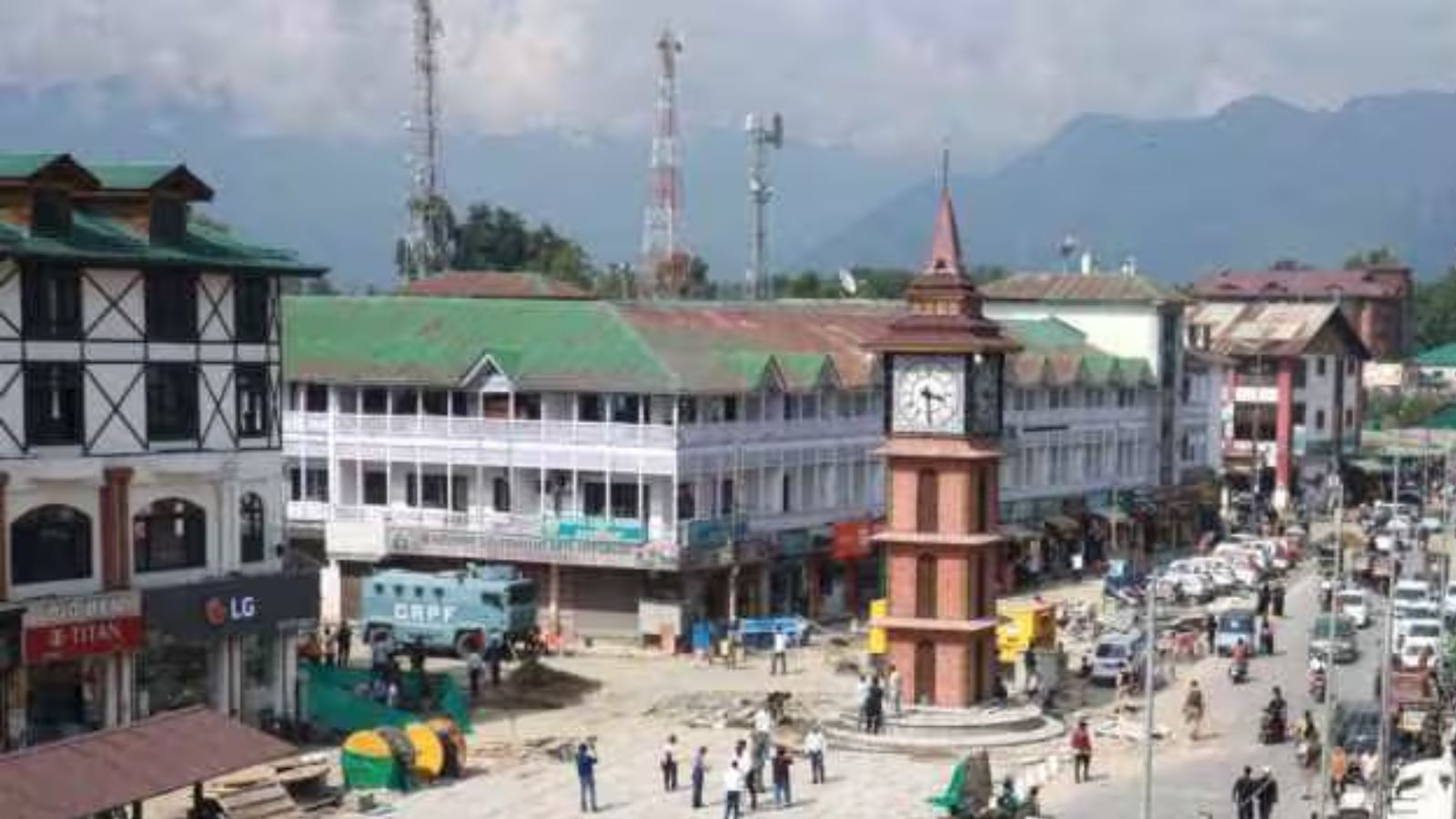
In a scathing critique, Ram Madhav argues that while J&K leaders cling to the defunct Article 370, the people of the Valley have embraced development and democratic integration.
Key Takeaways
- Regional leaders (NC and PDP) continue to protest for the restoration of Article 370 and 35A.
- Public engagement in these political demonstrations has seen a significant decline.
- The UT status is viewed by the Centre as a transitional phase toward eventual statehood.
- There is a stark contrast between the development in J&K and the instability in PoK.
The annual commemoration of August 5 has once again brought the political tensions of the Kashmir Valley to the forefront. Local political heavyweights, including the National Conference (NC) and the People's Democratic Party (PDP), staged demonstrations to protest the 2019 abrogation of Articles 370 and 35A. However, the fervor seen in previous years was notably absent among the general populace.
The Rhetoric vs. Reality Gap
While leaders like Mehbooba Mufti continue to frame Article 370 as a matter of 'identity and dignity,' BozokMedia analysis shows a growing disconnect between the political elite and the ground reality. Even Chief Minister Omar Abdullah has acknowledged the futility of expecting a reversal of these constitutional changes in the current political climate. The leadership's insistence on returning to a pre-2019 status appears increasingly out of sync with a population that is focused on stability.
The Valley leadership suffers from a bankruptcy of ideas, prioritizing lost privileges over future opportunities.
Development and the Democratic Shift
Since the reorganization of the state, the Union Territory has witnessed a transformation in sectors such as healthcare, infrastructure, and entrepreneurship. Citizens are increasingly comparing the stability on the Indian side of the LoC with the volatile conditions in Pakistan-Occupied Kashmir (PoK). The high voter turnout in the 2024 elections serves as a powerful indicator that the people are choosing democratic participation over political agitation.
Learning from the Ladakh Model
A significant point of comparison is the Ladakh region. Unlike the Valley leaders who remain fixated on Article 370, Ladakh's leadership has engaged in constructive dialogue with the Centre to secure constitutional protections within the existing framework. For the Valley to thrive, leaders must shift their focus from 'restoration' to 'integration and growth.'
Frequently Asked Questions
1. Is there any movement toward restoring statehood in J&K?
The central government has indicated that statehood will be restored at an appropriate time, but it is not immediate.
2. How has life changed in the Valley post-2019?
There has been a significant push toward infrastructure development, improved security, and increased economic opportunities through various central schemes.


