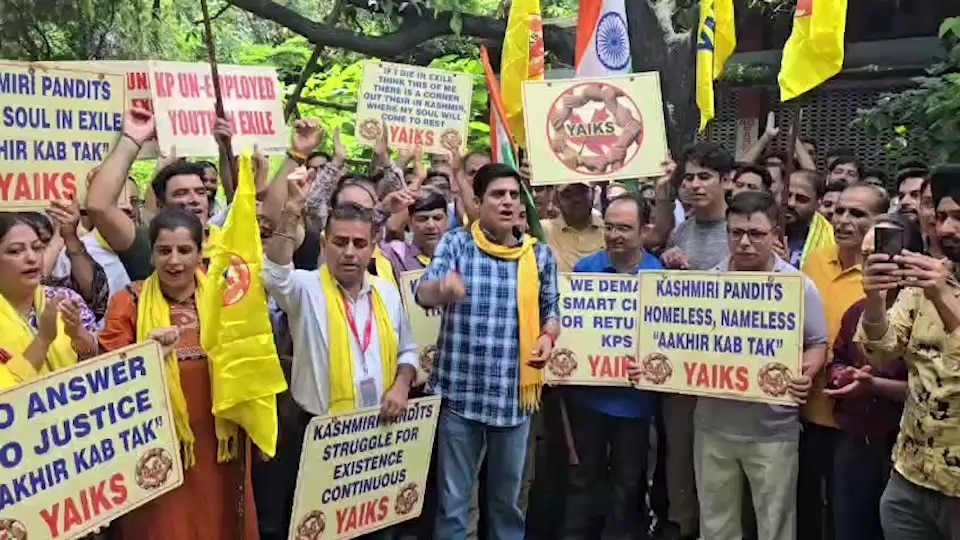
Displaced Kashmiri Pandits in Jammu camps have slammed political parties for using their plight only as election tools, demanding dignity and actual rehabilitation.
Key Takeaways
- Kashmiri Pandits accuse political parties of seasonal empathy during elections.
- The community describes itself as "political orphans" and "the new untouchables."
- Issues include crumbling infrastructure, unfulfilled rehabilitation, and lack of representation.
- Recent data shows an increase in registered migrant voters in the Valley.
Hundreds of displaced Kashmiri Pandits living in the Jagti township and surrounding camps in Jammu have voiced deep resentment against political entities. The community alleges that their decades of suffering are invoked only within election manifestos, only to be discarded once the votes are cast. They describe a systemic neglect that has relegated them to the status of "political orphans."
Residents have expressed frustration over being caught in a limbo of non-functional civic representation and failing infrastructure. They claim that while their plight is a hot topic during campaigning, it disappears from the political discourse immediately after, leaving them marginalized from the very democratic processes they are part of.
Why This Matters
BozokMedia analysis shows that the marginalization of the Kashmiri Pandit community is not just a humanitarian concern but a significant political rupture. Any attempt to resolve the Kashmir issue without addressing the political agency and dignity of this community is destined to remain incomplete and fragile.
"Used by everyone, represented by none, this is the real tragedy," stated Advocate Vishva Ranjan Pandita.
Tito Ganju, chairman of Panun Kashmir, emphasized that the community remains the indigenous bearers of Kashmir's civilizational memory. He asserted that while governments may attempt to discuss Kashmir without acknowledging the Pandit community, history and geopolitics will not permit such a fiction to persist.
Historical Background
The mass displacement of the Kashmiri Pandit community occurred in the early 1990s following the outbreak of militancy in the Kashmir Valley. For over three decades, thousands have lived in makeshift camps in Jammu, struggling for basic rights, employment, and a safe return to their ancestral homes.
Frequently Asked Questions
1. Why does the community feel neglected?
They feel neglected because political promises regarding their rehabilitation and infrastructure improvement are rarely fulfilled after elections conclude.
2. What are the primary demands of the displaced Pandits?
Their primary demands include dignified living conditions, fulfillment of employment promises, and a secure political framework for their return to the Valley.


