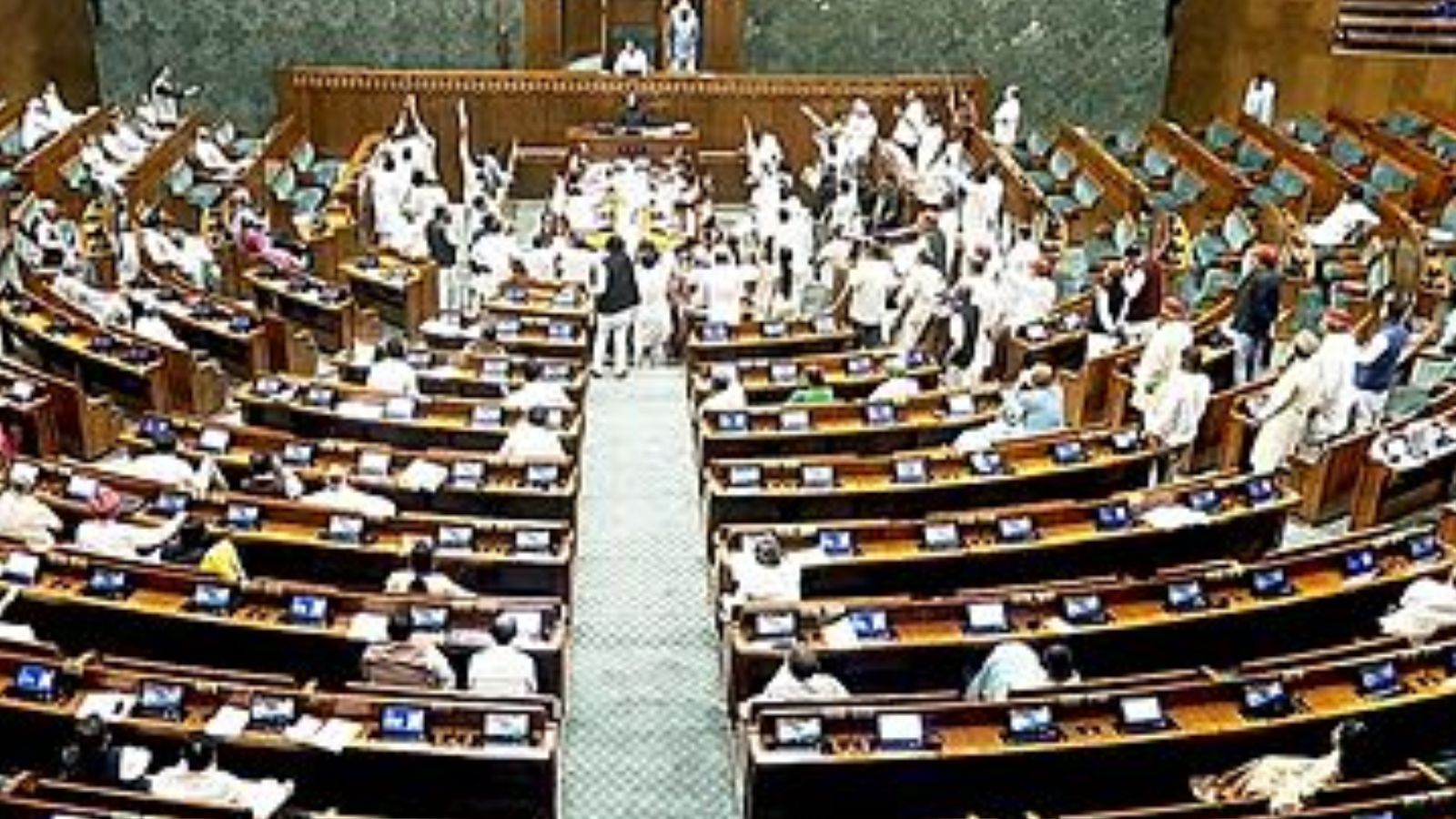
With only three days left in the Monsoon Session, Home Minister Amit Shah tabled the Kerala (Alteration of Name) Bill while opposition lawmakers protested over police actions on student demonstrators. The fate of key legislation on women’s reservation, delimitation and FCRA amendments remains uncertain.
Key Takeaways
- Amit Shah introduced the Kerala Name Change Bill
- Opposition protested police actions on student demonstrators
- Women’s reservation and FCRA amendment bills face an uncertain future
Introduction of the Kerala (Alteration of Name) Bill
The Lok Sabha agenda today included several flagship bills, with Union Home Minister Amit Shah expected to introduce the Kerala (Alteration of Name) Bill, 2026. The legislation aims to legally rename the state of Kerala, mandating updates across official documents, maps, and government records.
Opposition Backlash and Ongoing Uncertainty
Opposition parties voiced sharp criticism, citing the police excesses during the July 20 student protest led by the Cockroach Janta Party (CJP). Additionally, Congress MP Manish Tewari moved a notice for a new anti-defection law, highlighting broader political friction within the session.
Historical Background
Attempts to rename Kerala have surfaced intermittently since the state’s formation in 1956, when the former princely states of Travancore and Cochin were merged. Past proposals faltered due to legal complexities and public sentiment, making today’s bill a noteworthy development.
Why This Matters
BozokMedia analysis shows that a state‑level name change could ignite similar identity‑driven movements across India, potentially reshaping federal politics and influencing upcoming electoral calculations.
"Renaming a state is not just a bureaucratic exercise; it signals deeper cultural and political shifts that can reverberate nationwide," says political analyst Dr. Priya Menon.
Frequently Asked Questions
Q1: What specific changes does the Kerala Name Change Bill propose?
A: The bill outlines a systematic process to update the state's name in all legal documents, maps, and official records.
Q2: What are the main obstacles to the bill's passage?
A: Political opposition, concerns from cultural groups, and the broader legislative backlog pose significant challenges.