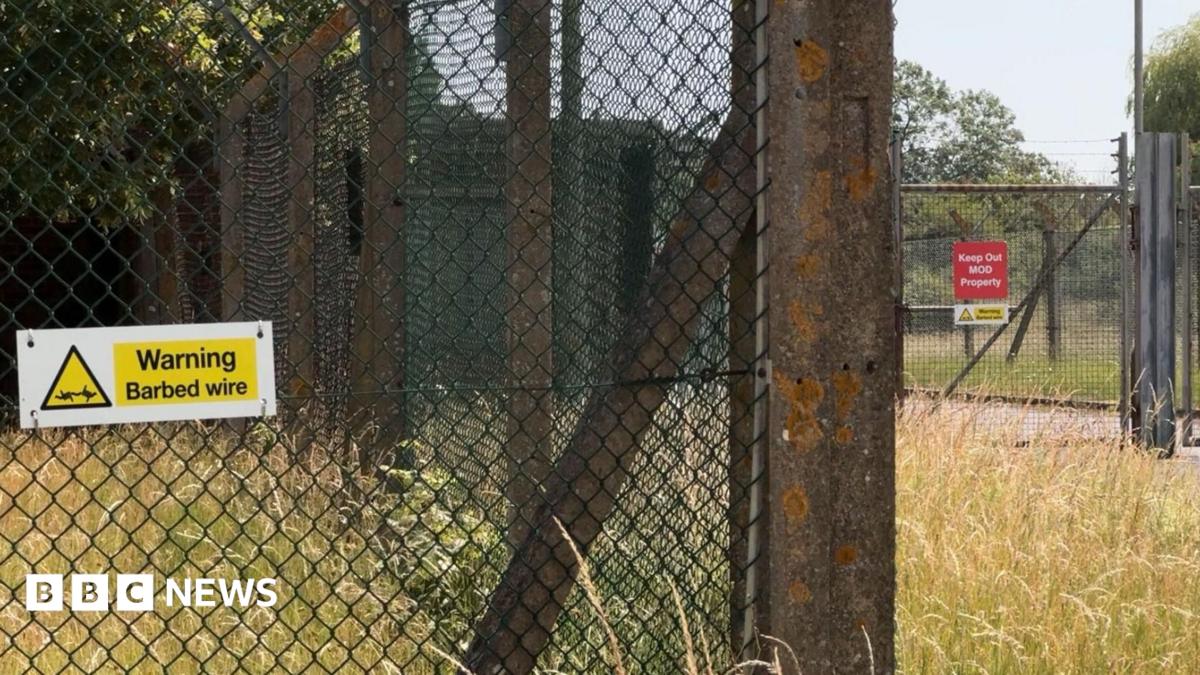
Home Office Minister Anna Turley has reaffirmed the government's commitment to using disused military sites for asylum seekers, despite fierce local opposition and symbolic independence votes in affected villages.
Key Takeaways
- The UK government is pivoting from hotels to former military bases for asylum seeker accommodation.
- Local communities, particularly in Piddington, are protesting due to infrastructure concerns.
- Two sites, RAF Wethersfield and Crowborough Training Camp, are already operational.
- The move aims to provide more 'secure' and 'contained' environments.
The UK government is moving forward with its controversial strategy to relocate asylum seekers from hotels to former military bases. Home Office Minister Anna Turley has defended the move, stating that the government's priority is to ensure asylum seekers are housed in "secure" and "appropriate" locations. According to Turley, disused Ministry of Defence properties are ideal because they offer on-site facilities and are more "contained," thereby limiting the direct impact on surrounding civilian populations.
However, this policy has ignited a firestorm of protest in rural areas. In Piddington, Oxfordshire, where plans involve housing over 1,000 asylum seekers, residents have expressed deep anxiety. The local community argues that their small-scale infrastructure is incapable of supporting such a large influx. In an unprecedented move of symbolic defiance, the Piddington Parish Council has even held a symbolic independence referendum, asking residents if they wish to remain part of the United Kingdom, highlighting a profound sense of abandonment by the central government.
Why This Matters
BozokMedia analysis shows that this shift represents a critical junction in UK migration policy. While the government seeks to reduce the massive fiscal burden of hotel accommodations, the social cost—measured in community cohesion and local infrastructure strain—is becoming a significant political liability. The tension between national logistical efficiency and local democratic consent is reaching a breaking point.
The use of military sites is a pragmatic solution to a logistical crisis, but it risks alienating the very communities the government needs to maintain stability.
To date, the government has already closed 13 hotels across England. The transition to military sites is already underway, with RAF Wethersfield in Essex and Crowborough Training Camp in East Sussex currently operational. Further sites, including locations in Suffolk and North Yorkshire, are facing similar backlash from local mayors and residents who deem these locations "simply the wrong place."
Comparison: Hotels vs. Military Sites
| Feature | Hotel Accommodation | Military Sites |
|---|---|---|
| Security Level | Lower / Less Controlled | Higher / Contained |
| On-site Facilities | Limited / Temporary | Existing Infrastructure |
| Community Impact | Broad & Unpredictable | Localized & Contained |
| Cost Efficiency | High Cost per Head | More Cost-Effective |
Frequently Asked Questions
1. Why is the government avoiding hotels?
Hotels are extremely expensive to maintain for long-term housing, and the government wants to move toward more permanent, secure facilities.
2. What are the main concerns of the protesters?
Protesters are primarily concerned about the lack of consultation and the inability of small villages to handle the increased demand on local services.