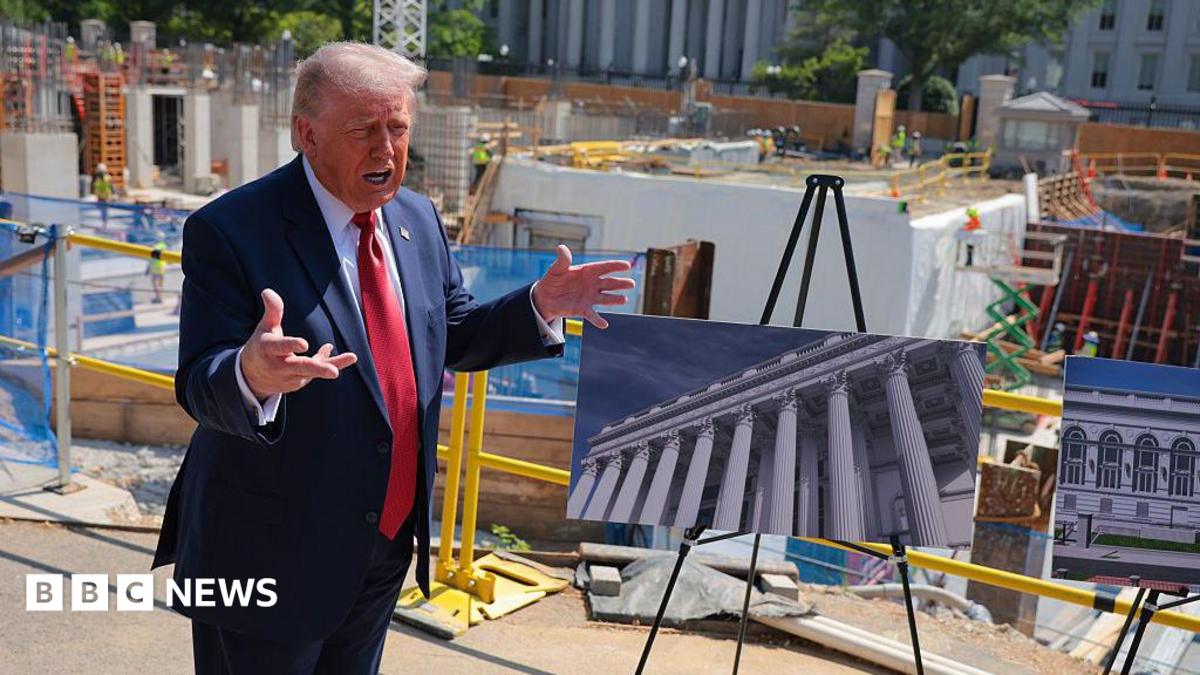
President Donald Trump has filed an emergency application with the Supreme Court to bypass a halt on his $400m White House ballroom project. The administration warns that requiring congressional approval for such works is 'dangerous' for executive authority.
Key Takeaways
- Trump administration seeks emergency Supreme Court intervention to continue the $400m ballroom project.
- An appeals court previously ordered a halt pending Congressional approval.
- The administration claims the project is privately funded and vital for national security.
- Construction is reportedly 65% complete.
U.S. President Donald Trump has approached the Supreme Court to allow the continued construction of a $400 million ballroom at the White House. This legal maneuver follows a recent appeals court ruling that ordered a cessation of work until Congress provides explicit permission, a decision prompted by a lawsuit from the National Trust for Historic Preservation.
In a high-stakes filing, U.S. Solicitor General D. John Sauer described the current injunction as "dangerous." He argued that forcing the President to go "hat-in-hand" to the legislature for essential White House upgrades grants Congress undue and dangerous leverage over the executive branch. Sauer noted that with construction already 65% complete, a sudden halt would be "flagrantly inequitable."
Why This Matters
BozokMedia analysis shows that this legal battle transcends mere architecture; it is a fundamental confrontation regarding the limits of presidential power versus legislative oversight. The outcome will set a massive precedent for how future administrations manage large-scale infrastructure projects on federal property without direct congressional intervention.
"Forcing the president to come hat-in-hand to Congress... gives the legislature dangerous leverage," argued Solicitor General D. John Sauer.
The administration defends the project by highlighting its dual purpose: a venue for grand diplomatic events and a critical upgrade for national security, including bomb shelters and medical treatment centers. Furthermore, they contend that because the project is funded by private corporate donations rather than taxpayer money, congressional oversight should not be mandatory.
Historical Context
This project is a cornerstone of Trump's ambitious plan to reshape the landscape of Washington, D.C. Beyond the ballroom, his administration has proposed significant changes to the Lincoln Memorial Reflecting Pool and the creation of an "Arc de Trump," modeled after the iconic Parisian monument. Critics, however, consistently allege that these projects bypass essential public comment and review processes.
Frequently Asked Questions
1. Why did the appeals court stop the construction?
The court ruled that the project required mandatory legal reviews and congressional approval, which had not been obtained.
2. What is the administration's main defense?
They argue the project is a matter of national security and is being funded privately, not by taxpayers.