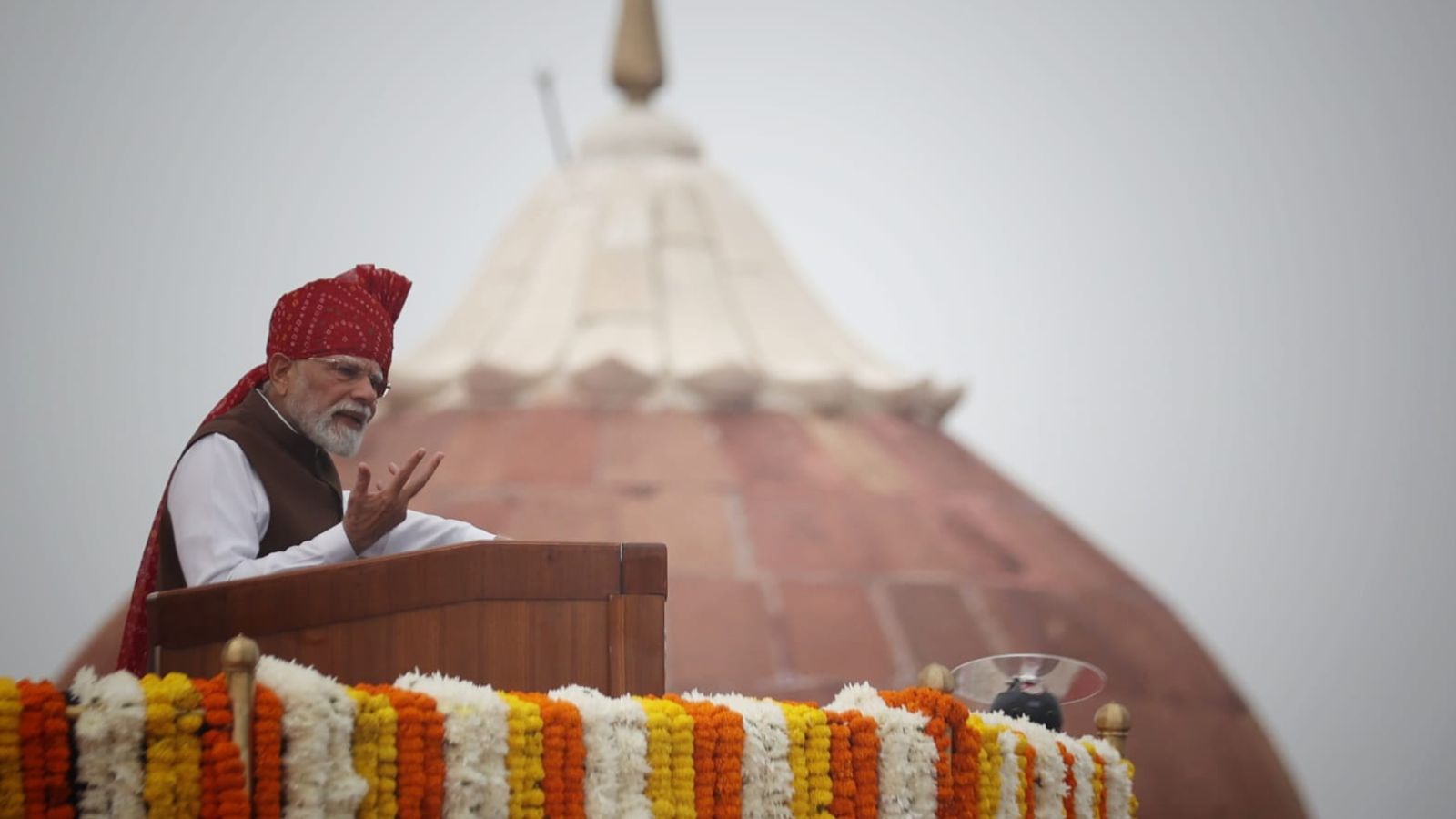
Addressing the nation from the Red Fort, PM Narendra Modi outlined a strategic vision for a developed India by 2047, focusing on AI skills for youth, energy security, and rapid governance reforms.
Key Takeaways
- Training 1 crore youth in AI skills within the next year.
- Introduction of 'Sapt Dhara' reforms for a developed nation.
- Target of 100 GW nuclear power capacity by 2047.
- Establishment of a nationwide free online coaching network.
Prime Minister Narendra Modi, in his address on the 80th Independence Day, framed a comprehensive roadmap for the nation's future. His speech centered on five strategic pillars: empowering the youth, ensuring self-reliance (Atmanirbharta) amidst global volatility, accelerating governance, boosting manufacturing and technology, and reinforcing national security and women's reservation.
Empowering the Next Generation
Recognizing the youth as the primary drivers of the Viksit Bharat project, the PM made several landmark announcements. To tackle the evolving job market, the government plans to train 1 crore young people in AI skills over the coming year. Furthermore, to alleviate the financial strain on middle-class families, a nationwide network of free online coaching will be launched.
"When I am talking about Viksit Bharat, taking the country forward at great speed, who is going to benefit the most? It is the youth." - PM Modi
Energy Security as National Defense
The Prime Minister highlighted that in the modern era, resources like fuel, fertilizers, and semiconductor chips are being 'weaponized' by global powers. To counter this, he emphasized the need for absolute energy security, setting an ambitious target of 100 GW of nuclear power by 2047 and announcing the construction of five new nuclear reactors over the next decade.
BozokMedia Analysis
BozokMedia analysis shows that this speech is a calculated response to socio-political pressures. By pivoting the employment narrative from traditional government jobs to emerging sectors like drones, EVs, and the bio-economy, the administration is attempting to redefine success for Gen Z and mitigate concerns regarding job scarcity and recent educational protests.
Why This Matters
The transition from a 'wait and watch' approach to a culture of 'speed' marks a significant shift in India's governance model. The 'Sapt Dhara' (seven-point) reforms aim to synchronize manufacturing, green economy, and soft power to catapult India into the ranks of developed nations by 2047.
Frequently Asked Questions
1. What is the 'Sapt Dhara' reform mentioned by the PM?
It is a seven-point reform strategy covering manufacturing, food processing, technology, connectivity, security, green economy, and soft power.
2. How will the government help students with coaching costs?
The government plans to create a nationwide network of free online coaching to support middle-class students.