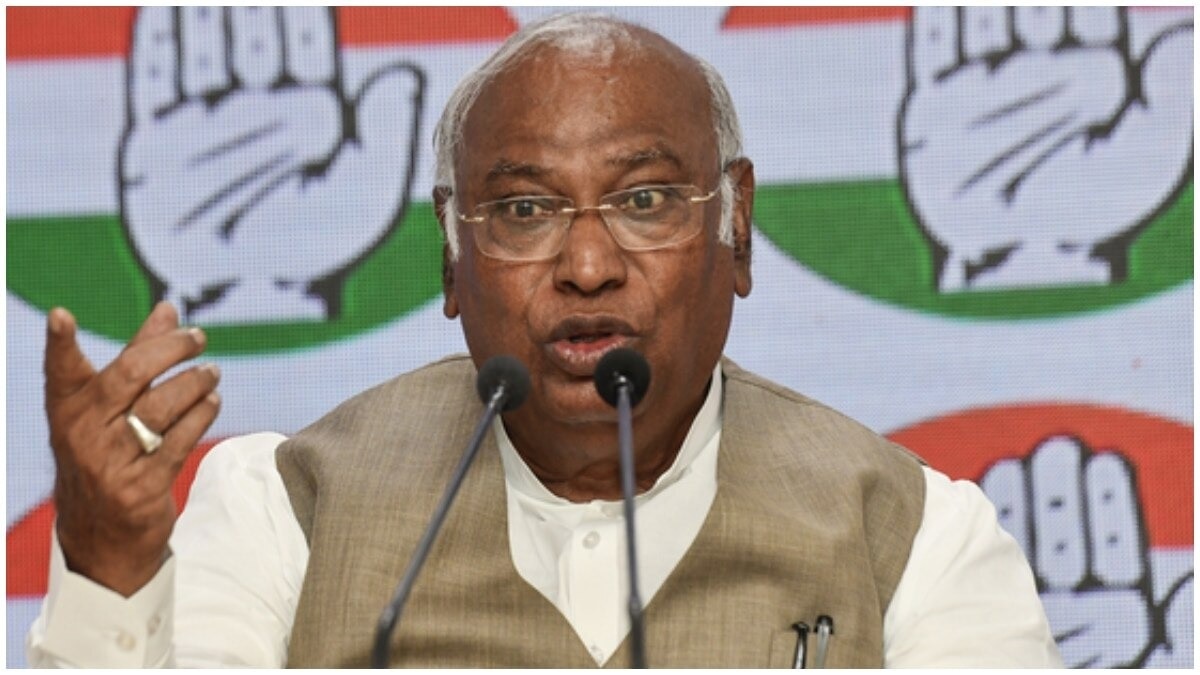
Congress President Mallikarjun Kharge issued a stern Independence Day message, highlighting the challenges faced by democratic institutions and constitutional values over the last decade. He called for justice and equality for all marginalized sections.
Key Takeaways
- Mallikarjun Kharge noted serious challenges to constitutional values and democratic institutions over the past decade.
- He defined freedom as the assurance of equality, dignity, and justice provided by the Constitution.
- Kharge advocated for the rights and opportunities of youth, farmers, women, and marginalized communities.
New Delhi: Marking India's 80th Independence Day, Congress President Mallikarjun Kharge delivered a profound message addressing the state of the nation. While acknowledging India's remarkable achievements since independence, he expressed grave concerns regarding the erosion of democratic norms over the last ten years.
In a message shared via X (formerly Twitter), Kharge emphasized that true freedom transcends the mere departure of British colonial rule. "For us, freedom was never merely liberation from British rule. It is the assurance bestowed upon every Indian by our Constitution -- of equality, dignity, justice and the freedom to speak without fear," he stated.
Why This Matters
BozokMedia analysis shows that Kharge's remarks are a strategic attempt to refocus the national discourse on institutional integrity and social equity. By highlighting the struggles of specific demographics, the Congress leadership is positioning itself as the primary defender of the constitutional mandate amidst a shifting political landscape.
"Constitutional values remain the greatest strength of India's democracy and the strongest safeguard for every citizen."
Kharge's address was particularly focused on the socio-economic disparities within the country. He called for meaningful opportunities for the youth, dignity for farmers, and empowerment for women. Furthermore, he insisted that Dalits, Adivasis, OBCs, minorities, and economically weaker sections must receive the full measure of justice promised by the Indian Constitution.
Historical Background
Since achieving independence in 1947, India has transitioned through various political eras. The Constitution, adopted in 1950, serves as the bedrock of the world's largest democracy, aiming to secure justice, liberty, equality, and fraternity for all its citizens.
Frequently Asked Questions
1. What were the main concerns raised by Mallikarjun Kharge?
He raised concerns about the challenges faced by constitutional values, democratic institutions, and social harmony over the past decade.
2. Who did Kharge say deserves more attention in India's growth?
He specifically mentioned youth, farmers, women, Dalits, Adivasis, OBCs, and minorities.