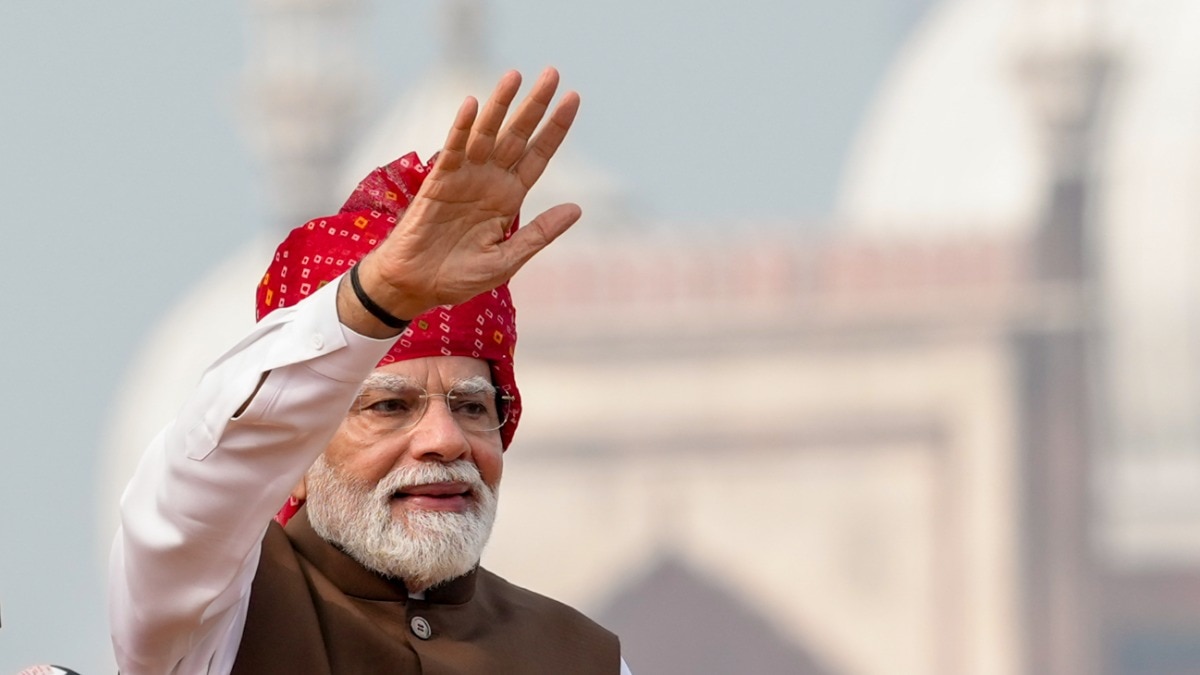
Addressing the nation from the Red Fort, PM Narendra Modi warned that while armed Naxalism is defeated, a new threat of 'ideological Naxalism' is fueling anti-development sentiment.
Key Takeaways
- Victory over armed insurgency shifted to a battle against 'ideological' Naxalism.
- Concerns over narratives that frame national development as exploitation.
- Emphasis on distinguishing between democratic dissent and anti-national discourse.
In a powerful address from the ramparts of the Red Fort on August 15, Prime Minister Narendra Modi issued a stark warning to the nation. He stated that while India has largely triumphed over armed Naxalism, the country must now remain vigilant against 'ideological' or 'mental' Naxals who promote despair, anarchy, and an anti-development mindset.
The Prime Minister pointed toward a growing trend where ideological biases replace facts and logic. In an era where India is witnessing record-breaking expansion in highways, railways, and digital infrastructure, certain narratives attempt to paint every economic reform as a conspiracy and every national achievement with suspicion.
Why This Matters
BozokMedia analysis shows that this shift in rhetoric marks a transition from security-centric governance to narrative-centric governance. By labeling anti-development discourse as 'ideological Naxalism,' the government is attempting to insulate national growth projects from political obstructionism that could deter foreign and domestic investment.
"The battle has shifted from the jungles to the mindsets; the goal is no longer just territorial control, but the control of the national narrative."
The discourse highlighted examples where basic infrastructure, like roads, was framed as a means of exploitation. Such rhetoric, the PM suggests, creates confusion and distrust among the masses. History teaches us that Naxalism did not begin with guns but with an ideological framework that rejected democratic institutions—a pattern that the current administration fears is repeating in a subtle, non-violent form.
Frequently Asked Questions
1. What is 'Ideological Naxalism' according to the PM?
It refers to a mindset that avoids violence but actively works to create distrust in national institutions and opposes development projects through misleading narratives.
2. Does this target political critics?
The Prime Minister emphasized that dissent and criticism are hallmarks of a healthy democracy; however, there is a clear line between legitimate disagreement and a systematic attempt to sabotage national progress.