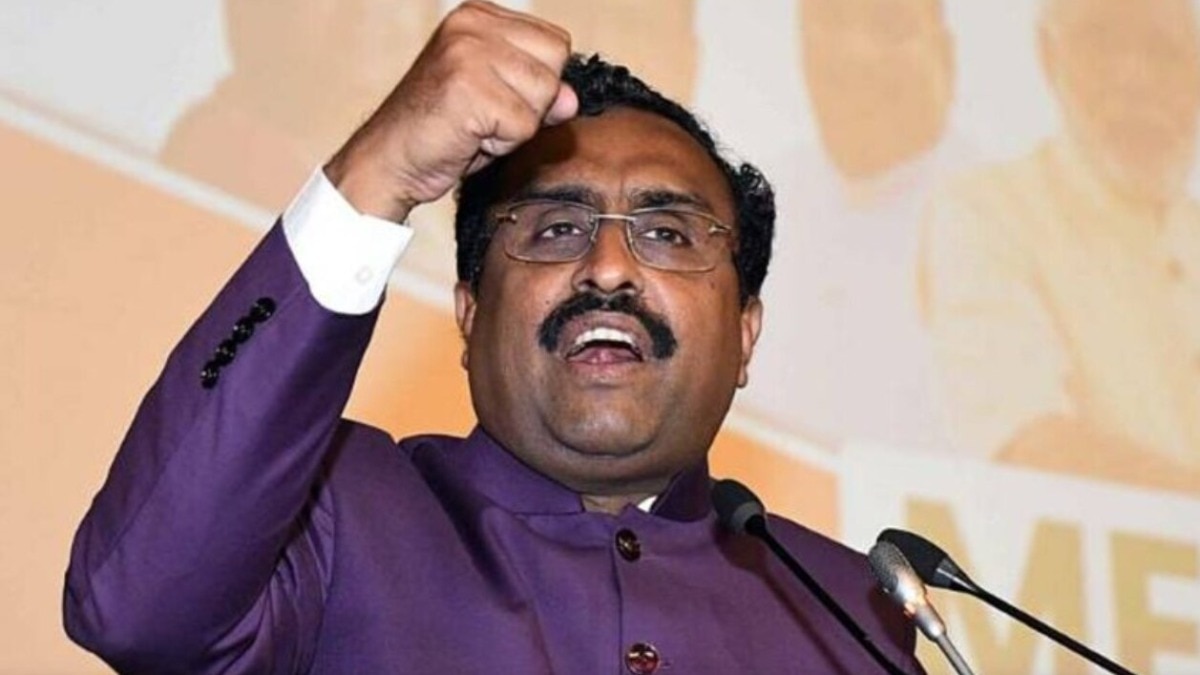
In a strategic organizational reshuffle, the BJP has appointed RSS stalwart Ram Madhav as National Vice-President. His return signals a move to tighten the ideological and operational synergy between the Sangh and the party.
- Ram Madhav appointed as National Vice-President in the latest BJP organizational rejig.
- Acts as a critical bridge between the Rashtriya Swayamsevak Sangh (RSS) and the BJP.
- Proven track record in Northeast expansion and J&K alliance negotiations.
- Combines deep ideological roots with electoral pragmatism.
The Bharatiya Janata Party (BJP) has once again reinforced its organizational structure by bringing back Ram Madhav, a seasoned strategist and RSS veteran, as the National Vice-President. This move is not merely a routine appointment but a calculated step to restore a leader who possesses the rare ability to navigate both the ideological rigidity of the Rashtriya Swayamsevak Sangh (RSS) and the pragmatic demands of electoral politics.
Ram Madhav's journey began in his teenage years within the RSS, eventually becoming a full-time worker in 1981. For over a decade, from 2003 to 2014, he served as the national spokesperson for the Sangh, making him one of the most visible faces of the organization. His transition to the BJP as National General Secretary between 2014 and 2020 cemented his role as the primary conduit between the two entities.
Why This Matters
BozokMedia analysis shows that the BJP is currently in a phase where it needs to balance its core ideological agenda with the necessity of expanding its footprint in diverse regional landscapes. Ram Madhav's return provides the party with a 'dual-language' leader—someone who can communicate the Sangh's vision to the party cadre while translating electoral needs back to the RSS leadership. This synergy is vital for maintaining internal stability and ideological coherence.
"Ram Madhav represents the ideal synthesis of a Pracharak's discipline and a politician's agility, making him indispensable for the BJP's current expansionist phase."
Beyond his role as a bridge, Madhav has earned the reputation of a 'master tactician.' His fingerprints are all over the BJP's successful foray into the Northeast. He was a central architect of the North-East Democratic Alliance (NEDA), which allowed the BJP to form coalitions in states like Manipur, Meghalaya, and Nagaland, effectively neutralizing regional opposition through strategic partnerships.
His tactical prowess was also evident during the complex 2014 government formation in Jammu and Kashmir. In a state plagued by political deadlock, Madhav was instrumental in negotiating the unlikely alliance between the BJP and the PDP. This ability to work across ideological divides—without compromising the party's ultimate goals—is exactly what the BJP seeks as it eyes future electoral challenges.
Historical Background
The relationship between the RSS and the BJP has always been symbiotic, rooted in the concept of 'Sangh Parivar.' While the RSS focuses on character building and social organization, the BJP serves as the political instrument. Leaders like Ram Madhav are the 'connectors' who ensure that the political wing does not drift too far from its ideological moorings, nor does the ideological wing become disconnected from the realities of democratic governance.
| Aspect | RSS Role (Pracharak) | BJP Role (Politician) |
|---|---|---|
| Focus | Ideology & Social Work | Elections & Governance |
| Method | Grassroots Mobilization | Coalition & Strategy |
| Madhav's Contribution | National Spokesperson | National Vice-President |
Frequently Asked Questions
Q1: What is the primary role of Ram Madhav in the current BJP setup?
As National Vice-President, he is expected to strengthen the organizational link with the RSS and lead strategic expansions in regional territories.
Q2: How did Ram Madhav help the BJP in the Northeast?
He was a key strategist behind the creation of NEDA, helping the BJP form coalitions and governments across several Northeastern states.