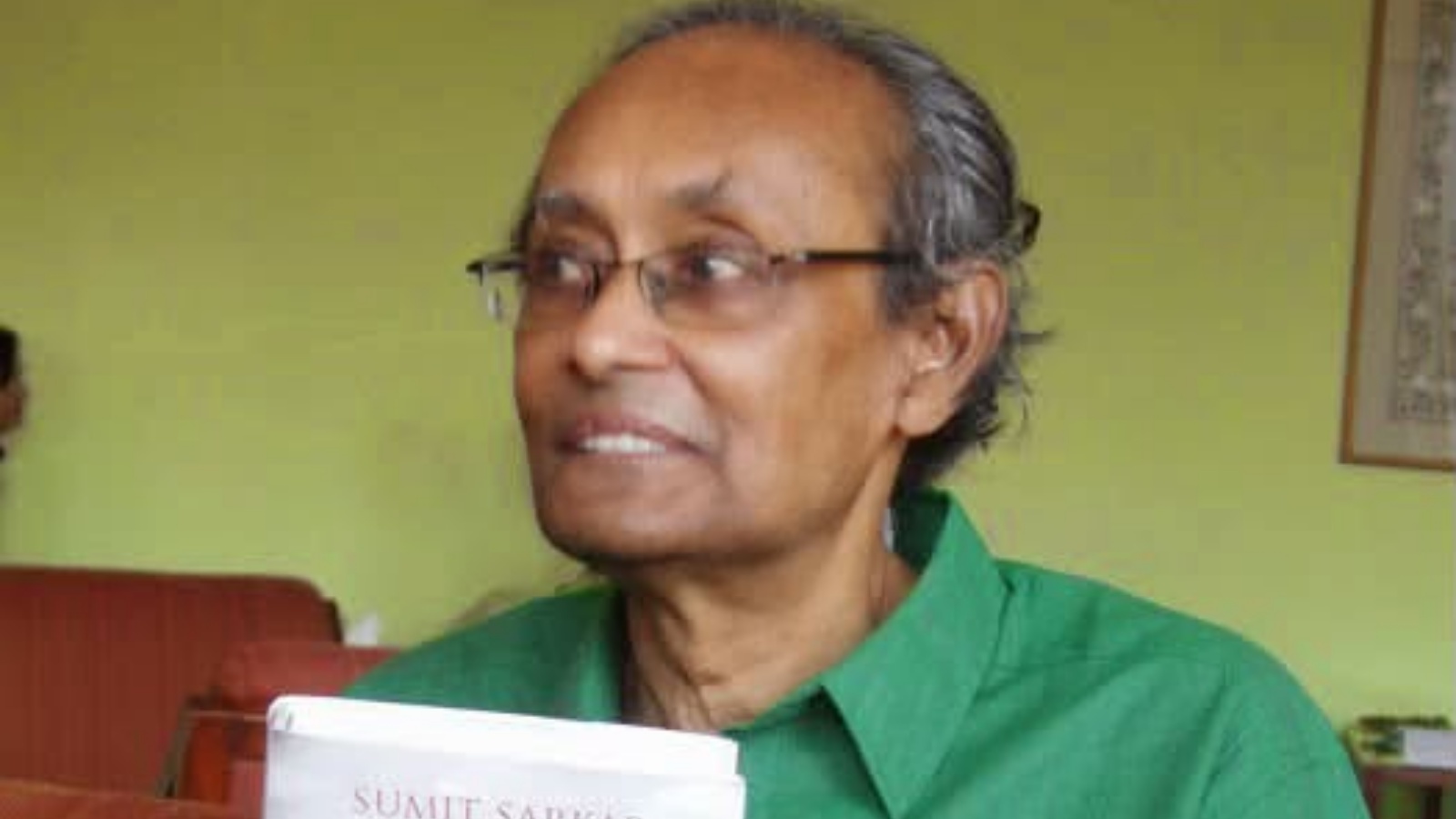
Renowned historian Sumit Sarkar has passed away at 87. A pioneer of Subaltern Studies and a lifelong Marxist, he reshaped the understanding of modern Indian history.
- Sumit Sarkar passed away at 87, leaving a monumental void in Indian historiography.
- He was a key figure in the Subaltern Studies project, focusing on 'history from below'.
- He remained a staunch Marxist and a vocal critic of the erosion of historical truths in modern India.
The world of academia has lost one of its most luminous minds. Sumit Sarkar, who passed away on August 13 at the age of 87, was a rare blend of a rigorous historian and a deeply compassionate human being. While his scholarly contributions are vast, his legacy is defined by his unwavering commitment to the truth and his ability to humanize the past.
Born into a family of intellectuals—his father, Professor Susobhan Sarkar, was a giant of the Bengali left—Sumit Sarkar inherited a tradition of critical inquiry. He remained a Marxist throughout his life, not out of blind faith, but through a continuous engagement with the socio-economic realities of India. His work sought to dismantle the Eurocentric and elitist narratives that had dominated Indian history for decades.
BozokMedia analysis shows that Sumit Sarkar's significance lies in his intellectual courage. He was an original contributor to the Subaltern Studies collective, which aimed to recover the history of the downtrodden. However, unlike many of his peers, he had the courage to break away from the group when it drifted toward postmodernism. He argued that by denying the existence of objective historical truths, postmodernism inadvertently paved the way for the manipulation of history for political ends.
Sumit Sarkar's work serves as a reminder that history is not a dead record, but a living dialogue between the present and the past.p>
In his later years, Sarkar was deeply alarmed by the rise of Hindutva and the systemic threat it posed to Indian democracy. He wrote lucid, polemical pieces warning that the undermining of factual history was a precursor to the erosion of democratic values. He viewed the current trend of historical revisionism as a dangerous tool for social polarization.
Beyond the library and the lecture hall, Sarkar was known for his wit and humility. He did not possess the arrogance often associated with high-ranking academics. Whether discussing French revolutionary songs in Paris or reading Tagore's Shahoj Path, he approached every subject with a sense of wonder and a sharp, critical eye.
His final years, though marked by physical illness, were spent in the company of his wife Tanika and son Aditya—both distinguished historians in their own right. Even in his frailty, his lucidity remained intact, and his capacity to laugh at the absurdities of the world never faded.
1. What was Sumit Sarkar's role in Subaltern Studies?
He was a founding contributor who promoted 'history from below,' focusing on the role of peasants, workers, and the marginalized in the Indian national movement.
2. Why did he criticize postmodernism?
He believed that postmodernism's rejection of absolute historical truth made it easier for political regimes to create fake histories and ignore empirical facts.