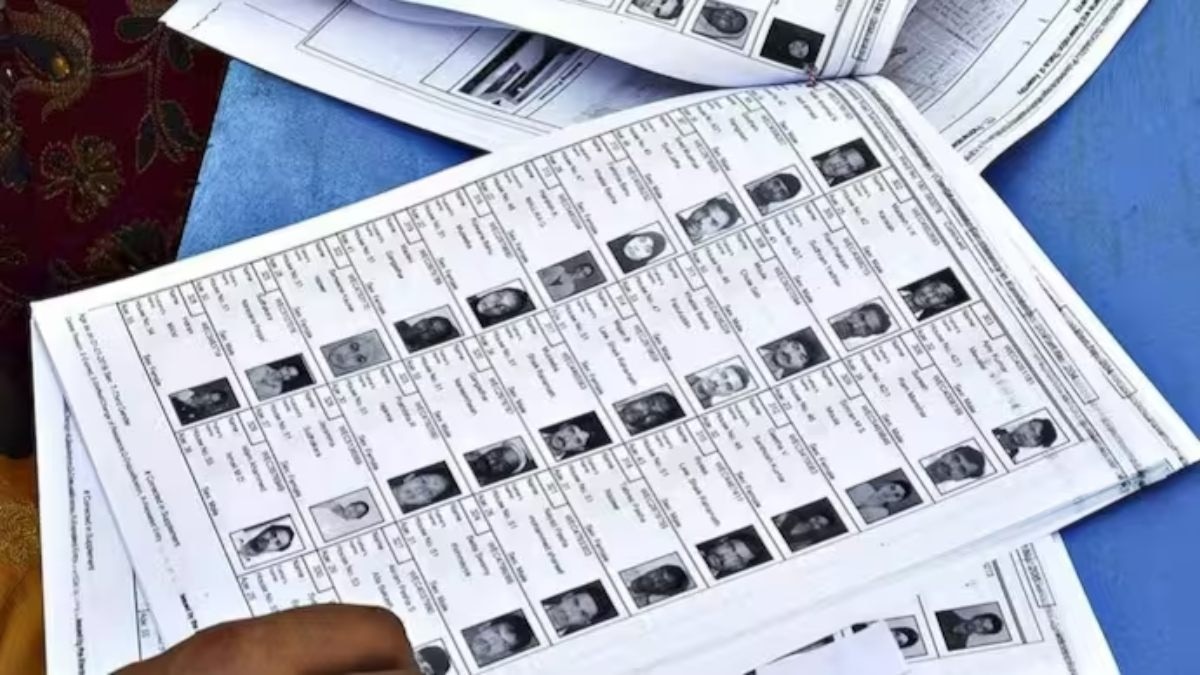
Following a Special Intensive Revision, the Maharashtra Chief Electoral Office has excluded 2.07 crore voters from the draft electoral rolls due to migration, death, or being untraceable.
- 2.07 crore voters (21.15% of the electorate) have been categorized as 'Uncollectable EF'.
- 76.80 lakh voters have permanently shifted, while 75.52 lakh could not be traced.
- 34.81 lakh voters were reported deceased.
- Voters can use Form 6, 7, or 8 to claim inclusion, correction, or deletion.
In a massive administrative overhaul of the electoral database, the Maharashtra Chief Electoral Office (CEO) announced on Tuesday that as many as 2.07 crore voters have been placed in the “Uncollectable EF” (Enumeration Form) category. This decision follows the conclusion of the Special Intensive Revision (SIR) conducted across the state.
Out of Maharashtra's total 9.78 crore registered voters, approximately 7.71 crore (78.85%) successfully submitted their signed Enumeration Forms during the door-to-door verification drive conducted by Booth Level Officers (BLOs) between June 30 and August 17. The remaining 2.07 crore electors were deemed ineligible for inclusion in the current draft rolls based on factual findings recorded during the exercise.
Breakdown of the Excluded Voters
The category-wise data provides a detailed look into why such a massive number of names were removed from the upcoming rolls. The primary reasons include:
| Reason for Exclusion | Number of Voters | Percentage |
|---|---|---|
| Permanently Shifted | 76.80 Lakh | 7.85% |
| Absent/Untraceable | 75.52 Lakh | 7.72% |
| Deceased | 34.81 Lakh | 3.56% |
| Duplicate/Enrolled Elsewhere | 17.63 Lakh | 1.80% |
| Others | 2.23 Lakh | 0.23% |
Why This Matters
BozokMedia analysis shows that this massive cleanup is a double-edged sword for the democratic process. While it significantly enhances the integrity of the electoral rolls by removing 'ghost voters' and duplicates, the scale of exclusion—over 21%—highlights the immense challenge of maintaining accurate data in a state with high internal migration. Ensuring that legitimate voters who have merely moved are not disenfranchised is critical for upcoming elections.
The massive scale of this revision underscores the critical need for real-time digital voter tracking to match the pace of urban migration.
Political parties have been officially requested to assist in this process. Through their respective Booth Level Agents, parties can provide information regarding any eligible voters who may have been incorrectly categorized. The CEO has assured that any such information will be verified by BLOs, and forms will be re-collected where necessary.
Historical Background
Electoral roll revision is a statutory requirement in India to ensure the principle of 'one person, one vote.' In large, populous states like Maharashtra, the Election Commission frequently employs 'Special Intensive Revisions' to combat the issues of deceased voters remaining on rolls and the proliferation of duplicate entries caused by frequent migration between districts.
Frequently Asked Questions
1. How can I check if my name is in the new list?
Voters can check the provisional lists on the websites of their respective District Collectors or the Chief Electoral Officer's official portal.
2. What should I do if I am 18 years old but my name is missing?
You can apply for inclusion by submitting Form 6 along with the required supporting documents during the one-month claim window.