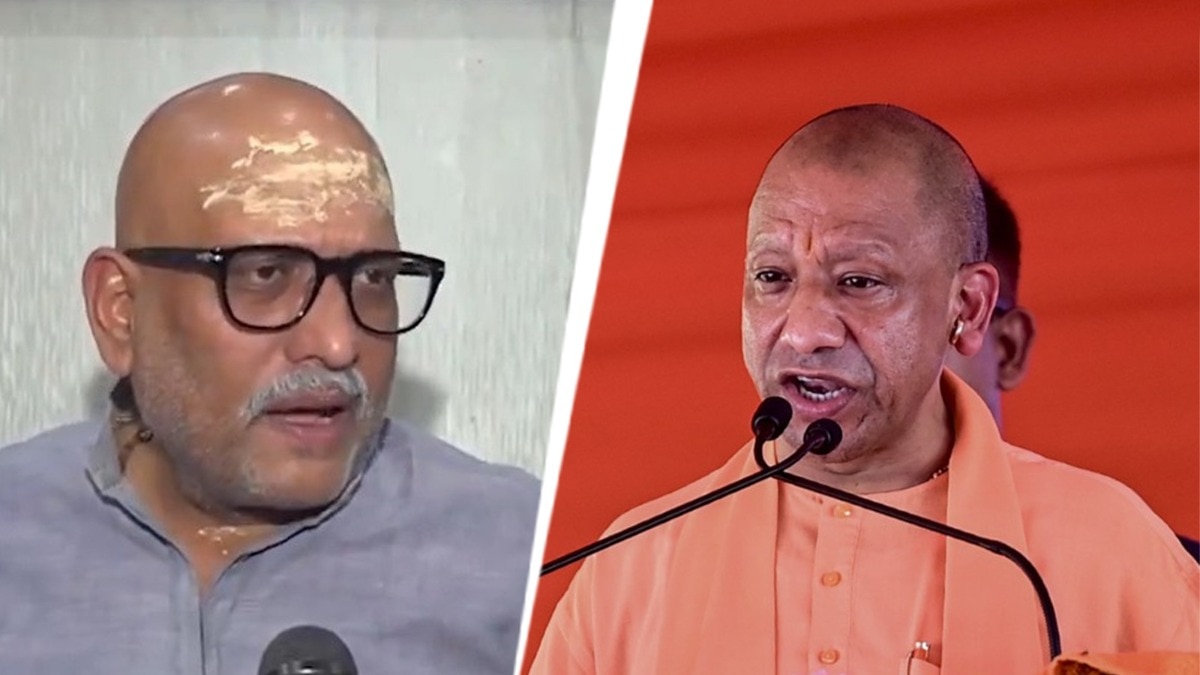
The Vande Mataram controversy intensified as BJP President Nitin Nabin sharply criticized the Congress party. Nabin's remarks came after the Congress decided to limit the singing of the national song to its first two stanzas at party events, sparking a fresh political firestorm.
- BJP President Nitin Nabin controversially labeled the Congress as the 'New Muslim League'.
- The controversy stems from Congress's decision to sing only the first two stanzas of Vande Mataram.
- This incident highlights deep ideological divisions and political polarization over national symbols.
The political landscape of India witnessed a significant escalation in the perennial 'Vande Mataram' controversy. BJP President Nitin Nabin launched a scathing attack on the Indian National Congress, controversially labeling the grand old party as the 'New Muslim League'. This sharp criticism follows the Congress party's recent directive to sing only the initial two stanzas of the revered national song at its official gatherings and events.
Nabin's remarks are part of the BJP's broader campaign to question the Congress's commitment to nationalism and cultural identity. BJP leaders have frequently accused Congress of 'appeasement politics' and 'disrespect' towards national symbols, and this new controversy further fuels these allegations.
Historical Background
The song 'Vande Mataram', penned by Bankim Chandra Chattopadhyay in his 1882 novel 'Anandamath', has a profound history interwoven with India's struggle for independence. It served as a powerful rallying cry for revolutionaries and patriots alike. However, its complete rendition has periodically faced scrutiny, largely due to certain verses that have been interpreted by some as invoking Hindu deities, leading to discomfort among sections of the Muslim community. Post-independence, while 'Jana Gana Mana' was adopted as the National Anthem, 'Vande Mataram' was recognized as the National Song, with a consensus emerging to sing only the first two stanzas in official capacities to ensure inclusivity, a decision that has been intermittently challenged and reaffirmed over decades.
Nabin's provocative comparison of the Congress to the historical Muslim League—a political party instrumental in the partition of India—is a highly charged accusation. It suggests that the BJP views the Congress's decision as a form of divisive appeasement politics, reminiscent of pre-independence communal divides. The BJP leadership often frames such actions as undermining national unity and cultural heritage, accusing the Congress of pandering to specific vote banks at the expense of national symbols.
Why This Matters
BozokMedia analysis shows this incident is more than just a political skirmish; it underscores the deep-seated cultural and ideological fault lines that continue to shape Indian politics. The debate over national symbols like 'Vande Mataram' touches upon questions of national identity, inclusivity, and historical interpretation, making it a recurring flashpoint that resonates deeply with the electorate. Such issues often become a means for political parties to solidify their ideology and galvanize their base, especially in the run-up to elections.
This rhetoric, while polarizing, is strategically employed to delineate clear ideological boundaries and consolidate core voter bases, often at the expense of nuanced historical understanding.
The controversy is not merely about a song; it's a microcosm of the larger ideological battle between the BJP's cultural nationalism and the Congress's secular pluralism. Such debates often ignite passionate responses across the political spectrum, serving as potent tools for political mobilization and voter polarization, especially in the run-up to state and national elections.
Frequently Asked Questions
- Q1: Why is 'Vande Mataram' controversial?
A1: Certain verses of 'Vande Mataram' are interpreted by some as invoking Hindu deities, which has historically caused discomfort among sections of the Muslim community, leading to debates over its full rendition. - Q2: What was the Muslim League's role in Indian history?
A2: The Muslim League was a political party in British India that advocated for the rights of Muslims and ultimately played a significant role in the partition of India and the creation of Pakistan.