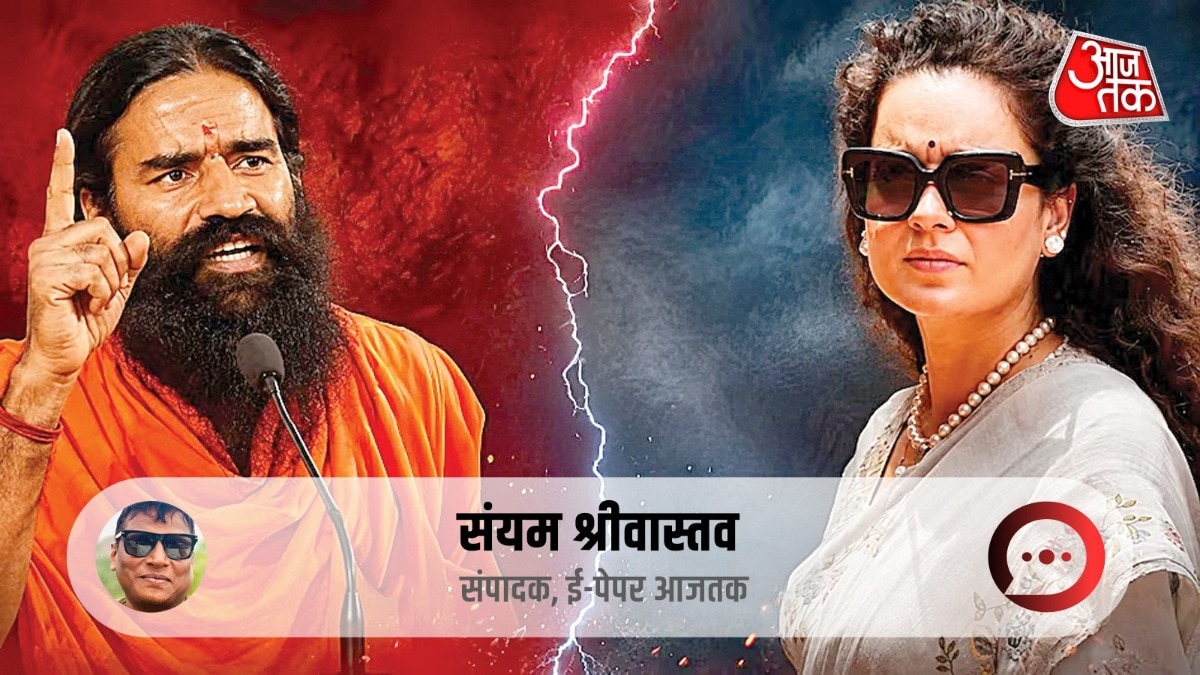
The escalating verbal spat between BJP MP Kangana Ranaut and Yoga Guru Baba Ramdev has sent shockwaves through the Right-Wing ideological bloc, raising questions about internal cohesion.
- A heated exchange erupted between Kangana Ranaut and Baba Ramdev over Gen-Z comments.
- The dispute escalated from ideological disagreement to personal attacks on character and private life.
- Analysts suggest this could signal a shift in the dynamics of the Right-Wing socio-cultural alliance.
- The clash highlights potential friction between political representatives and cultural influencers within the same ecosystem.
In the intricate dance of Indian politics, certain events serve as much more than mere headlines; they act as barometers for shifting power dynamics. The recent public confrontation between Kangana Ranaut, a prominent BJP Member of Parliament, and Baba Ramdev, the world-renowned yoga guru, is a prime example. What began as a disagreement over Ranaut's comments regarding 'Gen-Z' has rapidly devolved into a personalized war of words.
The friction ignited when Ramdev criticized Ranaut's perspective as a sign of a 'disturbed mind,' even suggesting that her political party should take note. In a sharp retort, Ranaut escalated the tension by advising Ramdev not to project his 'bedroom dreams' onto her. This transition from policy or social critique to personal character assassination marks a significant departure from the traditional decorum expected from leaders within the same ideological umbrella.
Why This Matters
BozokMedia analysis shows that this is not merely a celebrity feud; it is a visual representation of potential fractures within the massive socio-cultural coalition that constitutes the Indian 'Right Wing.' This ecosystem is a complex web of saints, yogis, industrialists, film stars, and politicians. When two pillars of this coalition—one representing political authority and the other representing cultural influence—clash publicly, the entire ideological brand suffers.
As political magnetism wanes, allied groups often begin to establish independent identities, sometimes by challenging the very center they once supported.
Political analysts are debating whether Ramdev's critique is a standalone social commentary or a calculated political signal. By addressing Ranaut's party directly, Ramdev has signaled that his influence is not strictly bound by political loyalty. Some experts interpret this as a symptom of declining central authority or a sign that allied influencers are seeking to carve out autonomous spaces as the political landscape shifts.
However, caution is required in drawing definitive conclusions. History shows that even the most monolithic political structures, such as the Congress party in its prime, have harbored internal power centers and factions. The BJP, despite its organizational strength, is composed of individuals with diverse ambitions and priorities. Public disagreements, while unseemingly, are not entirely unprecedented in large-scale political movements.
Frequently Asked Questions
1. What triggered the conflict between Kangana and Ramdev?
The dispute began after Kangana Ranaut made controversial remarks regarding the Gen-Z generation, which Baba Ramdev criticized.
2. Does this mean the BJP is losing control over its allies?
While it indicates growing independence among cultural influencers, it may also simply be a manifestation of internal ideological diversity.