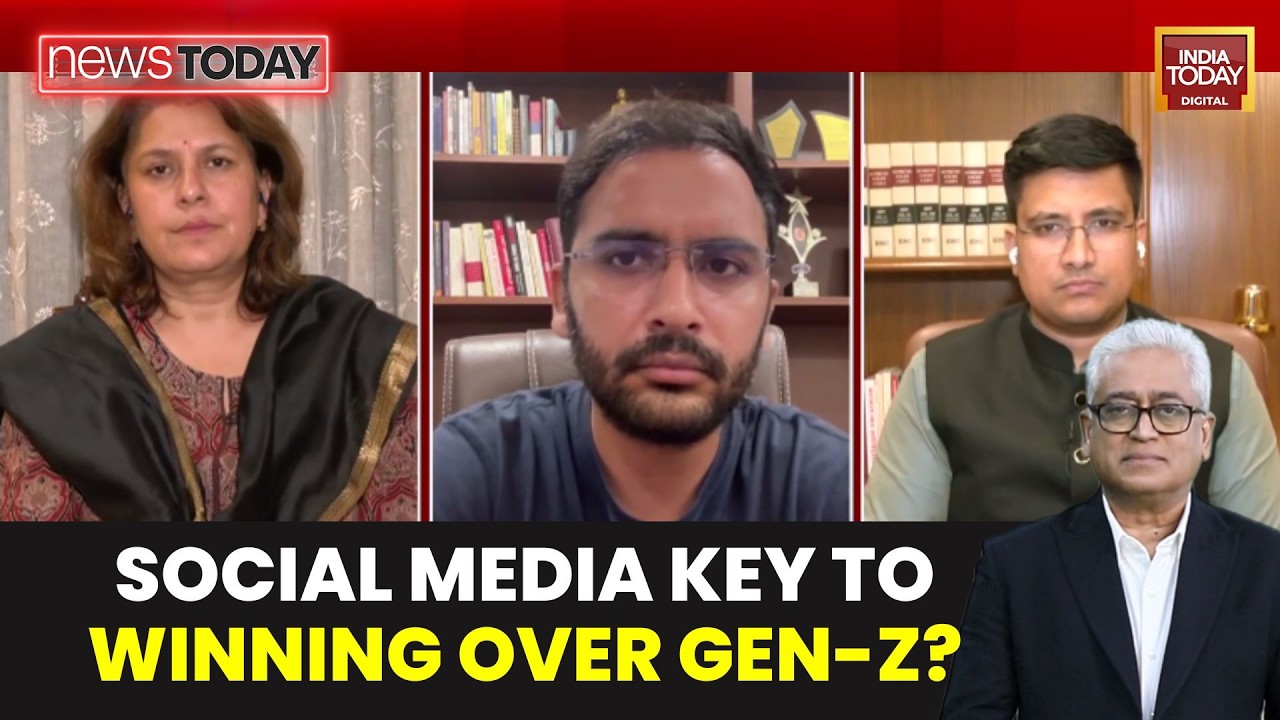
As political parties pivot toward the 18-29 demographic, PM Modi's university outreach and Rahul Gandhi's nationwide rallies signal a fierce battle for India's Gen Z and Gen Alpha voters.
- Gen Z and Gen Alpha voters (aged 18-29) have emerged as the pivotal demographic in Indian politics.
- PM Modi has launched the 'One Day One University' initiative for direct student engagement.
- Congress is conducting 'Chhatro ki Kood' rallies across 800 cities to mobilize youth.
- Issues like paper leaks and employment are driving student political consciousness.
The landscape of Indian political campaigning is undergoing a seismic shift. Moving away from traditional caste and religious arithmetic, major political players are now aggressively targeting Gen Z and Gen Alpha voters. This demographic, aged between 18 and 29, is no longer a passive audience but a decisive force capable of steering national narratives.
Prime Minister Narendra Modi has recognized this shift by directing union ministers to participate in the 'One Day One University' initiative. This program aims to bridge the gap between the government and the youth by discussing educational reforms, digital literacy, and employment schemes directly on campuses. The goal is to present the government as a partner in the students' professional journey.
The Opposition's Counter-Strategy
In response, the Congress party has mobilized a massive grassroots campaign. Under the leadership of Rahul Gandhi, the party is conducting 'Chhatro ki Kood' rallies in nearly 800 cities. These rallies are designed to foster direct interaction with students, allowing the opposition to critique government policies on unemployment and the quality of education, thereby positioning themselves as the voice of the disillusioned youth.
The surge in youth political engagement suggests that voters are now prioritizing policy outcomes and institutional integrity over traditional rhetoric.
Why This Matters
BozokMedia analysis shows that widespread protests over paper leaks and job scarcity have fundamentally altered the student psyche. Young voters are increasingly skeptical and demanding. This shift necessitates a move from mass rallies to targeted, digital, and issue-based communication. The ability of a party to address the 'aspirational gap' will likely determine the outcome of upcoming electoral cycles.
While the giants clash, smaller entities are also carving out niches. The 'Cockroach Janata Party,' for instance, has focused its campaign on school infrastructure, highlighting that the political conversation is expanding from higher education down to the foundational levels of the schooling system.
Historical Background
Student activism has long been a cornerstone of Indian democracy. From the historic movements of the 1970s that shaped national policy to the digital-first protests of the modern era, students have consistently acted as the conscience of the nation. Today, social media has amplified this voice, making student movements instantaneous and global.
Frequently Asked Questions
Question 1: What is the 'One Day One University' initiative?
Answer: It is a government outreach program where ministers visit universities to engage students on employment and education schemes.
Question 2: Why is Gen Z considered important for elections?
Answer: They constitute a massive, digitally-connected voting bloc that is increasingly focused on issues like jobs, technology, and social justice.
