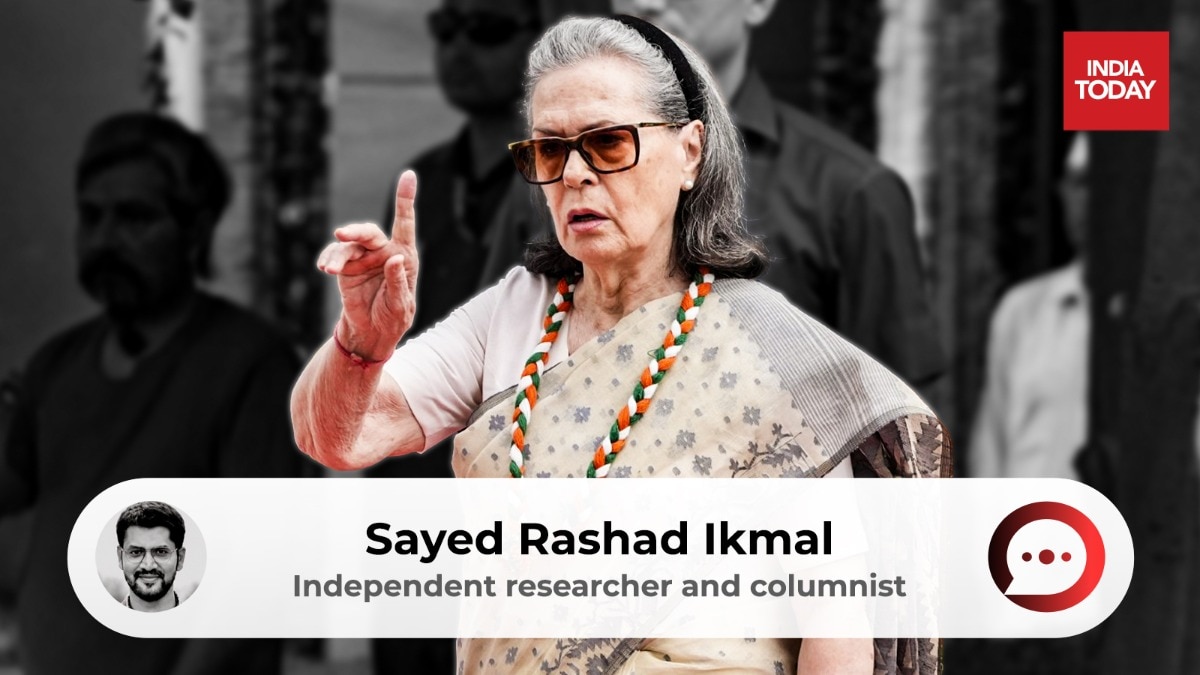
A recent incident involving Sonia Gandhi during the singing of Vande Mataram has reignited a century-old debate on secularism and national symbols. Is patriotism measured by the length of a song or the depth of inclusion?
- Sonia Gandhi's reaction to the full version of Vande Mataram at the Congress HQ has sparked intense political debate.
- The Congress party follows a 1937 precedent to use only the opening stanzas of the song.
- The controversy touches upon the delicate balance between religious imagery in national songs and secular identity.
During the 80th Independence Day celebrations at the Indian National Congress headquarters, an incident involving former President Sonia Gandhi became a flashpoint for political warfare. As the full rendition of Vande Mataram played, Gandhi appeared visibly uncomfortable. While party leaders like Mallikarjun Kharge and Rahul Gandhi were seen discussing the matter, right-wing ecosystems quickly framed the moment as an act of unpatriotic behavior.
However, to understand this moment, one must look back to 1937. During a pivotal meeting of the Congress Working Committee in Calcutta, legendary leaders including Mahatma Gandhi, Subhash Chandra Bose, and Sardar Patel decided to adopt only the opening stanzas of the song. This was not a sign of weakness, but a masterstroke of statesmanship aimed at ensuring that the national song could unite a civilizationally diverse population without causing religious alienation.
Why This Matters
BozokMedia analysis shows that this controversy is less about a song and more about the definition of 'Indianness.' The later stanzas of Bankim Chandra Chattopadhyay's masterpiece invoke Hindu deities like Durga and Lakshmi. For a secular state, the debate remains: should national symbols contain imagery that some citizens may find religiously exclusionary?
True patriotism lies in the ability to foster a sense of belonging for every citizen, regardless of their religious identity.
For decades, the BJP has attempted to challenge Sonia Gandhi's identity as a 'Hindustani' leader, frequently citing her Italian origins. This latest episode appears to be a continuation of that long-standing political strategy to question her commitment to the nation through symbolic litmus tests.
Frequently Asked Questions
1. Why does Congress only sing parts of Vande Mataram?
The party adheres to a 1937 decision to use only the first two stanzas to ensure the song remains inclusive of all religious communities in India.
2. What was the criticism against Sonia Gandhi?
Critics argued that her discomfort during the full version of the song was a sign of anti-nationalism, a claim the Congress party vehemently denies.


