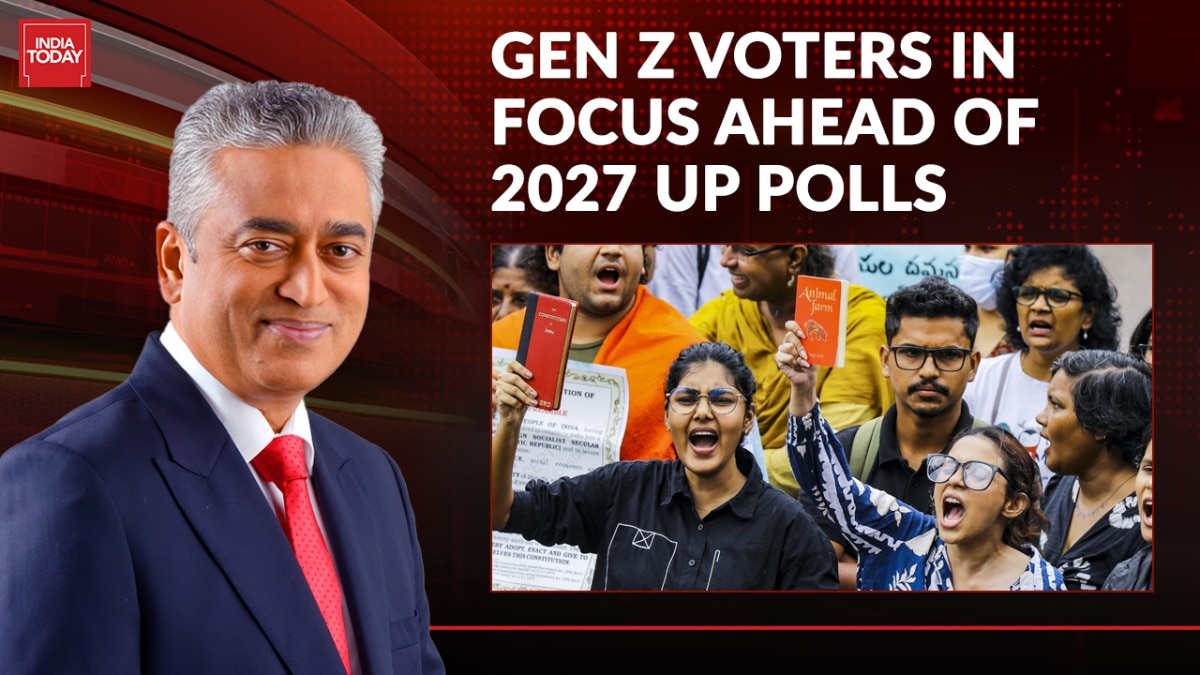
Political heavyweights are racing to capture the Gen Z and Gen Alpha vote bank. From PM Modi's university visits to Rahul Gandhi's massive student rallies, the battle for the youth is intensifying.
- Political parties are targeting the 18-29 age demographic.
- PM Modi has launched the 'One Day One University' initiative.
- Congress is conducting 'Chhatro ki Kood' rallies in 800 cities.
- Employment and paper leaks are driving youth political engagement.
The landscape of Indian politics is undergoing a seismic shift. Political parties are no longer just competing for traditional rural or urban blocks; they are now locked in a high-stakes race to win over Gen Z and Gen Alpha voters. This demographic, aged between 18 and 29, is increasingly seen as the ultimate kingmaker for upcoming contests, including the pivotal 2027 Uttar Pradesh elections.
Prime Minister Narendra Modi has taken a proactive stance by directing union ministers to participate in the 'One Day One University' initiative. This program is designed to foster direct engagement with students, discussing educational reforms, employment schemes, and digital literacy. The goal is to bridge the gap between the administration and the tech-savvy youth through both physical presence and massive digital outreach.
Why This Matters
BozokMedia analysis shows that the political center of gravity is shifting toward issues of employability and academic integrity. Following widespread protests over paper leaks, young voters have become more politically conscious and demanding of accountability, making them a volatile yet decisive force.
The youth vote is no longer a peripheral concern; it is now the central battlefield of Indian democracy.
Simultaneously, the Congress party is mounting a massive counter-offensive. Led by Rahul Gandhi, the party is organizing 'Chhatro ki Kood' rallies across nearly 800 cities. These rallies focus heavily on direct interaction, allowing Gandhi to critique the government's handling of student issues and position the party as a champion of youth aspirations.
The competition is even attracting smaller players. The Cockroach Janata Party has carved out a niche by focusing on school infrastructure, indicating that political messaging is becoming increasingly granular to address specific grassroots concerns of the younger generation.
Historical Background
Historically, Indian elections were often dictated by identity politics. However, as internet penetration has skyrocketed, the 'Digital Native' generation has introduced a new era where information is decentralized. The rise of Gen Z signifies a transition from identity-based voting to aspiration-based voting, centered around jobs, education, and digital rights.
Frequently Asked Questions
Question 1: Who constitutes the Gen Z voter demographic in India?
Answer: In the context of current elections, it primarily refers to voters aged between 18 and 29 years.
Question 2: What is the 'One Day One University' initiative?
Answer: It is a government-led outreach program where ministers visit campuses to engage students on employment and education-related schemes.

