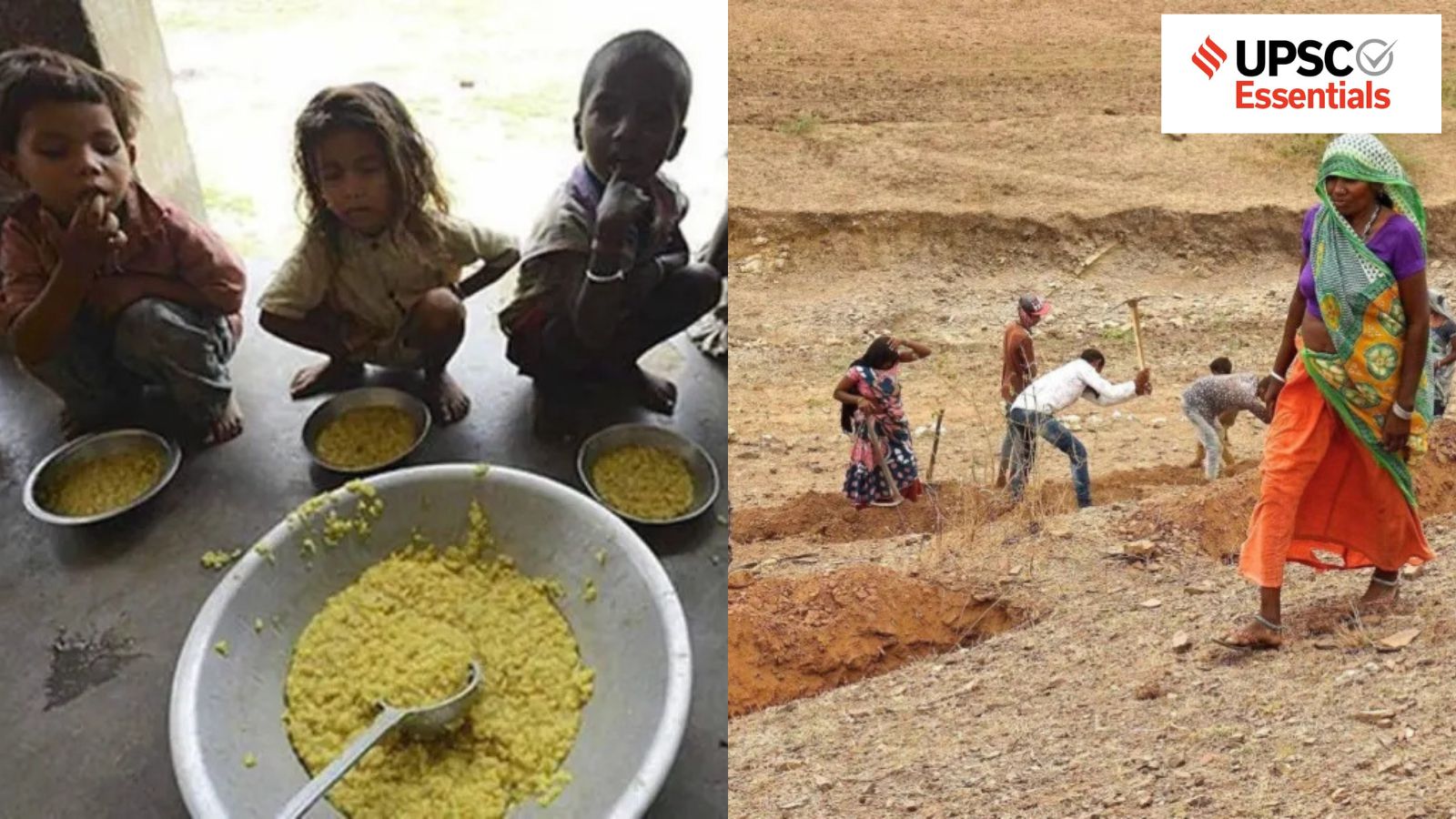
Developmental challenges like malnutrition and rural poverty are multifaceted. This analysis explores why 'convergence'—the alignment of multiple government schemes—is essential for impactful public policy.
- Developmental issues are interconnected and cannot be solved by a single departmental silo.
- Convergence focuses on aligning outcomes rather than merging administrative structures.
- The VB-G RAM G Act, 2025 promotes a 'Single Plan–Multi Funding' model at the Panchayat level.
- Effective convergence requires integration across planning, finance, administration, and data.
In the complex landscape of Indian administration, the term 'convergence' has emerged as a vital concept. From rural livelihoods to nutrition and social protection, development outcomes are rarely the result of a single intervention. Instead, they depend on the seamless coordination of multiple departments and schemes working toward a shared objective.
A landmark development in this direction is the Viksit Bharat–Guarantee for Rozgar and Ajeevika Mission (Gramin), or VB–G RAM G Act, 2025. Discussed in high-level consultations in June 2026, this framework places the Viksit Gram Panchayat Plan at the heart of local governance. It proposes a revolutionary "Single Plan–Multi Funding" approach, allowing various schemes to contribute to common local goals while maintaining their individual mandates.
Why This Matters
BozokMedia analysis shows that the traditional departmental approach often creates a mismatch between how a citizen experiences a problem and how the government delivers a solution. A single household does not experience 'poverty' as a single line item; they experience it as a lack of income, poor water quality, inadequate nutrition, and limited connectivity simultaneously. If government interventions remain fragmented, the impact on the ground remains diluted.
Convergence is not about merging schemes into one, but about ensuring they meet at the exact point where the citizen experiences development.
Take the challenge of malnutrition. Solving it requires more than just providing food supplements. It demands maternal health, immunization, safe water, and sanitation. This is why initiatives like Mission Saksham Anganwadi and Poshan 2.0 are designed to combine nutrition with early childhood interventions and health check-ups, bridging the gap between nutrition and health departments.
Distinguishing Convergence from Merger and Saturation
It is crucial to understand that convergence is distinct from other administrative terms:
| Concept | Definition | Focus |
|---|---|---|
| Merger | Combining schemes/institutions into one. | Structure |
| Saturation | Ensuring 100% coverage of eligible people. | Reach |
| Convergence | Aligning different schemes for a shared outcome. | Impact & Coordination |
Convergence operates across several dimensions: Planning convergence ensures a single roadmap for a district; Financial convergence allows complementary funding; Administrative convergence creates shared responsibility through nodal officers; and Data convergence ensures all departments are working from the same beneficiary database.
Frequently Asked Questions
1. Does convergence mean departments lose their independence?
No. Departments retain their specific budgets and legal mandates, but they align their timing and location of interventions.
2. How does data convergence help in rural development?
It prevents duplication of efforts and ensures that resources are directed to the most vulnerable households identified across multiple databases.


