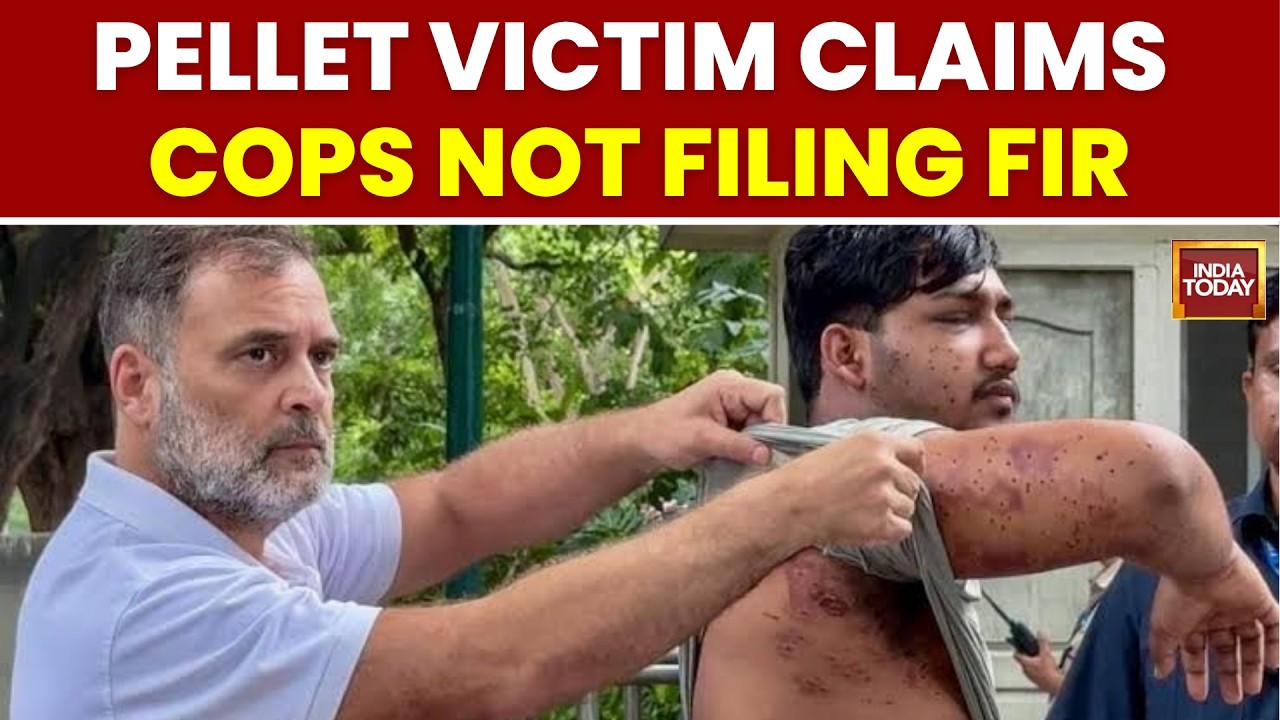
Congress leader Rahul Gandhi visited the Parliament Street police station with Sahil Lochab, a victim injured by a pellet gun during the July 20 student protest. He demanded answers on the inquiry's status and alleged police refusal to file a complaint, underscoring the party's call for accountability on the use of pellet guns against students.
- Rahul Gandhi visited Parliament Street police station accompanied by pellet gun victim Sahil Lochab.
- He sought details regarding the inquiry into the use of pellet guns during the July 20 student protest.
- Congress alleged that police had previously refused to file a complaint for the victim, prompting the personal intervention for an FIR.
- The incident highlights the growing demand for accountability from the central government on the authorization of force and pellet gun use against students.
New Delhi: Congress leader and Leader of Opposition Rahul Gandhi visited the Parliament Street police station accompanied by Sahil Lochab, a victim who sustained pellet gun injuries during the student protest in Delhi on July 20. The visit aimed to obtain clarification on the status of the inquiry into the incident and the consequences of pellet gun usage. Congress sources indicated that Gandhi personally accompanied Lochab to ensure that a First Information Report (FIR) was registered, alleging that the police had previously refused to file a complaint on Lochab's behalf.
During their visit to the Deputy Commissioner of Police's office, medical and hospital documents were presented to substantiate the case regarding the injuries sustained by Lochab. This move underscores the Congress party's persistent demand for accountability and clarification from the central government regarding who authorized the use of pellet guns and force against students during the July 20 protest at Jantar Mantar. The incident raises serious questions about the role of the police in managing democratic protests and the legality of using such force.
Historical Background
The use of pellet guns to control protests has long been controversial in India, particularly in regions like Kashmir. While considered 'non-lethal' weapons, pellet guns can cause severe injuries, blindness, and even death. In 2016, following widespread use during protests in Kashmir, the Supreme Court urged the central government to explore alternatives. Its deployment during a student protest in Delhi, once again, reignites debates on the human rights implications of crowd control techniques. This incident reflects the need for a review of protocols for the use of force by the police and accountability mechanisms.
Opposition parties have consistently questioned the government on whether there are standard operating procedures (SOPs) for deploying such weapons and if these protocols were adhered to in the July 20 incident. The alleged refusal by the police to register an FIR also raises concerns about obstruction of the judicial process and violation of a citizen's rights.
Why This Matters
This incident is significant for several reasons. Firstly, it raises serious questions about the legality and ethics of using force against citizens, especially students, during protests. Secondly, a direct visit by an opposition leader to a police station, following an alleged police refusal to register an FIR, highlights the challenges citizens might face in getting their grievances recorded. BozokMedia analysis shows that this event underscores the importance of police accountability, transparency, and the right to protest in a democracy. It puts pressure on the government and law enforcement agencies to uphold civil liberties and maintain the rule of law.
“This incident serves as a critical warning for the police to strengthen their accountability processes and ensure every citizen has unhindered access to justice, especially when allegations of force are involved.”
The Congress party has vowed to raise the matter in Parliament, demanding immediate intervention from the Union Home Ministry and a thorough investigation into the incident. This case pertains not only to Lochab's injuries but also to the broader implications of law enforcement's use of force during protests and the right to dissent in a democratic society.
Frequently Asked Questions
- What happened at the July 20 student protest?
- Why is the use of pellet guns controversial in protests?