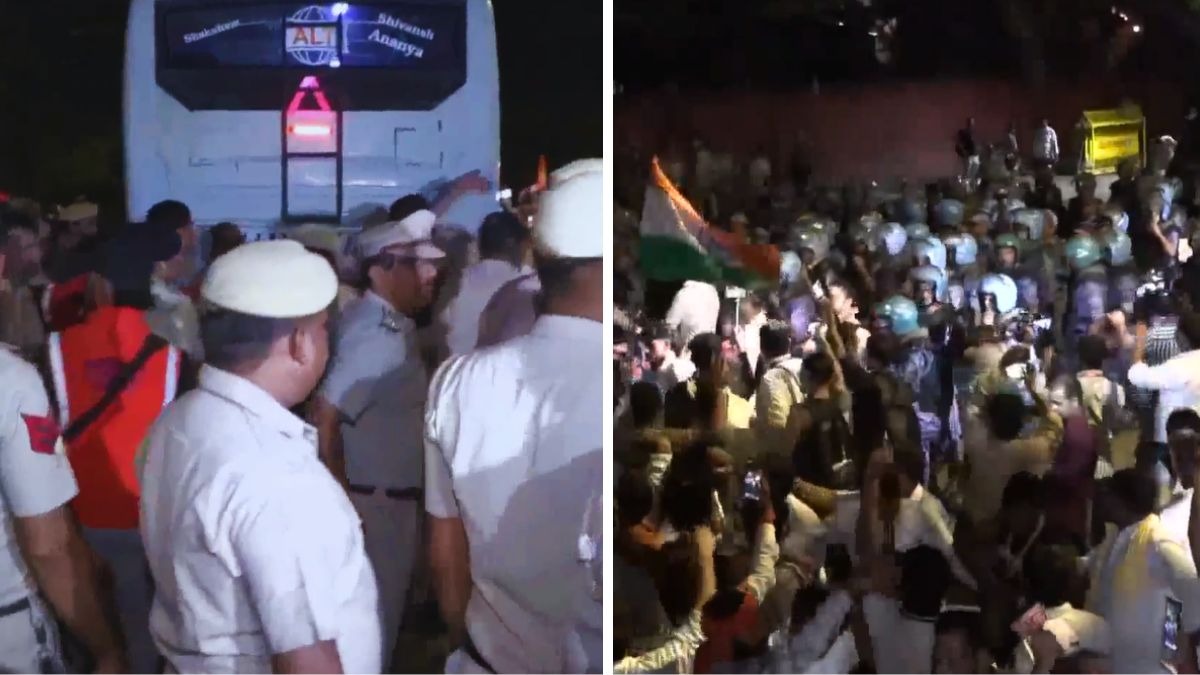
Protesters gathered at Jantar Mantar to demand a review of UGC equity rules and caste-based reservation were detained by the Delhi Police and RAF. The group called for economic criteria to be prioritized in government schemes.
- Protesters at Jantar Mantar were removed by Delhi Police and the Rapid Action Force (RAF).
- The demonstration targeted UGC equity rules and the existing caste-based reservation system.
- Protesters demanded the implementation of the 'Creamy Layer' concept for all categories.
- Police cited Section 163 of the BNSS as the reason for preventing the assembly.
The atmosphere at Jantar Mantar in New Delhi turned volatile as security forces moved in to disperse a large gathering of protesters. The demonstrators, representing segments of the upper caste community, were protesting against the University Grants Commission (UGC) equity rules and the current framework of caste-based reservation in India.
According to eyewitnesses and official reports, the Rapid Action Force (RAF) and Delhi Police personnel arrived at the site to clear the protest area. Protesters were seen being loaded into buses to be moved away from the site. The demonstrators argued that they were attempting to conduct a peaceful assembly to voice their concerns regarding social and economic justice.
Why This Matters
BozokMedia analysis shows that this protest highlights the growing friction between traditional caste-based affirmative action and the emerging demand for economic-based welfare. As the debate over 'Creamy Layer' implementation widens, it could lead to significant policy shifts in educational and administrative sectors across India.
The push for economic-centric reservation marks a pivotal shift in the discourse of social justice in contemporary India.
The primary demand of the protesters was for the government to prioritize economic status over caste in the distribution of scholarships, fee concessions, and coaching assistance. They advocated for a system where benefits reach the truly underprivileged, suggesting that the 'Creamy Layer' principle should be applied more broadly to ensure equitable distribution of resources.
On the legal front, the Delhi Police maintained that no permission had been granted for the protest on August 21. Authorities clarified that Section 163 of the Bharatiya Nagarik Suraksha Sanhita (BNSS) was already in effect in the New Delhi district, which prohibits the assembly of five or more people for protests or processions. The police also dismissed social media claims regarding granted permissions as 'fake and misleading.'
The situation remained tense as barricades were erected and paramilitary forces were deployed to maintain law and order. While some protesters claimed they were only seeking a peaceful dialogue, the lack of official authorization led to the large-scale detention and dispersal operation.
Frequently Asked Questions
Question 1: What were the specific demands of the protesters?
Answer: They demanded a review of reservation policies, focusing on economic status and the implementation of the 'Creamy Layer' concept.
Question 2: Why did the police intervene?
Answer: The police intervened because the protest was unauthorized and violated Section 163 of the BNSS, which restricts public assemblies.

