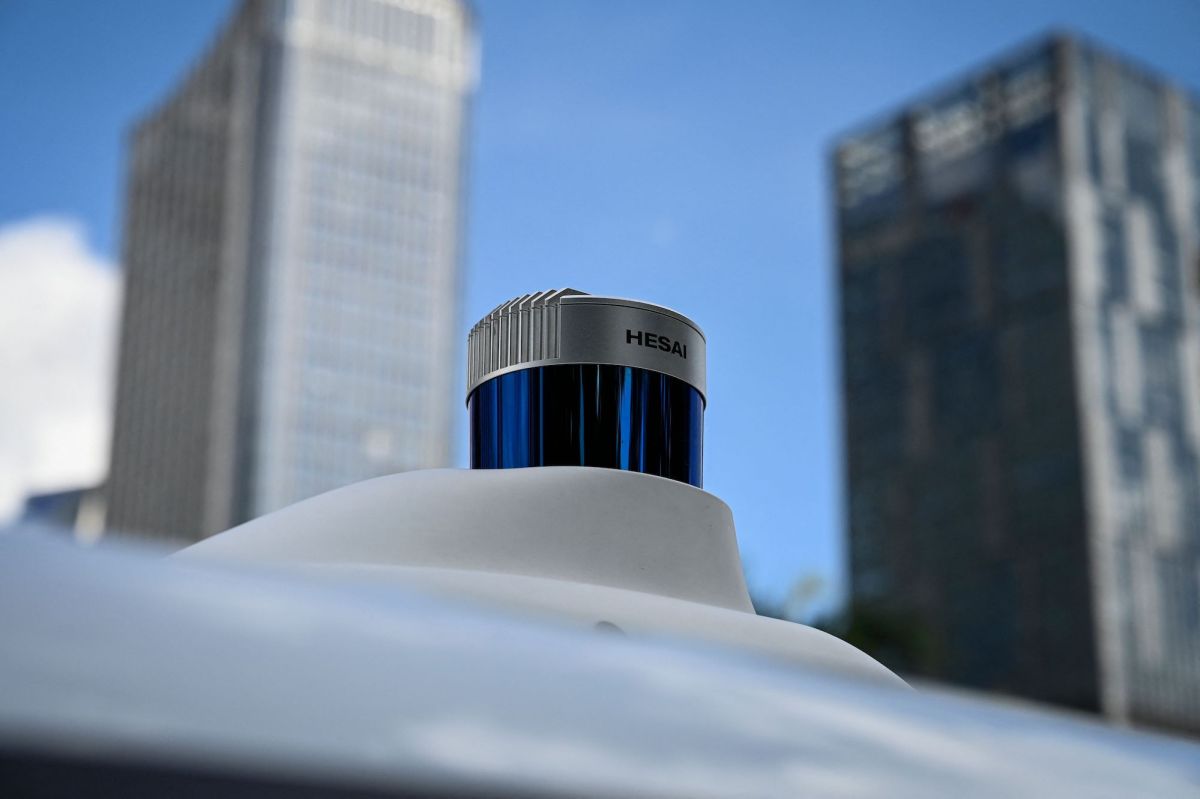
The Idaho National Laboratory is conducting a high-stakes security review of Chinese LiDAR sensors to determine if they pose espionage or cybersecurity risks to US autonomous vehicles.
- Idaho National Laboratory is investigating potential security flaws in Chinese-made LiDAR sensors.
- US lawmakers fear these sensors could serve as 'back doors' for military or industrial espionage.
- Chinese firms like Hesai and RoboSense have drastically lowered costs, attracting US automakers.
- Cybersecurity experts warn of risks ranging from mass sensor disabling to sensitive data theft.
A prominent laboratory under the US Department of Energy, the Idaho National Laboratory, is currently investigating whether Chinese-manufactured LiDAR (Light Detection and Ranging) sensors could pose a significant national security risk if integrated into American vehicles. This investigation comes at a critical juncture as the autonomous vehicle industry grapples with the tension between cost-efficiency and cybersecurity.
LiDAR technology, which uses laser pulses to create high-resolution 3D maps of a vehicle's surroundings, is essential for the safe operation of self-driving cars. However, US legislators, including Senator Tammy Baldwin and Congressman John Moolenaar, have raised alarms. They suggest that these sensors could potentially act as conduits for espionage, transmitting sensitive data back to Chinese interests or allowing for remote interference with vehicle systems.
Why This Matters
BozokMedia analysis shows that this is more than a simple hardware check; it is a battle for the future of transportation infrastructure. As the US moves toward a future of ubiquitous autonomous mobility, the integrity of the sensor stack becomes a matter of national sovereignty. Dependency on a geopolitical rival for critical sensor technology creates a strategic vulnerability that could be exploited during a conflict.
If an OEM builds its entire autonomous driving stack based on a Chinese supply chain, that is a massive strategic risk down the road.
The economic driver behind this controversy is the dramatic drop in LiDAR costs. While a decade ago these sensors could cost upwards of $75,000, Chinese giants like Hesai and RoboSense have scaled production to bring prices down to just a few hundred dollars. This price gap has placed immense pressure on American manufacturers like Luminar and has made companies like Rivian and General Motors consider Chinese components to remain competitive.
Beyond physical espionage, the cybersecurity risks are multifaceted. Experts warn that sensors could theoretically be disabled en masse, potentially paralyzing robotaxi fleets. Furthermore, the highly detailed spatial data collected by LiDAR can be compressed and transmitted via cellular networks, providing a granular view of American streets and movement patterns to foreign entities.
Frequently Asked Questions
1. What is the primary security concern regarding Chinese LiDAR?
The main concerns are 'back door' access for espionage and the potential for mass-disabling sensors to disrupt transportation networks.
2. Why are US companies interested in Chinese LiDAR if there are risks?
The primary driver is cost. Chinese manufacturers have achieved economies of scale that allow them to sell sensors at a fraction of the price of US-made alternatives.