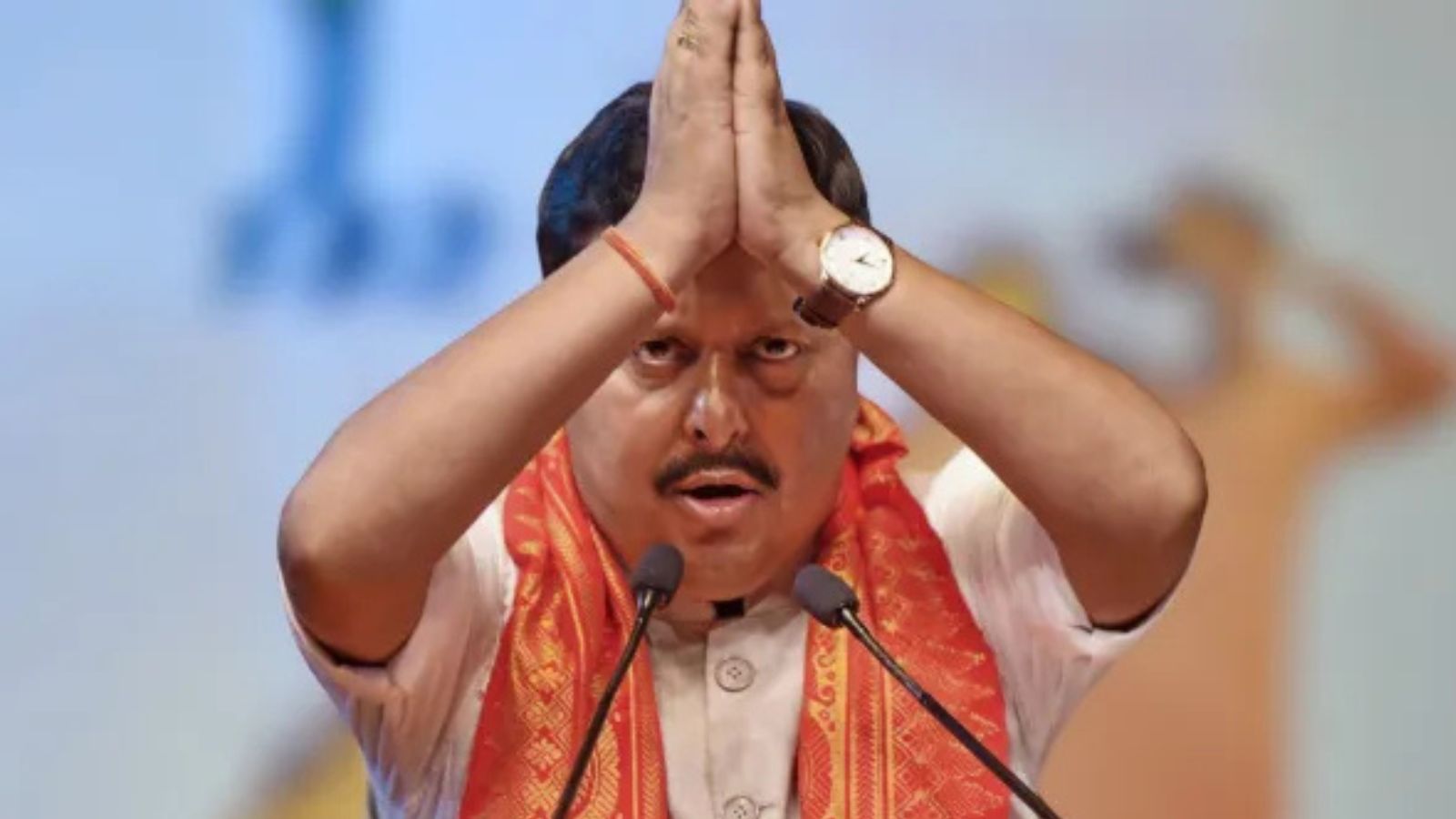
The Bharatiya Janata Party (BJP) has passed a formal resolution to uphold the complete singing of India's national song, Vande Mataram, strongly condemning the Congress party's decision to limit it to just two stanzas. BJP National President Nitin Nabin announced a nationwide campaign to spread awareness about the song's historical and national significance.
- BJP passes a resolution to honor the complete version of Vande Mataram.
- Congress criticized for restricting the national song to its first two stanzas, reviving its 1937 stance.
- BJP launches a nationwide campaign to educate citizens on the song's historical legacy.
The Bharatiya Janata Party (BJP) on Saturday passed a significant resolution to uphold the "honour, dignity, legacy, and national status of the complete Vande Mataram" and strongly condemned the Congress party's decision to restrict the singing of the national song to its first two stanzas. This move signals a fresh ideological battleground between the ruling party and the opposition over India's cultural and historical legacy.
The resolution was announced by BJP National President Nitin Nabin following the first round of deliberations among his newly formed organizational team. In a post on social media platform X, Nabin emphasized that the BJP regards Vande Mataram as the National Song of Bharat, an expression of deep reverence for Bharat Mata, a core mantra of the freedom struggle, and an immortal symbol of India's national consciousness.
Slamming Congress's 1937 Reaffirmation
The BJP's sharp reaction comes just days after the Congress Working Committee (CWC), on August 19, 2026, reaffirmed its 1937 resolution to restrict the singing of Vande Mataram to its first two stanzas during official Congress party programs. The BJP has labeled this move as a clear sign of "political appeasement" and "narrow vote-bank considerations."
Taking a direct swipe at the principal opposition party, Nabin stated that the BJP has resolved to "reject every attempt to subordinate" the National Song to communal pressure. To counter the Congress's stance, Nabin announced a massive nationwide campaign led by BJP workers to take the history, meaning, national significance, and glorious legacy of Vande Mataram to every corner of India.
Why This Matters
BozokMedia analysis shows that the dispute over Vande Mataram is not merely a debate over historical stanzas but a fundamental clash of political ideologies. By aligning the national song with Prime Minister Narendra Modi's vision of 'Developed India @ 2047,' the BJP is effectively framing the debate around modern patriotism, leaving the Congress to defend a complex historical compromise that may not resonate as strongly with contemporary voters.
"Vande Mataram is not merely a song, but an emotional and historical anchor of India's freedom movement that continues to define its post-independence identity."
Historical Background and the 1937 Resolution
Written by Bankim Chandra Chattopadhyay in the 1870s and later included in his novel *Anandamath*, Vande Mataram became a powerful rallying cry during the Indian independence movement. However, in 1937, the Congress Working Committee recommended singing only the first two stanzas of the song to address the concerns of non-Hindu communities who objected to the personification of the motherland as a deity in the latter parts of the song. While Congress views this as a historical consensus, the BJP views it as an unnecessary compromise of national pride.
| Comparison Aspect | BJP Stance | Congress Stance |
|---|---|---|
| Scope of Singing | Advocates for the honor and singing of the complete song. | Restricts singing to the first two stanzas based on the 1937 resolution. |
| Core Philosophy | Symbol of absolute patriotism and national consciousness. | Historical compromise to maintain communal harmony. |
| Action Plan | Launching a nationwide awareness and educational campaign. | Adhering to traditional party protocols for official events. |
Frequently Asked Questions
Q1: Why did Congress restrict Vande Mataram to two stanzas in 1937?
A1: The CWC in 1937 decided to sing only the first two stanzas to respect the religious sentiments of various communities, as the subsequent stanzas contained imagery comparing the nation to Hindu goddesses.
Q2: What is the goal of the BJP's nationwide campaign on Vande Mataram?
A2: The campaign aims to educate citizens across India about the complete history, meaning, and patriotic legacy of the national song, countering what the BJP calls historical distortions.

