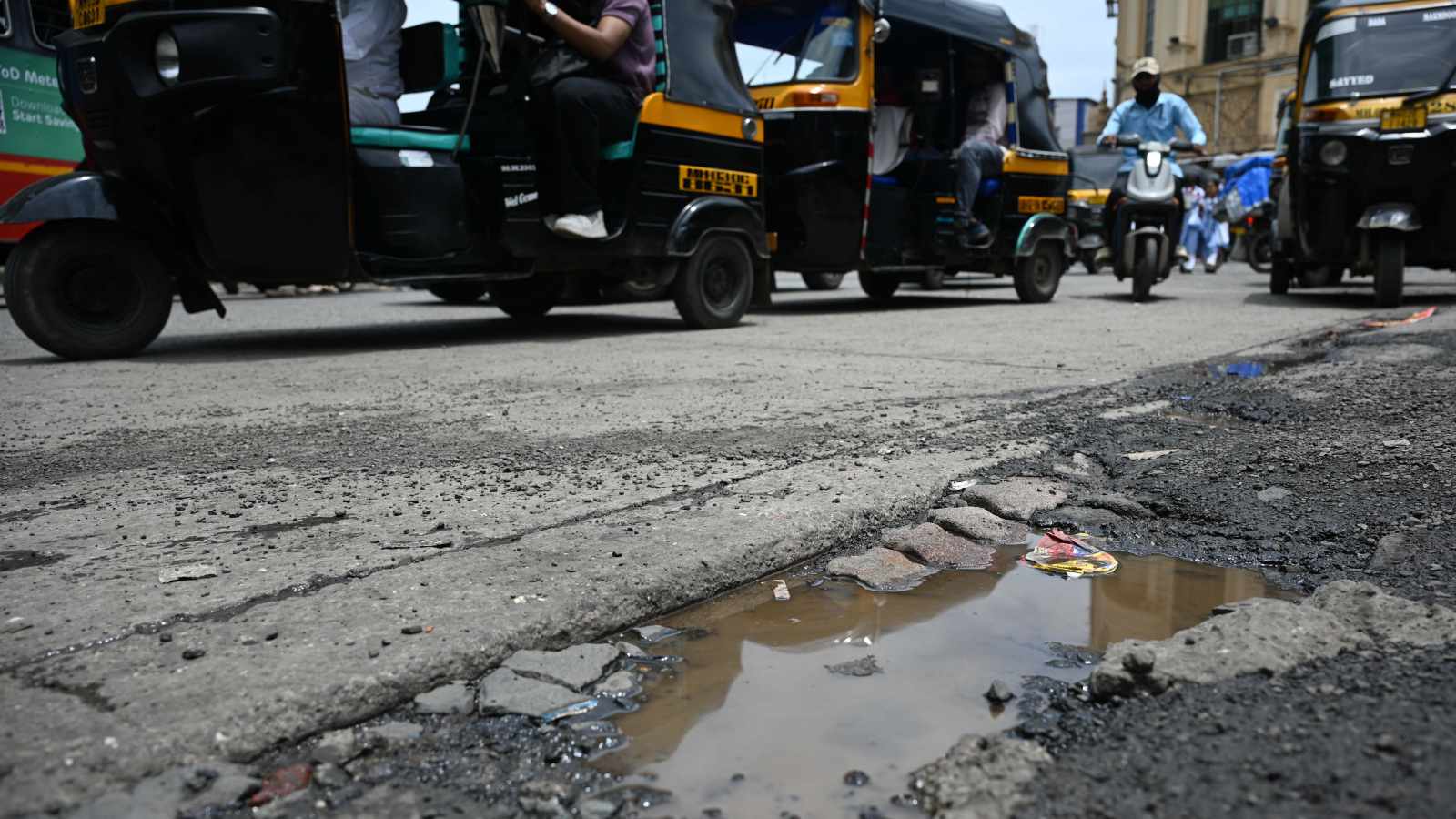
Despite a massive ₹17,000-crore road concretisation drive, Mumbai has seen over 8,000 pothole complaints in just two months, with eastern suburbs bearing the brunt.
- Over 8,032 pothole complaints were filed in Mumbai between June 10 and August 20.
- Eastern suburbs like Bhandup and Mankhurd reported the highest number of issues.
- BMC claims concretisation has improved road durability compared to last year.
- Utility trenching and bituminous stretches remain the primary culprits.
Mumbai's perennial battle with potholes has resurfaced with the arrival of the monsoon. Despite the Brihanmumbai Municipal Corporation (BMC) aggressively pushing its ₹17,000-crore road concretisation project, residents have filed more than 8,000 complaints regarding damaged roads in just over two months.
According to official data, between June 10 and August 20, the civic body received 8,032 pothole-related complaints across its 26 wards. While the BMC reported resolving 7,829 of these, the sheer volume highlights the ongoing struggle of urban commuters during the rainy season.
Regional Disparity in Road Damage
The data reveals a stark contrast between different parts of the city. The eastern suburbs have emerged as the most problematic zones. The S ward (Bhandup) recorded the highest number of complaints at 471, followed closely by the M/East ward (Govandi, Deonar, and Mankhurd) with 461 complaints. Meanwhile, South Mumbai's premium areas like Churchgate (A ward) remained relatively unscathed with only 61 complaints.
| Ward Name | Complaints | Major Areas Covered |
|---|---|---|
| S Ward | 471 | Bhandup |
| M/East Ward | 461 | Govandi, Mankhurd |
| M/West Ward | 374 | Chembur, Tilak Nagar |
| L Ward | 357 | Kurla, Saki Naka |
| A Ward | 61 | Churchgate, Fort |
Most complaints were lodged through digital platforms, with over 5,000 registered on the 'My BMC Marg' forum, 1,500 via WhatsApp, and 800 on X (formerly Twitter).
Why This Matters
BozokMedia analysis shows that the disconnect between massive infrastructure spending and ground-level road quality suggests a systemic issue in how utility works are coordinated with road maintenance. The recurring pattern of potholes appearing after trenching work indicates a lack of integrated urban planning.
The number of potholes has reduced owing to road concretisation, but bituminous stretches remain a significant challenge. - Ashwini Bhide, BMC Commissioner
BMC Commissioner Ashwini Bhide noted that while the concretisation of over 475 km of roads has helped, the remaining bituminous (asphalt) stretches are still highly susceptible to monsoon damage. She emphasized that the problem would persist until the entire 2,050 km road network is transitioned to concrete.
Civic officials also pointed out that many complaints stem from depressions around trenches dug for utility services. As these trenches settle after being filled, they frequently create new hazards for motorists.
Frequently Asked Questions
1. Why do potholes keep appearing after repairs?
Many potholes are caused by recent trenching for utility works. When the soil in these trenches settles, it creates depressions that turn into potholes.
2. What is the BMC doing to solve the long-term issue?
The BMC is implementing a massive ₹17,000-crore road concretisation project to replace old bituminous roads with more durable concrete surfaces.