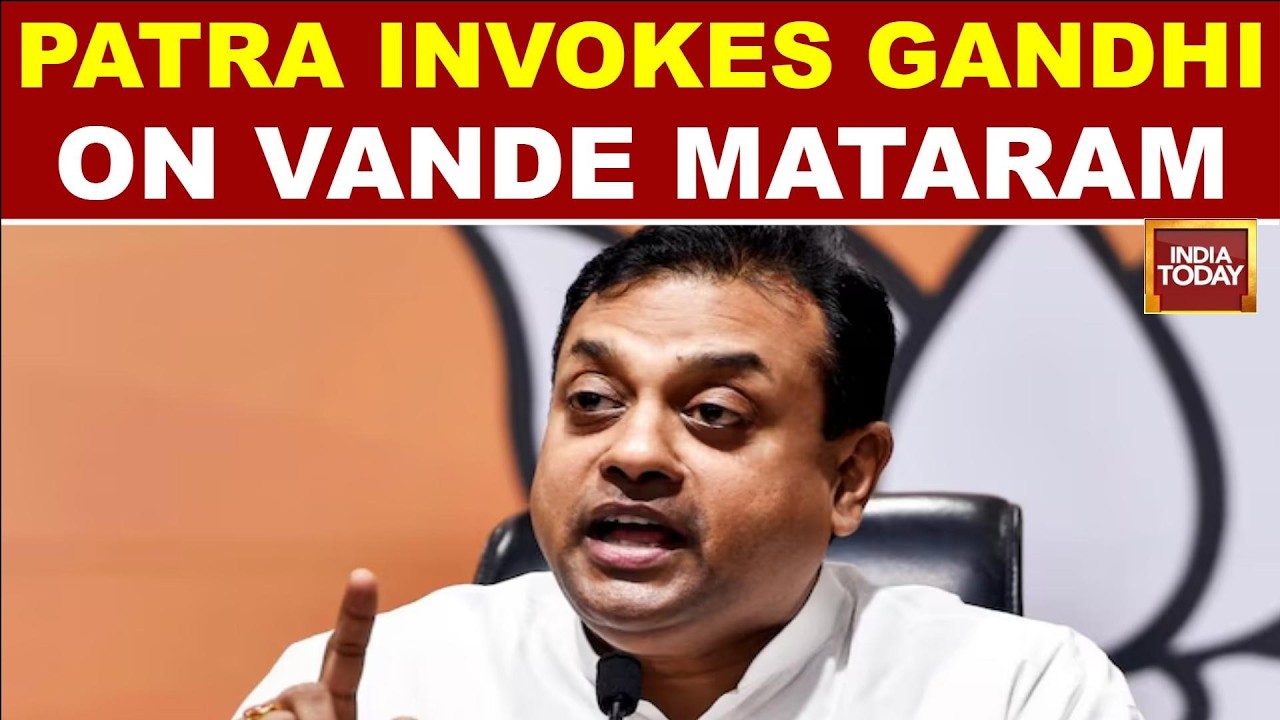
The BJP has passed a stern resolution against the Congress Working Committee's proposal regarding the rendition of Vande Mataram, accusing the opposition of historical appeasement.
- BJP passed a resolution condemning the proposal to restrict Vande Mataram to two stanzas.
- Sambit Patra invoked the 1937 historical context to criticize Congress's stance.
- PM Modi held strategic meetings with the newly appointed BJP leadership team.
The Bharatiya Janata Party (BJP) headquarters became the epicenter of a heated political debate following a high-level meeting of its newly formed leadership team. During the session, the party passed a decisive resolution targeting the Congress Working Committee's (CWC) proposal to limit the rendition of the national song, Vande Mataram, to just two stanzas.
Spokesperson Sambit Patra launched a scathing attack on the Congress leadership, asserting that the full six stanzas of the song hold immense historical and spiritual significance. Patra specifically invoked the political atmosphere of 1937, suggesting that the current opposition stance mirrors historical attempts to create divisions within the national fabric through appeasement tactics.
Why This Matters
BozokMedia analysis shows that this confrontation transcends a simple debate over lyrics; it is a fundamental clash over India's cultural identity and national symbols. By framing the issue around the 1937 resolution, the BJP is attempting to link the Congress's current policy to long-standing historical narratives of political fragmentation.
The sanctity of national symbols is non-negotiable, and any attempt to dilute them is viewed as an affront to the independence struggle.
Parallel to this controversy, Prime Minister Narendra Modi engaged in multiple rounds of discussions with the new BJP office bearers. These meetings were designed to strategize for upcoming electoral challenges and to streamline the party's organizational outreach. The integration of the new leadership team is seen as a critical move to fortify the party's grassroots presence.
Historical Background
The song Vande Mataram, composed by Bankim Chandra Chattopadhyay, has been a cornerstone of the Indian independence movement. The debate over its rendition has surfaced periodically in Indian politics, often highlighting the deep ideological rift between the BJP's cultural nationalism and the Congress's secular framework.
Frequently Asked Questions
1. What is the core of the Vande Mataram dispute?
The dispute arises from a Congress proposal to sing only two stanzas of the song, which the BJP claims undermines its full historical significance.
2. What was the significance of the 1937 reference?
Sambit Patra used the 1937 reference to accuse the Congress of following a pattern of political decisions that historically led to national division.