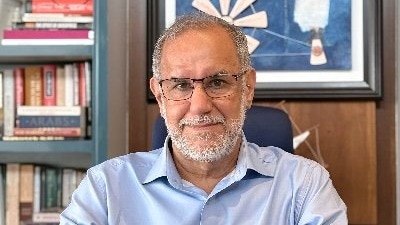
Retired Indian Foreign Service officer Navdeep Suri faced an unexpected hurdle when officials asked him to prove his citizenship during Punjab's electoral roll revision. The incident highlights potential flaws in the voter verification process.
- Retired diplomat Navdeep Suri was asked to provide citizenship proof during Punjab's Special Intensive Revision (SIR).
- The discrepancy arose from data mismatches dating back to 2003.
- The incident raises concerns about the ease of voter verification for ordinary citizens.
In a striking irony, a man who spent decades representing India's interests on the global stage is now struggling to prove his identity to his own country. Navdeep Singh Suri, a retired Indian Foreign Service (IFS) officer, was recently asked to produce documentation to establish his Indian citizenship during the Special Intensive Revision (SIR) of electoral rolls in Punjab.
Suri's career is distinguished by high-level diplomatic roles, including serving as India's Ambassador to the United Arab Emirates and Egypt, and as High Commissioner to Australia. Despite his impeccable official record, the resident of Amritsar encountered bureaucratic hurdles while undergoing routine voter verification.
Why This Matters
BozokMedia analysis shows that this incident exposes a critical vulnerability in the digitization and synchronization of historical electoral data. When a high-ranking former diplomat—whose movements and status are documented by the Ministry of External Affairs—encounters such friction, it suggests that the automated verification systems may lack the nuance required to handle complex, real-world scenarios, potentially disenfranchising millions of legitimate voters.
"If I have trouble establishing my citizenship after representing India in three countries, what’s the fate of the common citizen?" - Navdeep Suri expressed his concern on X.
The issue reportedly stems from a mismatch with records from 2003. At that time, Suri was stationed at the Indian High Commission in London. This period of overseas posting appears to have created a discrepancy in the local voter database, prompting officials to demand his passport and further proof of nationality.
Historical Context: The Punjab SIR Process
The Punjab government is currently in the second phase of the Special Intensive Revision of its electoral rolls. This massive undertaking involves house-to-house verification to ensure the sanctity of the democratic process. During the first phase, which ran from June to August, officials digitized data for nearly 1.94 crore electors.
| Metric | Data/Details |
|---|---|
| Total Registered Electors | 2.14 Crore |
| Enumerated Electors | 1.94 Crore |
| Categorized as Absent/Dead/Duplicate | Over 20 Lakh (9.63%) |
| Final Roll Publication Date | October 12 |
While the process aims to clean up the rolls by removing deceased, shifted, or duplicate entries, the Suri case highlights the risk of 'false negatives'—where valid citizens are flagged as problematic due to administrative errors.
Frequently Asked Questions
1. Why was Navdeep Suri's citizenship questioned?
The authorities cited a mismatch between his current details and the electoral records from 2003, during which he was serving abroad.
2. What is the timeline for the Punjab voter roll update?
Claims and objections can be filed until September 12, with the final rolls expected by October 12.