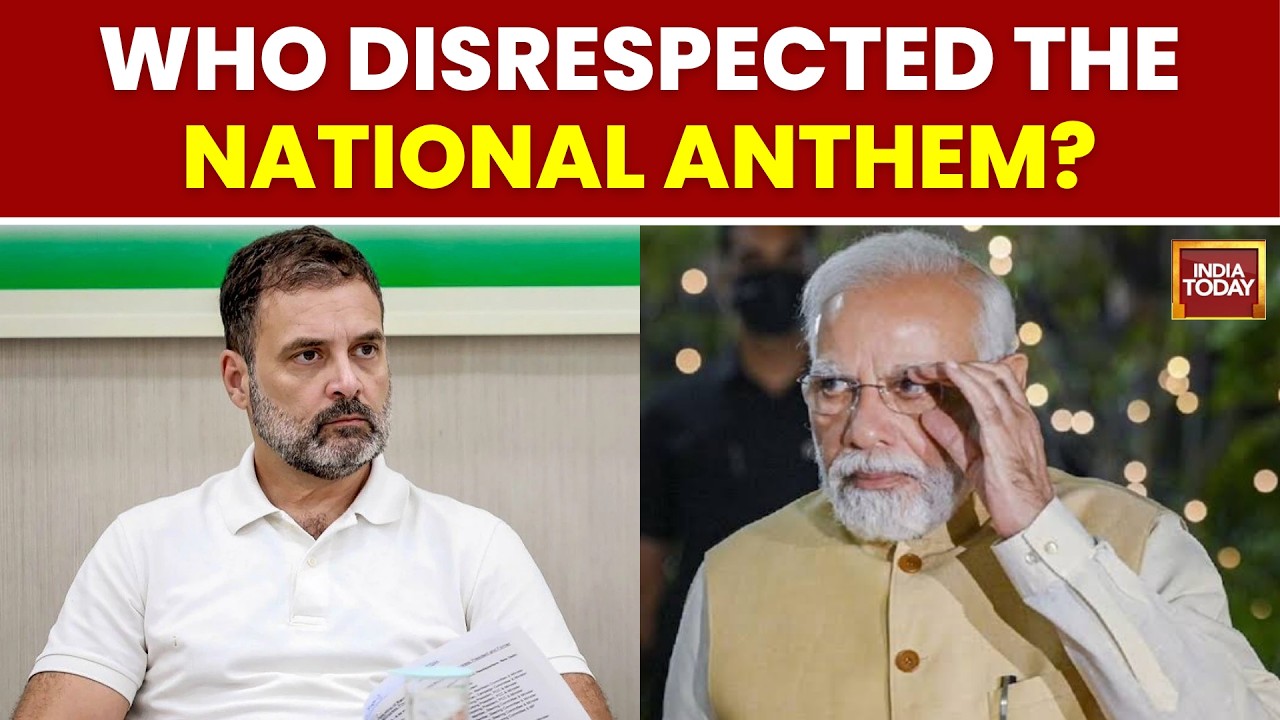
The Congress Working Committee's decision to sing only two stanzas of 'Vande Mataram' has ignited a fierce debate. Is this a strategic error that could mirror the historic Shah Bano fallout?
- The Congress Working Committee (CWC) decided to limit the singing of 'Vande Mataram' to two stanzas.
- Critics argue this move provides ammunition for the BJP's 'appeasement' narrative.
- The decision is being compared to the 1985 Shah Bano judgment reversal.
A profound political debate has erupted in India regarding the boundaries of secularism and cultural identity. The Congress Working Committee (CWC) has recently decided that the party will only sing two stanzas of the national song, 'Vande Mataram', instead of its full version. While the party asserts this is on legal and historical grounds, political analysts are questioning whether this move will inadvertently trigger a 'Shah Bano moment' for the Congress.
Historical Context: The Shadow of 1985
To understand the gravity of this situation, one must look back to 1985. At that time, Prime Minister Rajiv Gandhi held an unprecedented political mandate. However, his decision to overturn the Supreme Court's Shah Bano judgment—which had granted maintenance to a divorced Muslim woman—to appease minority sentiments, became a turning point. That decision allowed the BJP to build a potent narrative around 'minority appeasement,' a strategy that eventually fueled the massive movement for the Ram Temple in Ayodhya. History shows that in Indian politics, perception often outweighs legal correctness.
The Shifting Political Landscape
The political environment of 2024-26 is vastly different from the mid-80s. Under the leadership of Prime Minister Narendra Modi, the Sangh Parivar has successfully reshaped India's public culture. Despite the BJP's reliance on coalition partners in the Lok Sabha, their grip on the national cultural narrative remains dominant. While Rahul Gandhi has managed to find resonance with the youth and Gen Z on various issues, the 'Vande Mataram' controversy offers the BJP a ready-made opportunity to strike at the Congress's core credibility.
Why This Matters
BozokMedia analysis shows that the Congress is walking a tightrope. By attempting to respect the religious sensibilities of minorities regarding the full version of the song, they risk alienating the Hindu majority who view the song as a symbol of unadulterated patriotism. The decision touches upon the very essence of Article 25 of the Constitution and the evolving definition of secularism in India.
Politics is rarely about the letter of the law; it is about the sentiment of the masses.
Since 2014, the fundamental pillars of Indian secularism have undergone a transformation. The debate is no longer just about minority rights, but about how those rights coexist with a rising tide of cultural nationalism. The Congress's decision could be seen as a defensive maneuver to protect minority voices, but it may inadvertently hand the BJP a decisive victory in the battle of perceptions.
Frequently Asked Questions (FAQ)
1. Why is the 'Vande Mataram' decision controversial?
It is controversial because while it aims to respect religious sensitivities, it is being perceived by many as an act of political appeasement, which is a major electoral issue in India.
2. How does the Shah Bano case relate to this?
The Shah Bano case is a historical precedent where a decision to prioritize religious personal law over civil law led to a massive political shift that benefited the BJP.
| Aspect | Shah Bano Case (1985) | Vande Mataram Controversy (Present) |
|---|---|---|
| Key Figure | Rajiv Gandhi | Rahul Gandhi / Mallikarjun Kharge |
| Primary Issue | Muslim Personal Law | Cultural/Nationalist Symbolism |
| Political Impact | Rise of BJP's Appeasement Narrative | Potential Risk of Alienating Majority |