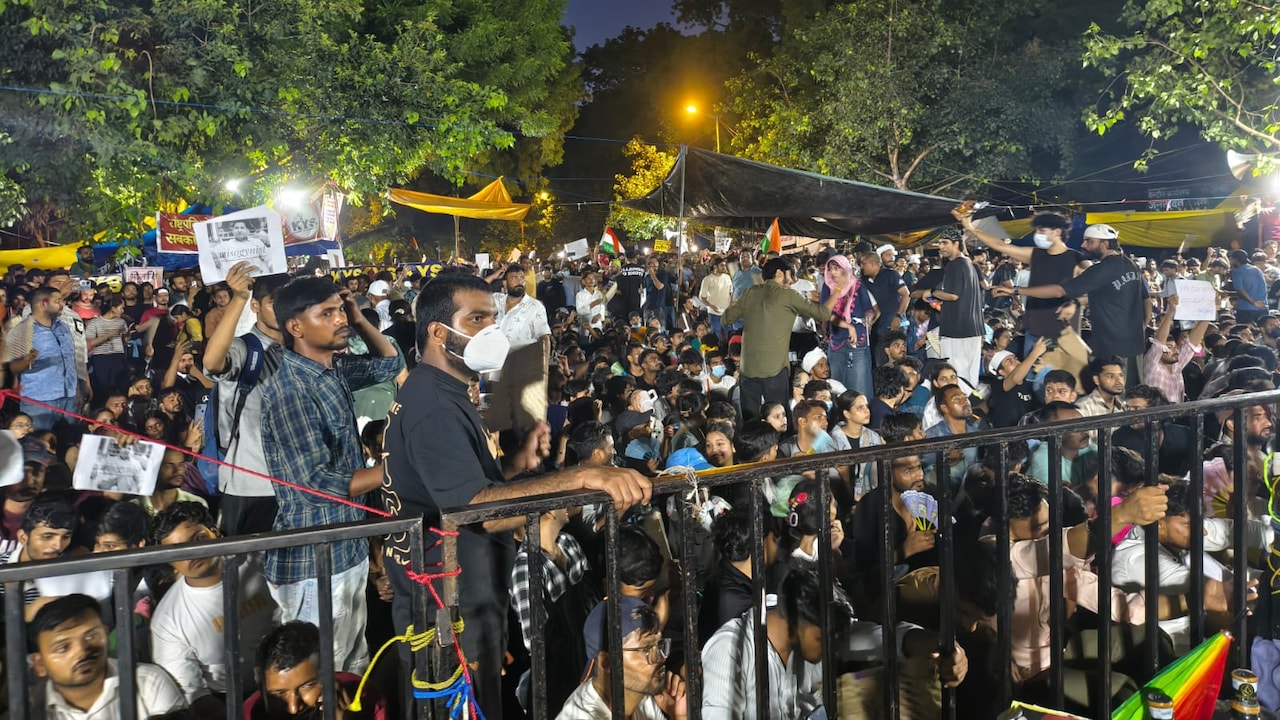
The State Platform for Common School System (SPCSS-T.N.) has urged the Tamil Nadu Chief Minister to nullify directives aimed at surveilling youth participating in political protests.
- SPCSS-T.N. has called for the immediate nullification of the Chief Secretary's surveillance directive.
- The government issued circulars to universities to prevent student participation in political protests.
- Concerns have been raised regarding the lack of communication between the bureaucracy and the Council of Ministers.
A significant political controversy has erupted in Tamil Nadu following directives aimed at monitoring students and youth involved in political demonstrations. The State Platform for Common School System-Tamil Nadu (SPCSS-T.N.) has officially petitioned Chief Minister C. Joseph Vijay to declare the Chief Secretary's recent surveillance orders null and void.
The controversy stems from state government circulars issued to various colleges and universities. These directives instruct educational institutions to actively prevent students from participating in protests organized by political entities, specifically mentioning Left parties and the Cockroach Janta Party. Critics argue that such measures infringe upon the fundamental democratic rights of the youth.
A Breakdown in Governance?
P.B. Prince Gajendra Babu, General Secretary of SPCSS-T.N., highlighted a potential constitutional lapse. He noted that statements made by Ministers in the Legislative Assembly suggest they were kept in the dark regarding major decisions made during a law and order review meeting on July 28, chaired by the Chief Secretary.
The organization argues that in a parliamentary democracy, the elected Council of Ministers must guide the bureaucracy. The failure to inform the executive about significant decisions taken during administrative meetings undermines the principle of ministerial responsibility to the legislature and the public.
Why This Matters
BozokMedia analysis shows that this friction between the bureaucracy and the elected executive highlights a critical tension in state governance. When administrative directives bypass the political leadership, it threatens the established hierarchy of a democratic state and risks creating an unaccountable administrative layer.
The sanctity of a parliamentary democracy relies on the bureaucracy being an instrument of the elected executive, not an independent decision-making body.
The SPCSS-T.N. is now demanding the release of the minutes from the July 28 meeting and has called upon the Chief Minister to present the absolute truth before the Legislative Assembly to restore public trust.
Frequently Asked Questions
1. What is the core demand of SPCSS-T.N.?
They are demanding that the Chief Minister withdraw the directive that allows for the surveillance of students and youth involved in protests.
2. Why is the government issuing these circulars?
The government claims the circulars are necessary to maintain law and order by preventing student participation in political rallies organized by specific parties.