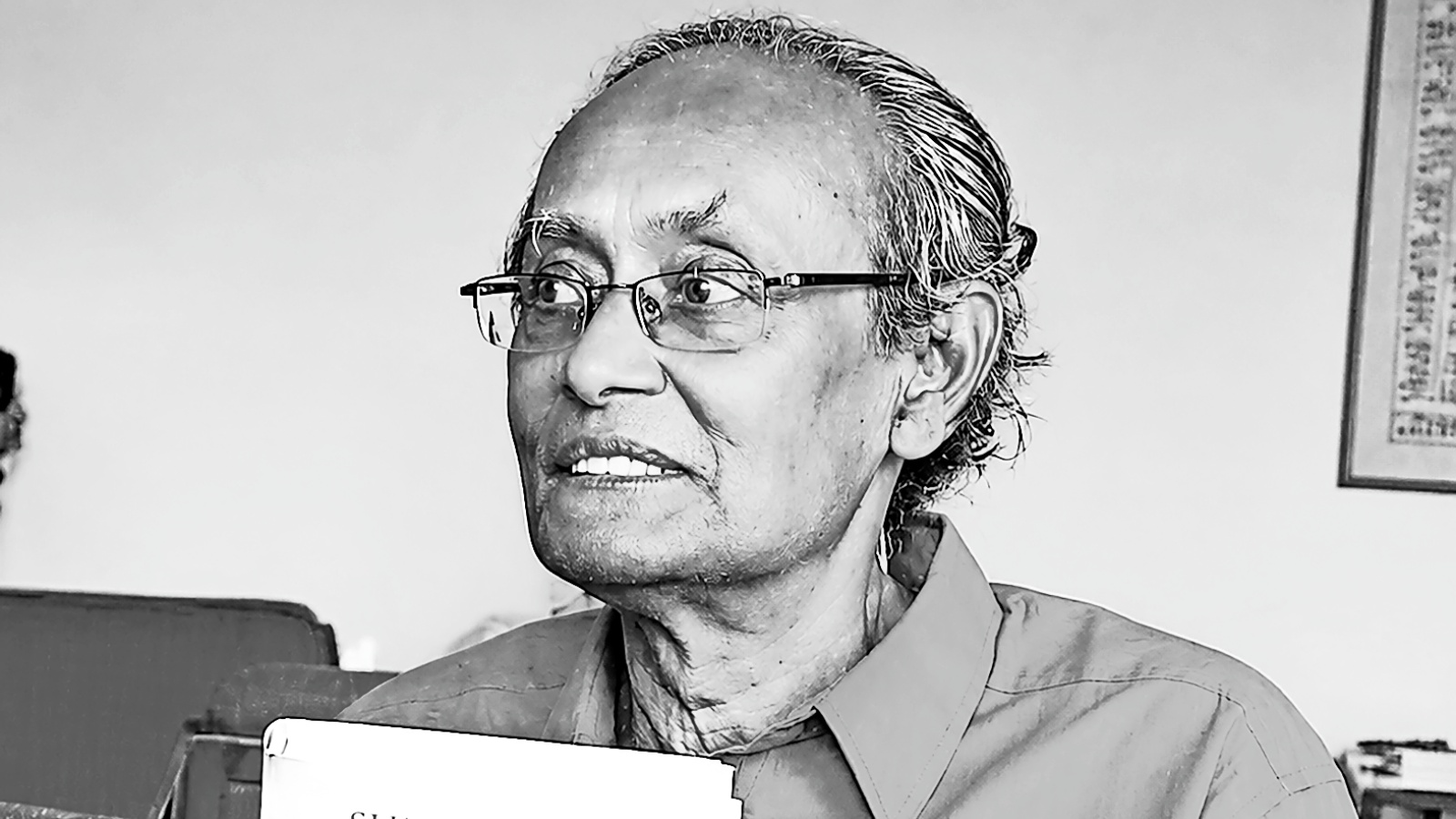
Renowned historian Sumit Sarkar, a pioneer of Subaltern Studies, has passed away at 87. His work shifted the focus of Indian history from elites to the masses.
- Renowned historian Sumit Sarkar passed away on August 13, 2026, at age 87.
- A key figure in the 'Subaltern Studies' movement, focusing on 'history from below.'
- Famous for his seminal work, 'The Swadeshi Movement in Bengal, 1903-1908.'
- Demonstrated immense moral courage by returning the Rabindra Puraskar in 2007.
The passing of a historian is a unique kind of loss; it is the departure of a guide who teaches us not just what happened, but who it happened to. Sumit Sarkar (1939-2026), one of India's most influential historians, passed away on August 13, 2026, leaving behind a legacy that fundamentally restructured the landscape of South Asian historiography.
Sarkar was a cornerstone of the Subaltern Studies Collective, an intellectual movement that emerged in the late 1970s. Before this shift, Indian history was largely a narrative of political elites, great leaders, and colonial administration. Sarkar, alongside figures like Ranajit Guha, revolutionized this by insisting on a 'history from below'—an approach that sought to recover the autonomous political agency of peasants, workers, and tribal communities.
A Shift in Historical Perspective
His early work, 'The Swadeshi Movement in Bengal, 1903-1908' (1973), served as a blueprint for this new era. Instead of focusing solely on the high-level negotiations of nationalist leaders, Sarkar delved into the agency of small artisans and rural workers, proving they were not mere followers of the elite but active participants in their own right.
Sumit Sarkar didn't just write history; he gave a voice to those whom the grand narratives had silenced for centuries.
BozokMedia analysis shows that Sarkar's intellectual journey was marked by a rare combination of contribution and critique. While he helped build the Subaltern Studies framework, he was also its most rigorous critic. In his later years, he warned against the movement's drift toward extreme post-modernism, arguing that certain intellectual trends were inadvertently mirroring the rhetoric of the Hindu Right.
Moral Integrity and Intellectual Courage
Beyond the archives, Sarkar was a man of profound political conscience. In 2007, in a move that stunned the academic world, he returned his Rabindra Puraskar—a prestigious literary award from the West Bengal government. This was a protest against the state-sponsored violence in Nandigram, where police had fired upon farmers. For Sarkar, the tragedy of Nandigram was a devastating indictment of the democratic failures in post-independence India.
Historical Context and Legacy
Born into a scholarly Brahmo family in Calcutta, Sarkar was part of an intellectual lineage that included his father, the Marxist historian Sushobhan Sarkar, and his uncle, the legendary statistician P.C. Mahalanobis. His textbook, 'Modern India, 1885-1947', became a staple for generations of students, shaping the historical consciousness of millions across the globe.
Frequently Asked Questions
1. What is 'Subaltern Studies'?
It is a school of historiography that focuses on the history of marginalized groups like peasants and workers rather than just the ruling elites.
2. Why is Sumit Sarkar's work still relevant?
His emphasis on the agency of ordinary people continues to influence how social movements and political histories are studied today.