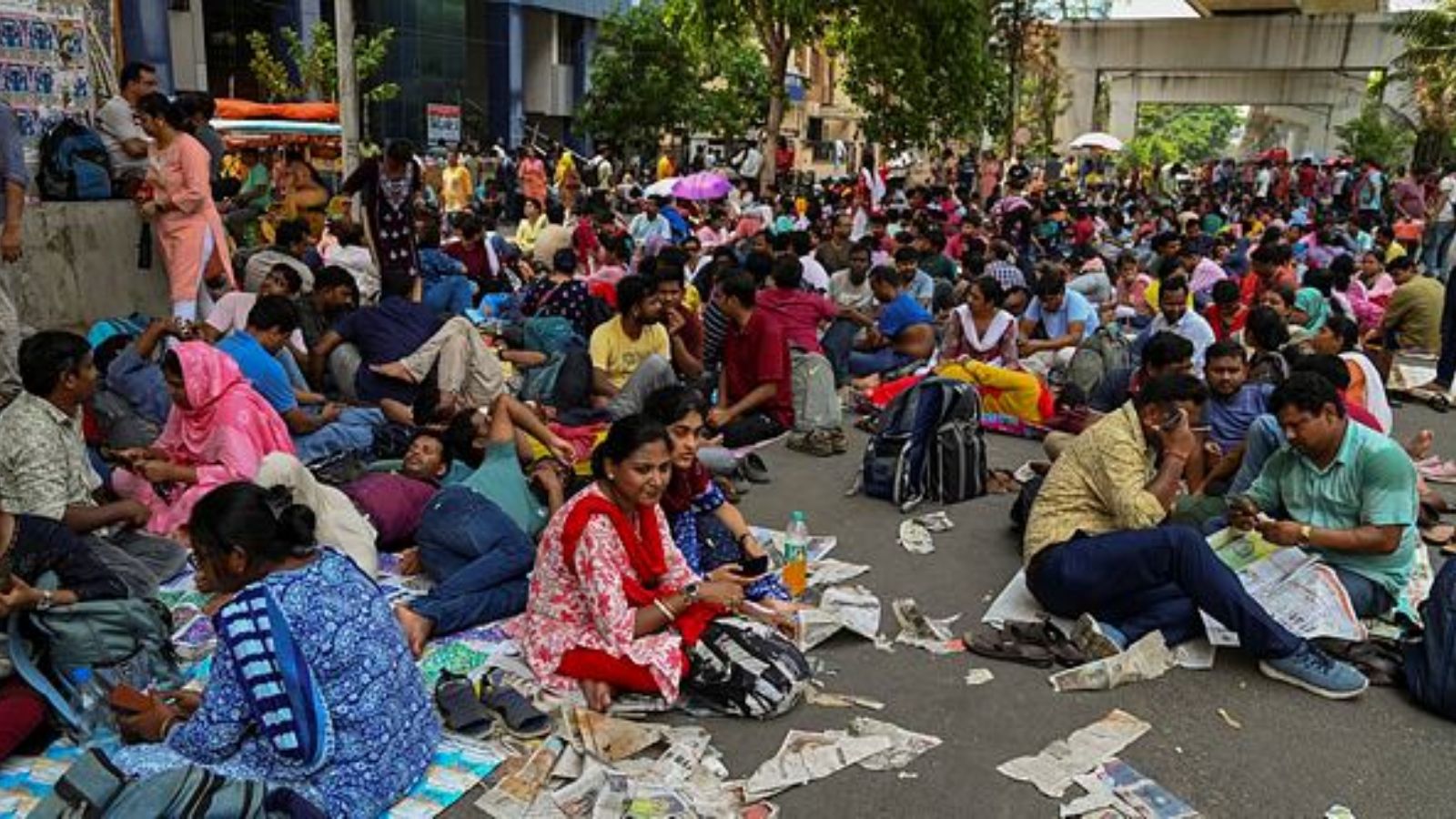
A growing segment of India's educated youth is falling into the 'precariat' class—lacking stable employment, education, or training. This systemic failure threatens the demographic dividend and is creating a volatile new political faultline.
- 1 in 3 young Indians (15-30 years) are classified as NEET (Not in Education, Employment, or Training).
- The rise of the 'precariat'—a class defined by unstable, gig-based, and contractual work—cuts across caste and class.
- Economic pressures, including rising education costs and stagnant real wages, are squeezing the middle class into insecurity.
India is currently witnessing a profound shift in its social fabric. While political leaders from across the spectrum—including Prime Minister Narendra Modi and Rahul Gandhi—have begun tailoring their rhetoric to appeal to 'Gen Z', the underlying crisis is far more systemic than a mere generational gap. The emergence of a vast population of youth who are neither in education, employment, nor training (NEET) represents a critical faultline in the nation's growth story.
The current landscape for the educated youth has turned ominous. What is often marketed as the 'future of work' is, in reality, a shift toward punishing contractual arrangements and piece-work. This 'gig economy' is frequently a mask for job insecurity, where workers face technology-driven obsolescence and a total lack of social safety nets. No amount of individual determination can offset the systemic absence of guaranteed income.
The Emergence of the 'Precariat'
Drawing on the theories of activist scholar Guy Standing, India is seeing the rise of the 'precariat'—a social class characterized by flexible labor, zero contracts, and casualization. This is not limited to the underprivileged; the Indian middle class is increasingly seeing its children slide into this category. The fear of downward social mobility has transformed competitive exams into desperate ventures rather than opportunities for growth.
The transition from a stable career path to a precarious existence is not a personal failure of the youth, but a systemic failure of the economic architecture.
Why This Matters
BozokMedia analysis shows that the NEET crisis is not just an employment statistic but a ticking political time bomb. When a significant portion of the youth feels that hard work no longer guarantees a dignified life, cynicism takes root. This mirrors global trends such as China's 'tang ping' (lying flat) and the 'Great Resignation' in the US, where workers reject exploitative systems. In India, this anger could coalesce into a powerful, unpredictable political force that transcends traditional identity politics.
According to the International Labour Organisation (ILO) and the Institute of Human Development, approximately 103 million youth fall into the NEET category. Simultaneously, the Reserve Bank of India (RBI) has noted that the middle class is being priced out of housing and basic necessities due to inflation in healthcare and education, further deepening the sense of precarity.
| Feature | Traditional Employment | The Precariat (Gig Work) |
|---|---|---|
| Contract Type | Permanent/Long-term | Temporary/Zero-hour |
| Income Stability | Fixed Monthly Salary | Variable/Piece-rate |
| Benefits | Pension, Health Insurance | None/Self-funded |
| Social Status | Stable Middle Class | Economically Insecure |
Addressing this crisis requires more than just AI coaching or online certificates. It demands a massive expansion of public goods, including healthcare and housing, and a fundamental decentralization of economic activity to create meaningful local employment.
Frequently Asked Questions
Q1: What does NEET stand for in the context of youth employment?
NEET stands for 'Not in Education, Employment, or Training,' referring to individuals who are not currently pursuing any of these three paths.
Q2: How is the 'precariat' different from the traditional working class?
Unlike the traditional working class, the precariat lacks job security, predictable income, and occupational identity, living in a state of constant economic instability.