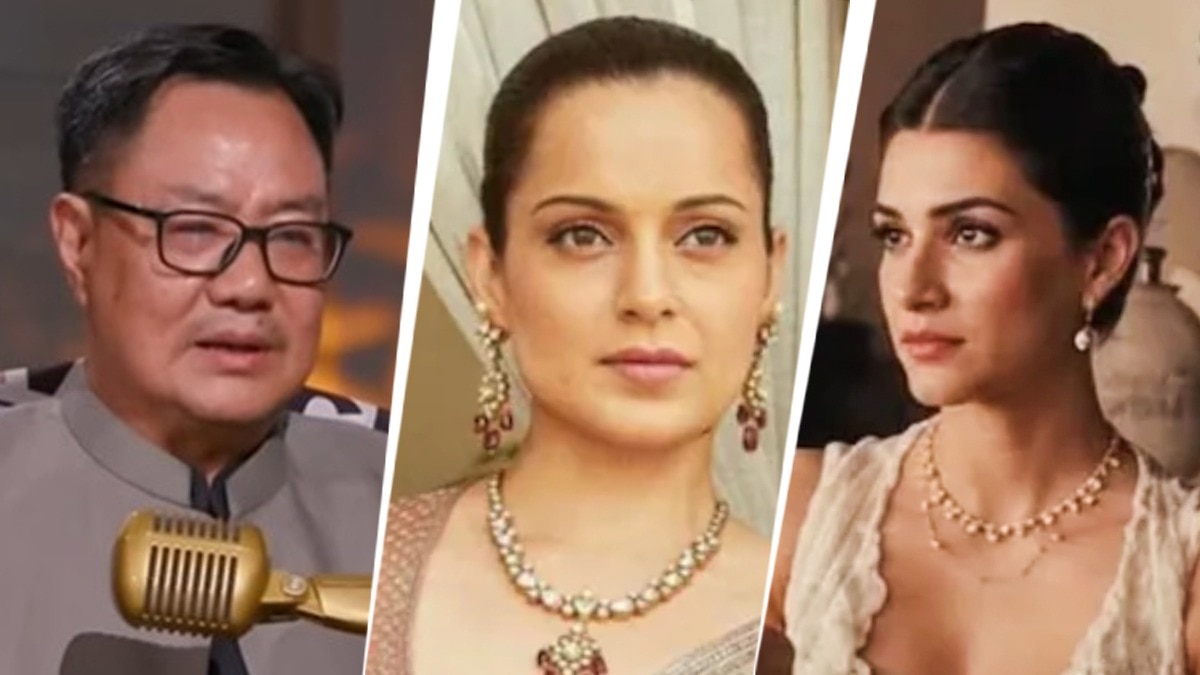
Union Minister Kiren Rijiju has weighed in on the controversy between Kangana Ranaut and Kriti Sanon, asserting that freedom of speech inherently includes the right to dissent. He also addressed the Manusmriti debate and remarks against PM Modi.
- Kiren Rijiju defended Kangana Ranaut's right to criticize Kriti Sanon's attire.
- He emphasized that freedom of expression is a two-way street involving the right to disagree.
- He strongly condemned abusive language directed at PM Narendra Modi.
- He reaffirmed that India is governed by the Constitution, not religious texts like Manusmriti.
Union Minister Kiren Rijiju has entered the fray regarding the ongoing controversy involving BJP MP Kangana Ranaut and actress Kriti Sanon. The dispute arose following Ranaut's criticism of Sanon's attire in a recent jewelry advertisement. Rijiju argued that freedom of expression cannot be a one-sided privilege; if one has the right to voice an opinion, others must have the right to oppose it.
In an exclusive interaction, Rijiju addressed the social media backlash surrounding the advertisement. He questioned the logic of restricting dissent, asking, "If you have freedom to express things as per your choice, why are you restricting others from disagreeing or opposing that?" He further clarified that while he can guide MPs on parliamentary decorum, he cannot dictate their personal views expressed outside the House.
Why This Matters
BozokMedia analysis shows that this controversy transcends celebrity gossip, touching upon the fundamental democratic principle of pluralism. It highlights the growing tension between individual expression and social expectations in the digital age, especially when political figures are involved.
The Minister also addressed the controversial remarks made by Ranaut regarding the "gutter generation." Rijiju defended the context, suggesting the remarks were aimed at those who used abusive language against Prime Minister Narendra Modi and his late mother. He condemned such vitriol, stating that abusing the Prime Minister's family is contrary to Indian culture, while simultaneously maintaining that legitimate political criticism is essential for democracy.
Democracy thrives when the right to express an opinion is balanced by the equal right to dissent and oppose.
The conversation pivoted significantly toward the debate over the Manusmriti. Addressing concerns that opposing patriarchal religious texts might label someone as anti-Hindu, Rijiju dismissed such notions. He reminded the public that India is a constitutional democracy, stating, "The government is not putting Manusmriti as the yardstick to govern. India is run by the Constitution."
Rijiju described Hinduism as a liberal faith that has historically allowed individuals the freedom to change their beliefs. He stressed that while people have the right to subscribe to or oppose religious texts, there is a clear line between expressing an opinion and advocating for separatism or violence against the nation.
Frequently Asked Questions
1. What was the core of the Kangana-Kriti controversy?
It involved Kangana Ranaut criticizing Kriti Sanon's attire in a Rakhi advertisement.
2. How does Rijiju view the role of the Constitution vs. religious texts?
He stated that the Constitution is the sole governing document of India, and religious texts like Manusmriti are matters of individual belief.

