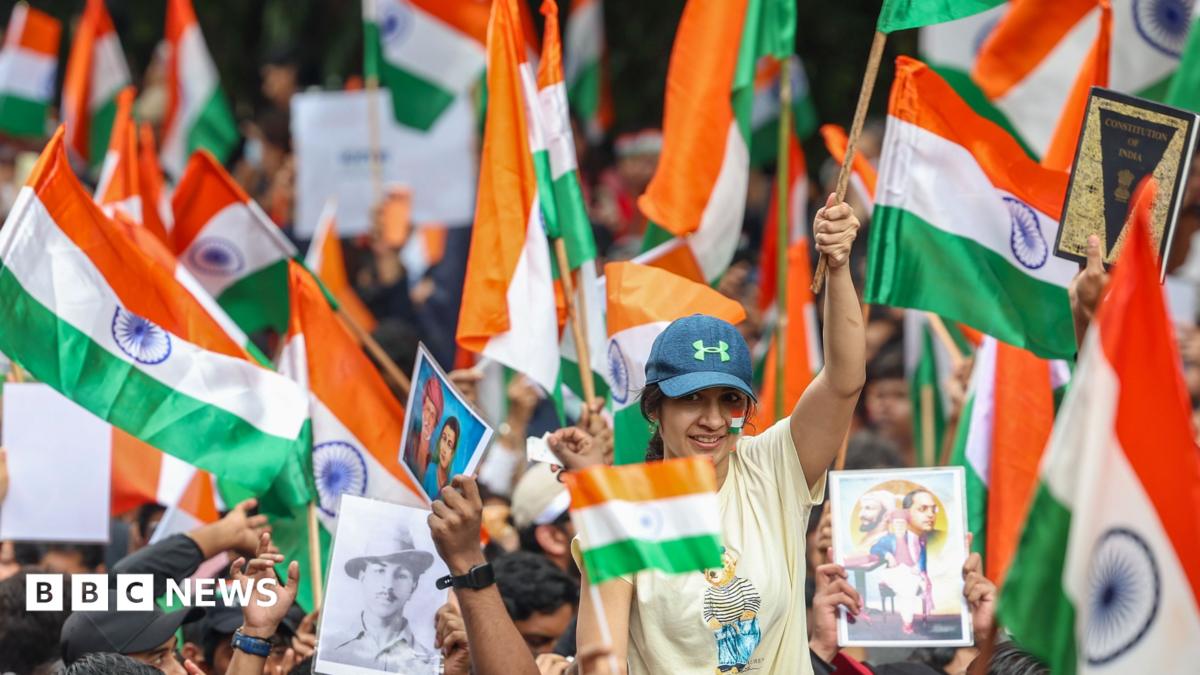
Rahul Gandhi slams PM Modi's 'culture shock' comment, sparking a massive debate on patriarchy and how female activists are perceived in India.
- Rahul Gandhi criticized PM Modi's reaction to women protesters using profanity.
- The controversy stems from the Cockroach Janta Party (CJP) protests in Delhi.
- Experts highlight a double standard in how male vs. female activists are judged.
Recent footage of young women using expletives during protests in India has ignited a profound national debate: Is the social backlash significantly harsher when women use profanity compared to men? This question sits at the intersection of political rhetoric, gender roles, and the evolving landscape of Indian activism.
The Political Tug-of-War
The controversy was reignited by Leader of the Opposition Rahul Gandhi, who addressed a gathering of students in Pune. Gandhi directly challenged Prime Minister Narendra Modi's recent assertion that seeing young women swear was a "culture shock." Gandhi argued that this specific focus on gender reveals a deeply rooted patriarchal mindset, noting that while male swearing is often dismissed or normalized, female swearing is treated as a moral crisis.
The incident traces back to the weeks-long Cockroach Janta Party (CJP) protests in Delhi, where demonstrators demanded urgent education reforms following widespread exam paper leaks. During these intense demonstrations, some women used foul language directed at the administration and the Prime Minister, leading to widespread condemnation from the ruling party's supporters.
Why This Matters
BozokMedia analysis shows that this issue transcends mere vocabulary. It touches upon the 'respectability politics' applied to women in public spaces. When female protesters are judged by their linguistic decorum rather than the validity of their demands, it effectively serves to delegitimize their political agency and silence their grievances.
"The focus on the gender of the speaker rather than the substance of the speech is a classic tool used to undermine female political participation."
The fallout has been severe for some. A 15-year-old girl involved in the protest faced intense online trolling and rape threats, eventually being forced to issue a public apology. This highlights the dangerous digital landscape female activists must navigate in India today.
Historical Context and Double Standards
Journalist Namita Bhandare points out a glaring hypocrisy in the 'culture shock' narrative. She notes that in various Indian cultural traditions, such as certain wedding rituals in Northern India, women use expletives as part of celebratory folk songs without social stigma. Furthermore, the political sphere is replete with examples of male politicians using misogynistic language, yet these instances rarely trigger the same level of 'cultural' outcry.
While PM Modi has championed women's empowerment through various government schemes, his own past remarks and the conduct of his party members have frequently been criticized for being disrespectful toward women, creating a complex contradiction in his political identity.
Frequently Asked Questions
1. What was the primary trigger for this debate?
The debate was triggered by PM Modi calling the use of expletives by women during the CJP protests a 'culture shock.'
2. How did Rahul Gandhi respond to the Prime Minister's comment?
Gandhi labeled the comment as patriarchal, questioning why the gender of the protesters was being singled out when both men and women used similar language.