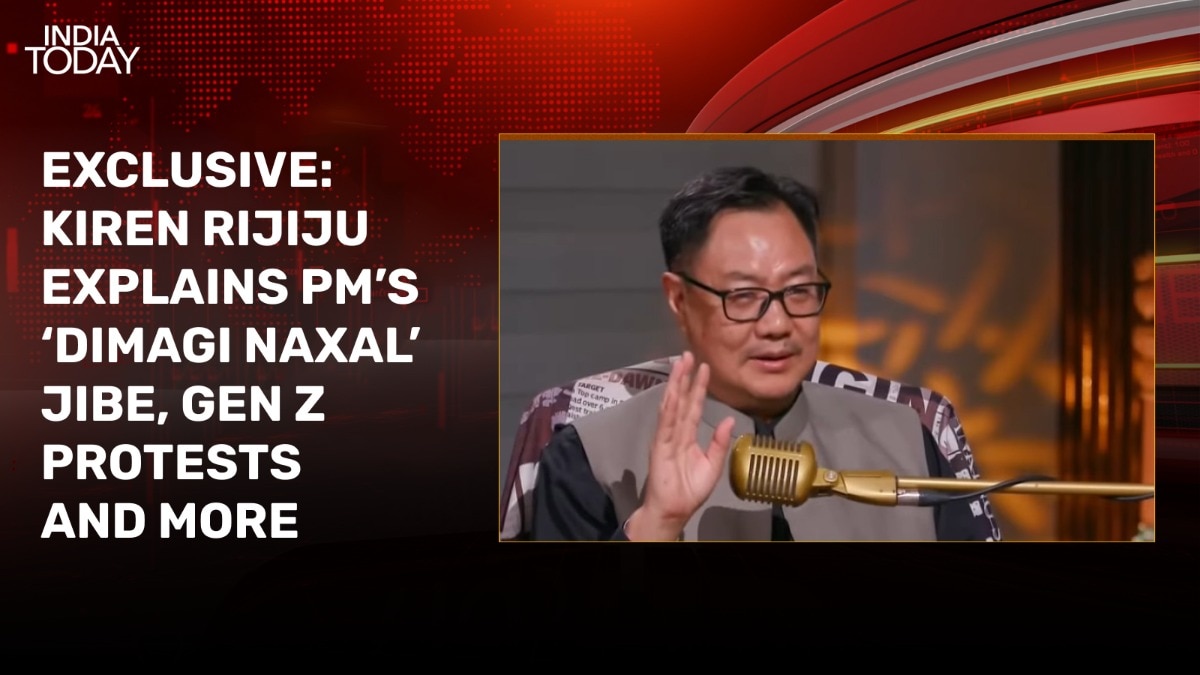
Union Minister Kiren Rijiju has provided a deep dive into the political significance of PM Modi's 'Mental Naxal' jibe and the ongoing controversy surrounding Rahul Gandhi's remarks on Manusmriti.
- Kiren Rijiju clarified the political intent behind the term 'Mental Naxal'.
- He criticized Rahul Gandhi's comments on Manusmriti as divisive.
- The debate highlights a deepening ideological rift in Indian politics.
Union Minister Kiren Rijiju has stepped forward to decode the complex political rhetoric currently dominating the Indian landscape. Addressing the media, Rijiju explained the context behind Prime Minister Narendra Modi's recent use of the term 'Mental Naxal' (Dimagi Naxal), suggesting it targets ideologies that seek to destabilize the nation through intellectual subversion rather than armed conflict.
Rijiju also took a sharp swipe at the opposition, specifically targeting Rahul Gandhi over his recent comments regarding the Manusmriti. The Minister argued that the opposition is attempting to weaponize ancient texts to create social fissures and caste-based divisions within the electorate, rather than engaging in constructive policy debate.
Why This Matters
BozokMedia analysis shows that this linguistic shift in political discourse signifies a move toward targeting the 'intellectual landscape' of the opposition. By labeling certain ideologies as 'Mental Naxals,' the ruling dispensation is attempting to redefine dissent as a form of ideological insurgency, thereby raising the stakes of political confrontation.
The evolution of political terminology in India is moving from policy disputes to fundamental identity battles.
Historically, the term 'Naxalism' has been associated with violent insurgencies in rural India. However, the transition of this term into the realm of 'mentalities' indicates a strategic attempt to delegitimize the ideological framework of the opposition in the eyes of the urban and middle-class electorate.
Furthermore, the debate over Manusmriti highlights the ongoing struggle over India's cultural and social identity. While the opposition views these discussions as essential for social justice, the ruling BJP sees them as an assault on the civilizational fabric of the country.
Frequently Asked Questions
1. What does the term 'Mental Naxal' imply in this context?
It refers to individuals or groups whose ideologies are perceived as being focused on division and chaos rather than national development.
2. Why is the Manusmriti mentioned in current politics?
It has become a flashpoint for debates regarding social hierarchy, caste, and the interpretation of ancient Indian traditions.