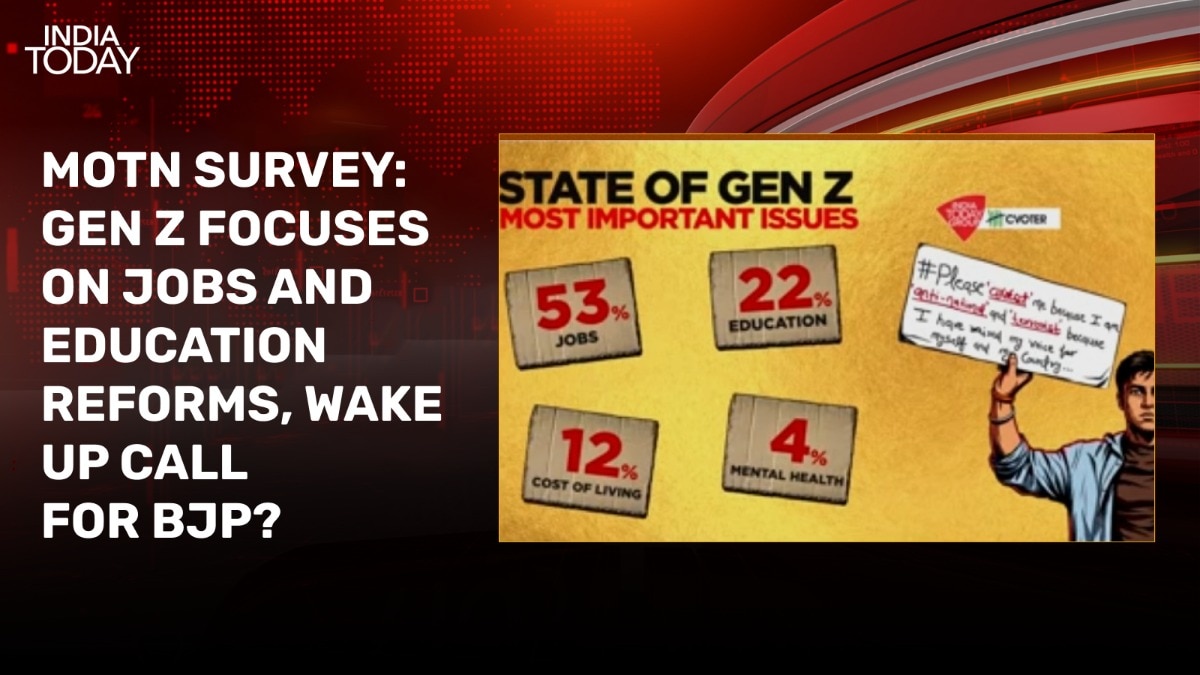
A heated debate on India Today's Mood of the Nation (MOTN) reveals deep-seated anger among youth aged 18-35 regarding unemployment and paper leaks, marking a potential turning point in Indian politics.
- Youth aged 18-35 are increasingly dissatisfied due to economic grievances and exam irregularities.
- C-Voter's Yashwant Deshmukh describes this as the biggest crisis for the BJP in 12 years.
- While BJP claims a strong seat conversion math, public perception among voters is shifting.
In a high-stakes discussion on India Today's Mood of the Nation (MOTN), political heavyweights debated the shifting tides of Indian voter sentiment. Hosted by Rajdeep Sardesai, the panel delved into whether the ruling party is facing a structural decline or mere temporary turbulence. The core of the discontent, according to the discussion, lies within the Gen Z demographic, specifically those aged 18 to 35.
The Youth Factor: Jobs and Integrity
Congress leader Brajesh Kalappa emphasized that the political landscape is being reshaped by the frustrations of the younger generation. The primary drivers of this discontent are the lack of stable employment opportunities and the recurring scandals surrounding paper leaks in recruitment examinations. This demographic, which holds significant voting power, is increasingly looking for accountability regarding economic stability and institutional integrity.
Why This Matters
BozokMedia analysis shows that the ability of a political party to retain power is directly proportional to its ability to address the aspirations of the youth. The shift from ideological voting to issue-based voting, specifically regarding livelihoods, marks a significant evolution in the Indian electorate.
This arguably is the biggest crisis time that the BJP is facing in the last 12 years of being in power.
Adding weight to this sentiment, C-Voter founder Yashwant Deshmukh provided a sobering analysis. He noted that when adjusting for specific regional gains like those in West Bengal, there is a visible trend of decline across several other states. This suggests that the party's momentum may be slowing in key battlegrounds.
Conversely, BJP spokesperson Sanju Varma offered a more optimistic mathematical perspective. Varma argued that the party's 39% standalone vote share is highly efficient, translating arithmetically to approximately 289 seats. He maintained that the BJP possesses a unique capability to convert its vote share into a dominant parliamentary presence, a trend observed in previous election cycles.
Frequently Asked Questions
1. What are the main concerns of Gen Z in India?
The primary concerns are unemployment, economic stability, and the integrity of competitive exams due to paper leaks.
2. What is the BJP's defense against the declining sentiment?
The party argues that its high vote-to-seat conversion ratio ensures a strong seat count despite shifting perceptions.


