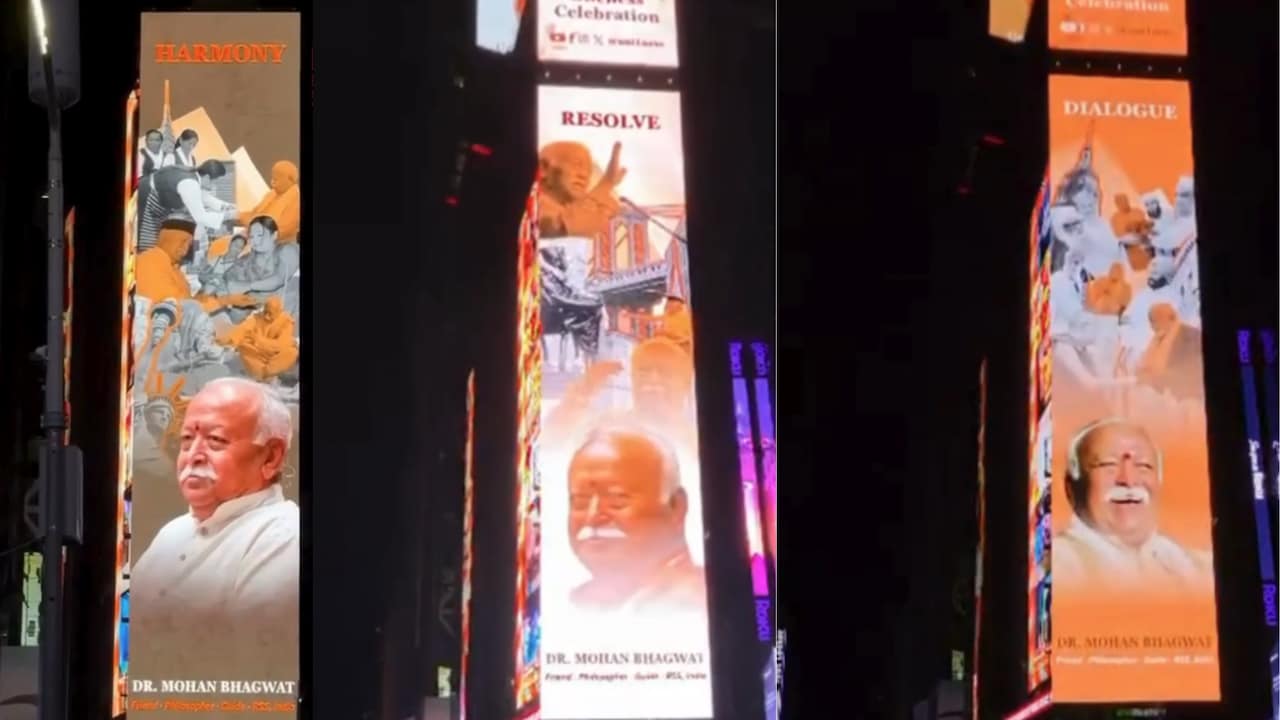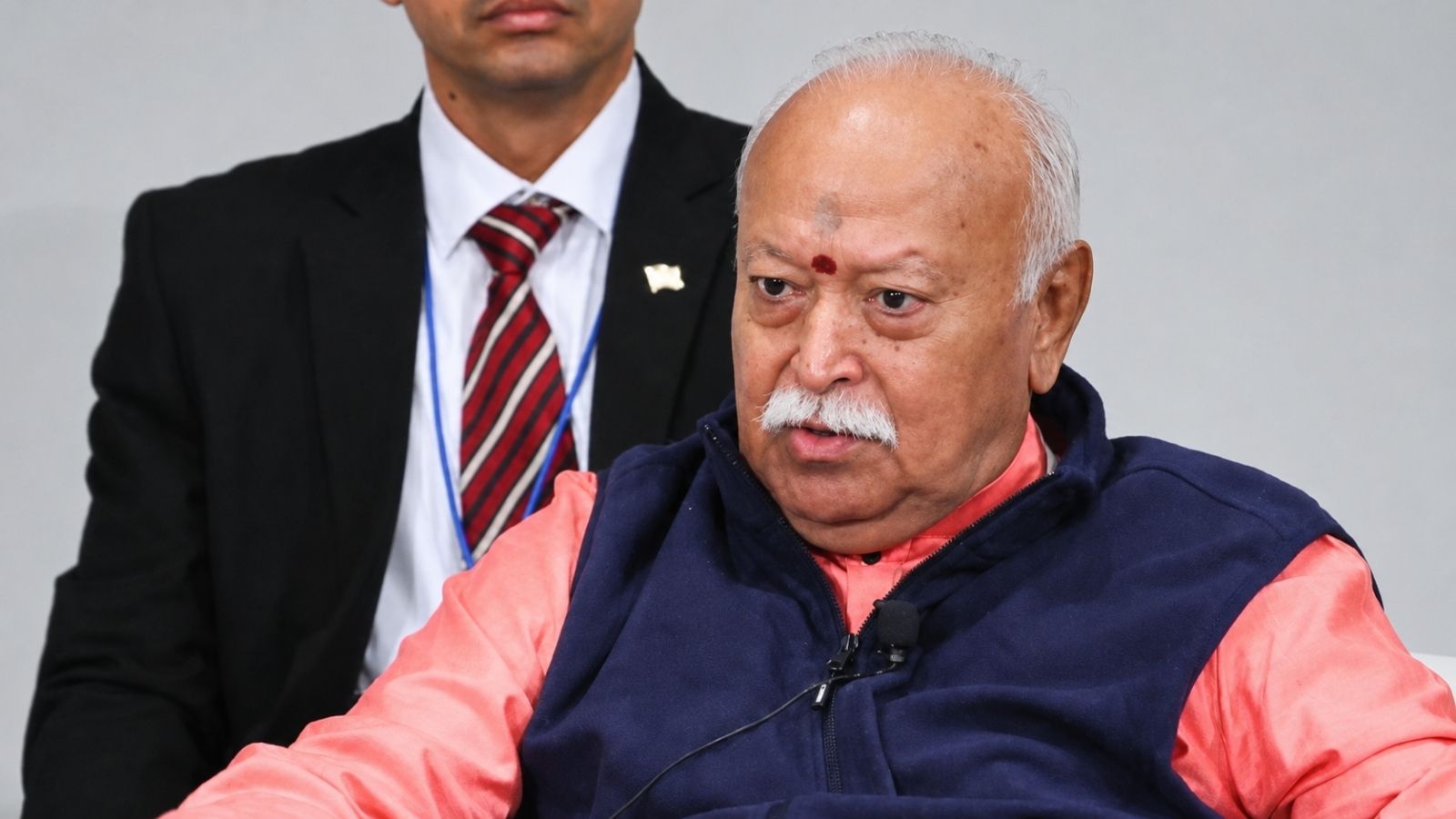
In a landmark speech in New York, RSS chief Mohan Bhagwat stated that any Hindu who advocates for the expulsion of Muslims from India ceases to be a Hindu, emphasizing the inclusive essence of the faith.
- Mohan Bhagwat emphasized that Hindu tradition views all faiths as paths to the same divinity.
- He clarified that 'Hindu Rashtra' does not imply the exclusion of Muslims.
- The RSS chief advocated for social-level transformation rather than starting with political institutions.
- He stated that diversity is the rule of nature, while unity is the truth behind it.
Addressing the 'One World, One Humanity' faith leaders' conference in New York, Rashtriya Swayamsevak Sangh (RSS) chief Mohan Bhagwat delivered a profound message on religious coexistence. He asserted that a Hindu who believes Muslims should be "driven out" of India cannot remain a Hindu, arguing that the core of Hindu philosophy leaves no room for such exclusionary ideologies.
Speaking at the conference organized by the AHEAD Forum—which brought together leaders from Christianity, Judaism, Hinduism, and Islam—Bhagwat reflected on his past dialogues. He recalled a 2018 interaction where Muslim brothers questioned the implications of a 'Hindu Rashtra.' "I said no, that is not Hindutva," Bhagwat stated. "If any Hindu thinks there should be no Muslims in India, he will not remain Hindu."
Why This Matters
BozokMedia analysis shows that this statement marks a significant attempt to redefine the narrative around Hindutva in the global and domestic arena. By decoupling religious identity from political exclusion, Bhagwat is attempting to bridge the widening gap between communal identities and national belonging, positioning the RSS as a force for social cohesion rather than political polarization.
"If you want to call yourself a Hindu, you have to believe that all paths are leading to the same God. And every human has dignity."
Bhagwat criticized the current state of politics, describing it as a "game of self-interest." He argued that instead of trying to influence political institutions directly, socio-religious organizations must focus on strengthening society. He noted that in a democracy, politics is a reflection of public opinion; therefore, building social strength is the most effective way to influence policy.
To illustrate the RSS's commitment to non-discriminatory service, he cited the 1996 plane crash in Haryana. He mentioned how RSS workers were among the first responders, providing aid and performing last rites for victims without regard for their religion. "We did not think that they were Muslims," he remarked, adding that political affiliations might have hindered such selfless service.
Frequently Asked Questions
1. What is Mohan Bhagwat's view on diversity?
Bhagwat views diversity as a "decoration of our innate unity" and believes that while diversity is a rule of nature, unity is the underlying truth that must be protected.
2. How does the RSS plan to influence politics according to Bhagwat?
He believes the RSS aims to build social strength first, which will eventually shape public opinion and, consequently, influence political policies.