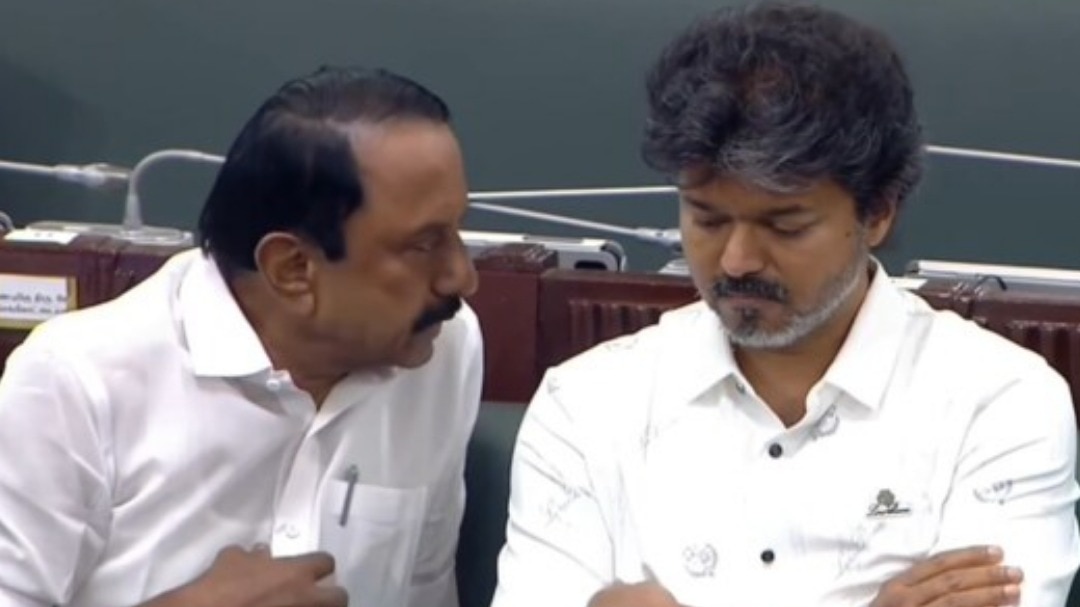
In a landmark move for Tamil Nadu's legislative history, Chief Minister Vijay sat alongside his ministers in the Assembly, signaling a shift toward collective leadership.
- Chief Minister Vijay set a new precedent by sitting with ministers in the Assembly.
- This move breaks long-standing legislative traditions in Tamil Nadu.
- The action signals a transition towards a more collaborative governance model.
A historic shift occurred in the Tamil Nadu Assembly today as Chief Minister Vijay performed an unprecedented act. In a move that has sent ripples through the political landscape, the CM chose to sit directly alongside his cabinet ministers during the proceedings. This departure from traditional seating arrangements marks a significant moment in the state's legislative history.
Traditionally, the Chief Minister occupies a distinct and elevated position within the House, symbolizing the pinnacle of executive authority. However, by sitting with his ministers, Vijay has visually and symbolically emphasized the concept of a 'Cabinet Government' where decisions and presence are shared. This gesture is being viewed as a masterstroke in political communication.
Why This Matters
BozokMedia analysis shows that this move could redefine the working dynamics of the Tamil Nadu Cabinet. By breaking the physical distance between the head of the government and his ministers, Vijay is fostering an environment of collective responsibility. This could lead to more synchronized policy implementation and a more unified front during legislative debates.
The Chief Minister's decision to sit with his ministers is a powerful visual cue of inclusive and collaborative leadership.
The implications of this move extend beyond the walls of the Assembly. For the electorate, it portrays a government that is working as a cohesive unit rather than a top-down hierarchy. Political analysts suggest that this could be a strategic attempt to humanize the leadership and project a sense of teamwork and accessibility.
Historically, the role of the Chief Minister in South Indian politics has been characterized by strong, centralized authority. Vijay's approach challenges this status quo, potentially setting a new benchmark for other state leaders in India who wish to project a more modern, team-oriented governance style.
Frequently Asked Questions
Question 1: Is this a permanent change in Assembly rules?
Answer: It is primarily a symbolic and strategic move by the CM rather than a formal change in standing orders.
Question 2: How has the opposition reacted?
Answer: While reactions vary, many see it as a tactical move to project unity within the ruling dispensation.